


Correlation between small-cell lung cancer serum protein/peptides determined by matrix-assisted laser desorption/ionization time-of-flight mass spectrometry and chemotherapy efficacy
- PMID: 38764042
- PMCID: PMC11103996
- DOI: 10.1186/s12014-024-09483-8
Correlation between small-cell lung cancer serum protein/peptides determined by matrix-assisted laser desorption/ionization time-of-flight mass spectrometry and chemotherapy efficacy
Abstract
Background: Currently, no effective measures are available to predict the curative efficacy of small-cell lung cancer (SCLC) chemotherapy. We expect to develop a method for effectively predicting the SCLC chemotherapy efficacy and prognosis in clinical practice in order to offer more pertinent therapeutic protocols for individual patients.
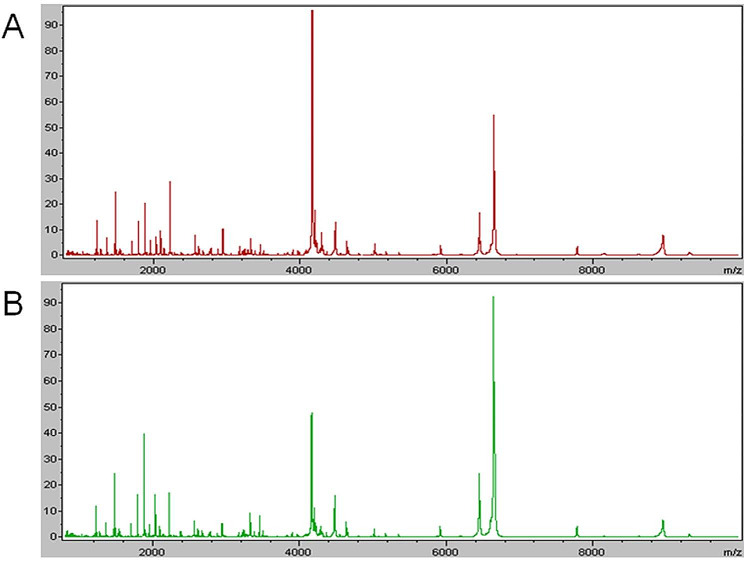
Methods: We adopted matrix-assisted laser desorption/ionization time-of-flight mass spectrometry (MALDI-TOF-MS) and ClinPro Tools system to detect serum samples from 154 SCLC patients with different curative efficacy of standard chemotherapy and analyze the different peptides/proteins of SCLC patients to discover predictive tumor markers related to chemotherapy efficacy. Ten peptide/protein peaks were significantly different in the two groups.
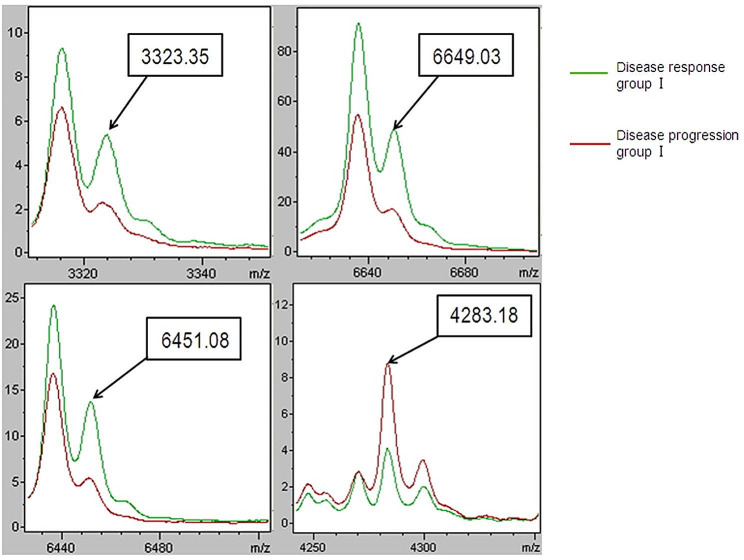
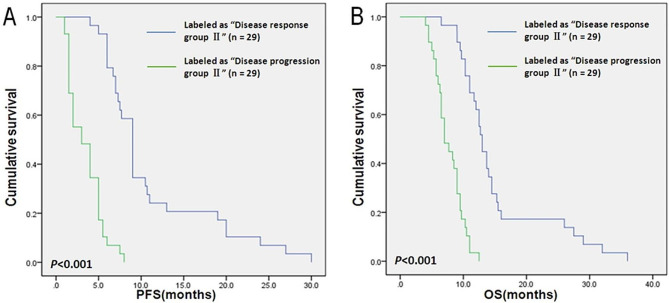
Results: A genetic algorithm model consisting of four peptides/proteins was developed from the training group to separate patients with different chemotherapy efficacies. Among them, three peptides/proteins (m/z 3323.35, 6649.03 and 6451.08) showed high expression in the disease progression group, whereas the peptide/protein at m/z 4283.18 was highly expressed in the disease response group. The classifier exhibited an accuracy of 91.4% (53/58) in the validation group. The survival analysis showed that the median progression-free survival (PFS) of 30 SCLC patients in disease response group was 9.0 months; in 28 cases in disease progression group, the median PFS was 3.0 months, a statistically significant difference (χ2 = 46.98, P < 0.001). The median overall survival (OS) of the two groups was 13.0 months and 7.0 months, a statistically significant difference (χ2 = 40.64, P < 0.001).
Conclusions: These peptides/proteins may be used as potential biological markers for prediction of the curative efficacy and prognosis for SCLC patients treated with standard regimen chemotherapy.
Keywords: Chemotherapy; Matrix assisted laser desorption ionization-time of flight-mass spectrometry; Prediction of efficacy; Proteomics; Small-cell lung cancer.
© 2024. The Author(s).
Conflict of interest statement
The authors declare no competing interests.
Figures
References
-
- Cheng S, Evans WK, Stys-Norman D, Shepherd FA, Lung Cancer Disease Site Group of Cancer Care Ontario’s program in evidence-based C. Chemotherapy for relapsed small cell lung cancer: a systematic review and practice guideline. J Thorac Oncology: Official Publication Int Association Study Lung Cancer. 2007;2(4):348–54. doi: 10.1097/01.JTO.0000263720.15062.51. - DOI - PubMed
Grants and funding
LinkOut - more resources
Full Text Sources