


Developing preclinical dog models for reconstructive severed spinal cord continuity via spinal cord fusion technique
- PMID: 38764541
- PMCID: PMC11099315
- DOI: 10.1016/j.ibneur.2024.04.006
Developing preclinical dog models for reconstructive severed spinal cord continuity via spinal cord fusion technique
Abstract
Background: Spinal cord injury (SCI) is a severe impairment of the central nervous system, leading to motor, sensory, and autonomic dysfunction. The present study investigates the efficacy of the polyethylene glycol (PEG)-mediated spinal cord fusion (SCF) techniques, demonstrating efficacious in various animal models with complete spinal cord transection at the T10 level. This research focuses on a comparative analysis of three SCF treatment models in beagles: spinal cord transection (SCT), vascular pedicle hemisected spinal cord transplantation (vSCT), and vascularized allograft spinal cord transplantation (vASCT) surgical model.
Methods: Seven female beagles were included in the SCT surgical model, while four female dogs were enrolled in the vSCT surgical model. Additionally, twelve female dogs underwent vASCT in a paired donor-recipient setup. Three surgical model were evaluated and compared through electrophysiology, imaging and behavioral recovery.
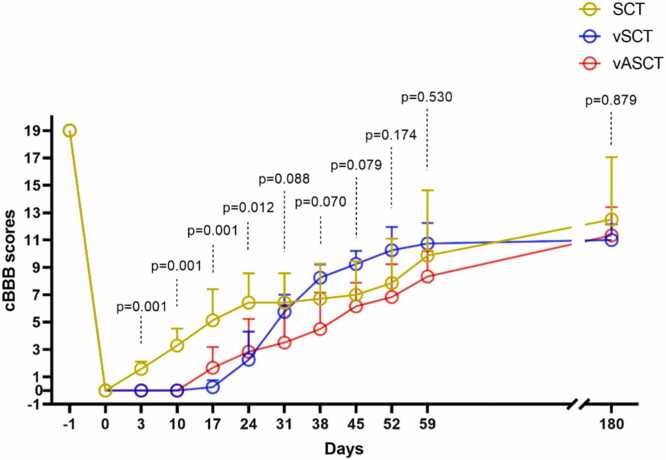
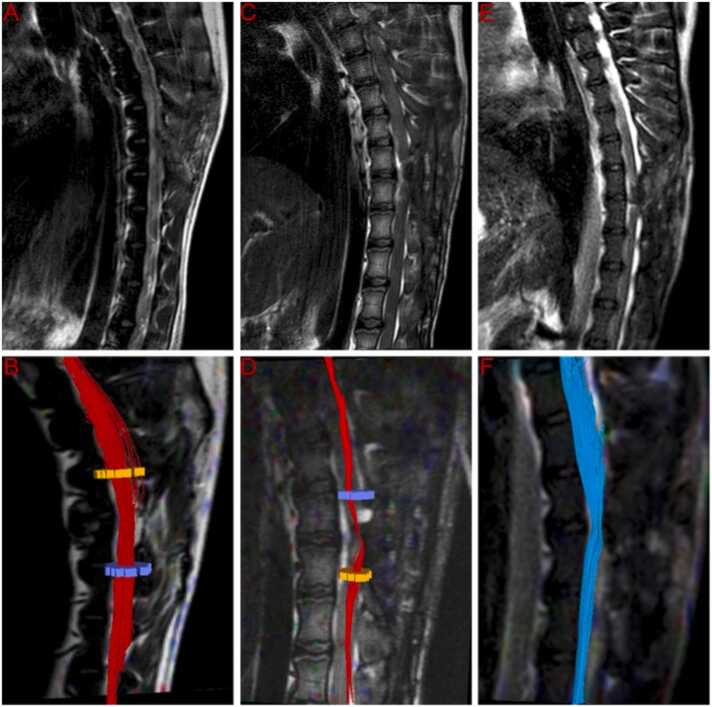
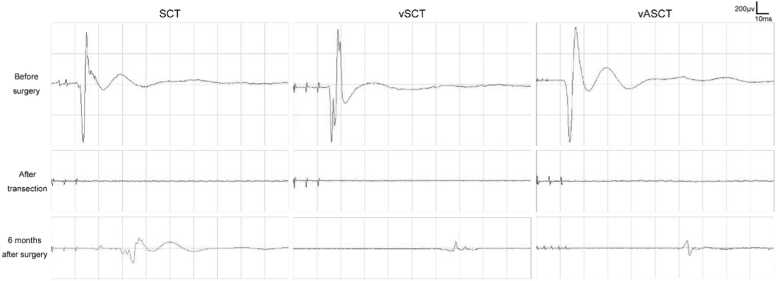
Results: The results showed a progressive recovery in the SCT, vSCT and vASCT surgical models, with no statistically significant differences observed in cBBB scores at both 2-month and 6-month post-operation (both P>0.05). Neuroimaging analysis across the SCT, vSCT and vASCT surgical models revealed spinal cord graft survival and fiber regrowth across transection sites at 6 months postoperatively. Also, positive MEP waveforms were recorded in all three surgical models at 6-month post-surgery.
Conclusion: The study underscores the clinical relevance of PEG-mediated SCF techniques in promoting nerve fusion, repair, and motor functional recovery in SCI. SCT, vSCT, and vASCT, tailored to specific clinical characteristics, demonstrated similar effective therapeutic outcomes.
Keywords: Polyethylene glycol; Spinal cord fusion; Spinal cord injury; Spinal cord transplantation; Surgical procedure.
© 2024 The Authors.
Conflict of interest statement
The authors of this manuscript have no conflicts of interest to disclose.
Figures
References
-
- Basso D. Neuroanatomical substrates of functional recovery after experimental spinal cord injury: implications of basic science research for human spinal cord injury. Phys. Ther. 2000;80:808–817. - PubMed
LinkOut - more resources
Full Text Sources
Research Materials