


Exploring Preconceptions as Barriers to Peritoneal Dialysis Eligibility: A Global Scenario-Based Survey of Kidney Care Physicians
- PMID: 38765569
- PMCID: PMC11101779
- DOI: 10.1016/j.ekir.2024.01.041
Exploring Preconceptions as Barriers to Peritoneal Dialysis Eligibility: A Global Scenario-Based Survey of Kidney Care Physicians
Abstract
Introduction: Despite the growing number of patients requiring kidney replacement therapy (KRT), peritoneal dialysis (PD) is underutilized globally. A contributory factor may be clinician myths about its use. The aim of this study was to explore perceptions about PD initiation by clinicians according to various physical, social, and clinical characteristics of patients.
Methods: An online global survey (in English and Thai) was administered to ascertain nephrologists' and nephrology trainees' decisions on recommending PD as a treatment modality.
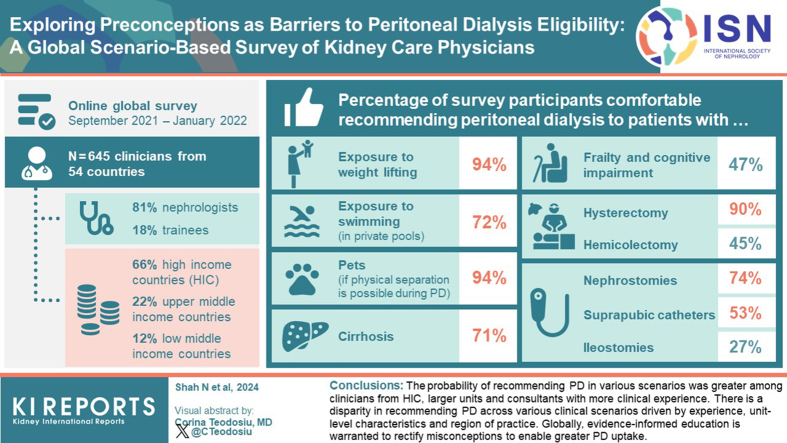
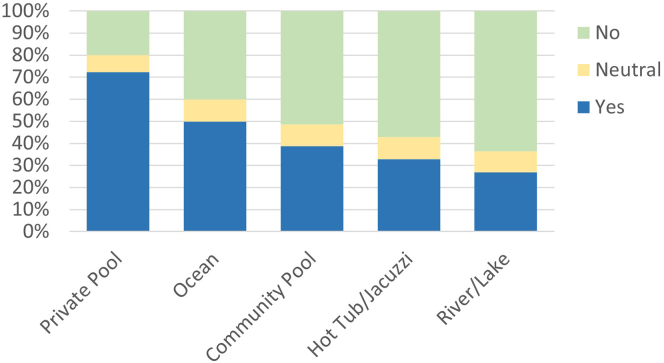
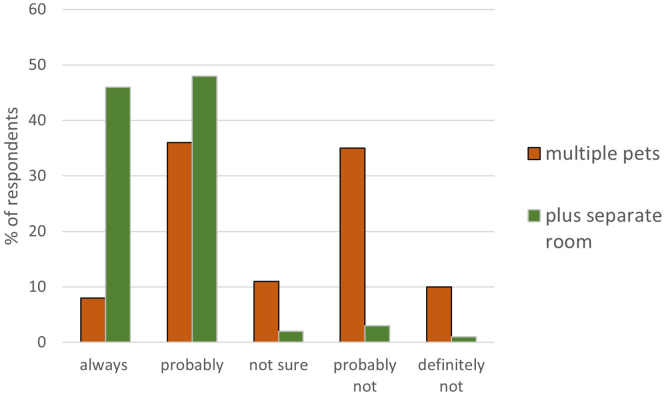
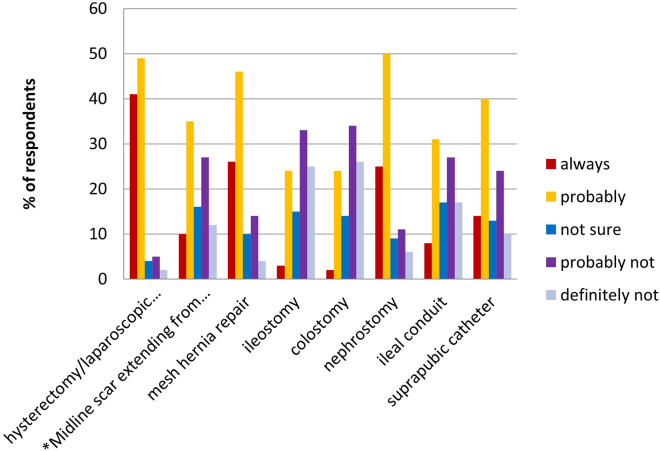
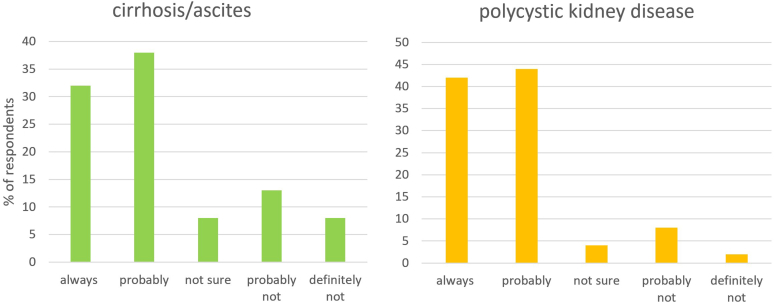
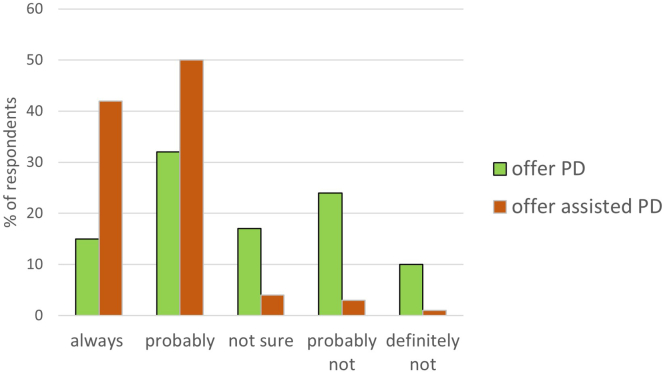
Results: A total of 645 participants (522 nephrologists and 123 trainees; 56% male) from 54 countries (66% from high-income countries [HICs], 22% from upper middle-income countries [UMICs], 12% from lower middle-income countries, and 1% from low-income countries [LICs]) completed the survey. Of the respondents, 81% identified as attending physicians or consultants, and 19% identified as trainees or other. PD was recommended for most scenarios, including repeated exposures to heavy lifting, swimming (especially in a private pool and ocean), among patients with cirrhosis or cognitive impairment with available support, and those living with a pet if a physical separation can be achieved during PD. Certain abdominal surgeries were more acceptable to proceed with PD (hysterectomy, 90%) compared to others (hemicolectomy, 45%). Similar variation was noted for different types of stomas (nephrostomies, 74%; suprapubic catheters, 53%; and ileostomies, 27%).
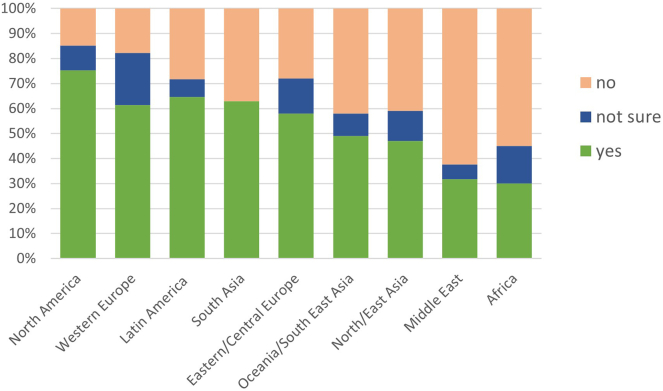
Conclusion: The probability of recommending PD in various scenarios was greater among clinicians from HICs, larger units, and consultants with more clinical experience. There is a disparity in recommending PD across various clinical scenarios driven by experience, unit-level characteristics, and region of practice. Globally, evidence-informed education is warranted to rectify misconceptions to enable greater PD uptake.
Keywords: kidney failure; nephrologist; patient selection; peritoneal dialysis; survey.
© 2024 International Society of Nephrology. Published by Elsevier Inc.
Figures
References
LinkOut - more resources
Full Text Sources
Research Materials
