


Left Ventricular Hypertrophy After Renal Transplantation: Systematic Review and Meta-analysis
- PMID: 38769973
- PMCID: PMC11104731
- DOI: 10.1097/TXD.0000000000001647
Left Ventricular Hypertrophy After Renal Transplantation: Systematic Review and Meta-analysis
Abstract
Background: Left ventricular hypertrophy (LVH) in patients with end stage renal disease undergoing renal replacement is linked to an increased risk for cardiovascular diseases. Dialysis does not completely prevent or correct this abnormality, and the evidence for kidney transplantation (KT) varies. This analysis aims to explore the relationship between KT and LVH.
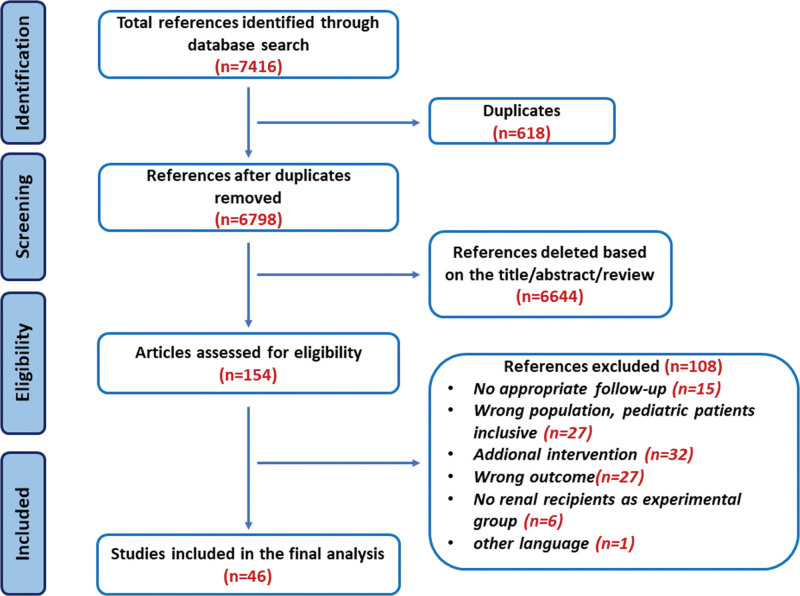
Methods: MEDLINE and Scopus were systematically searched in October 2023. All cross-sectional and longitudinal studies that fulfilled our inclusion criteria were included. Outcome was left ventricular mass index (LVMI) changes. We conducted a meta-analysis using a random effects model. Meta-regression was applied to examine the LVMI changes dependent on various covariates. Sensitivity analysis was used to handle outlying or influential studies and address publication bias.
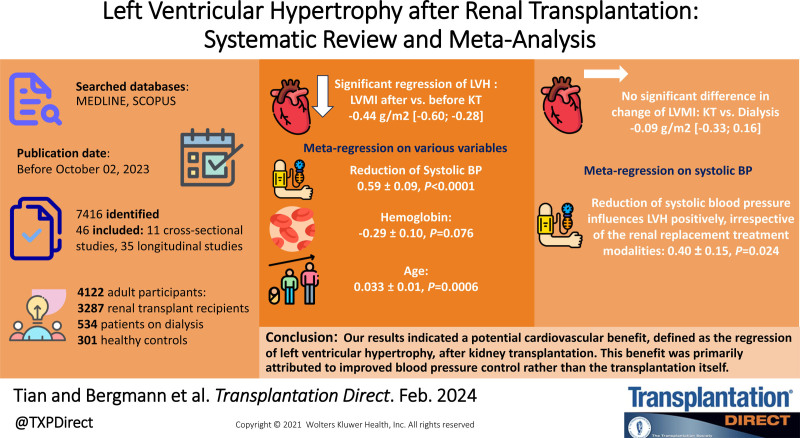
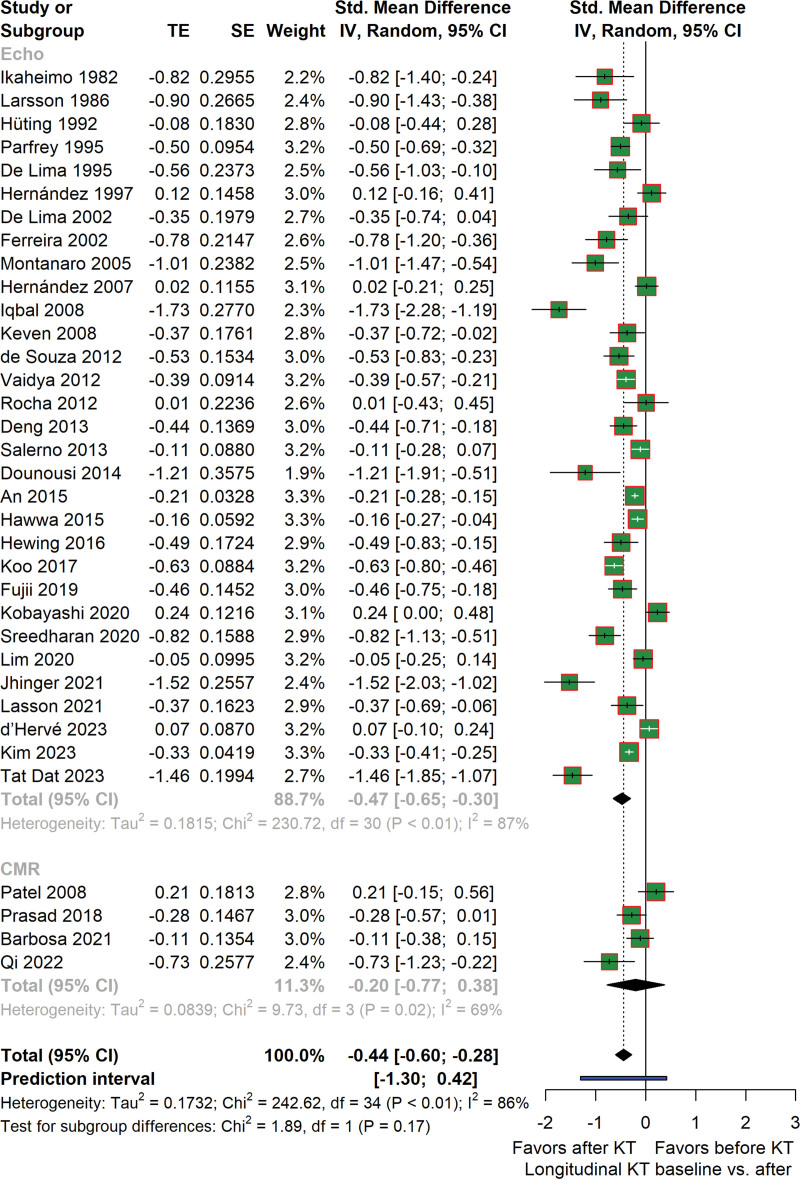
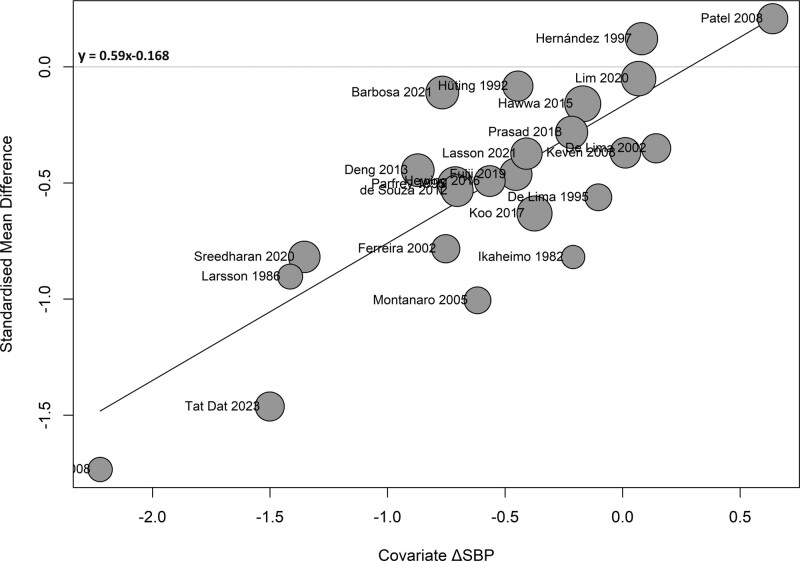
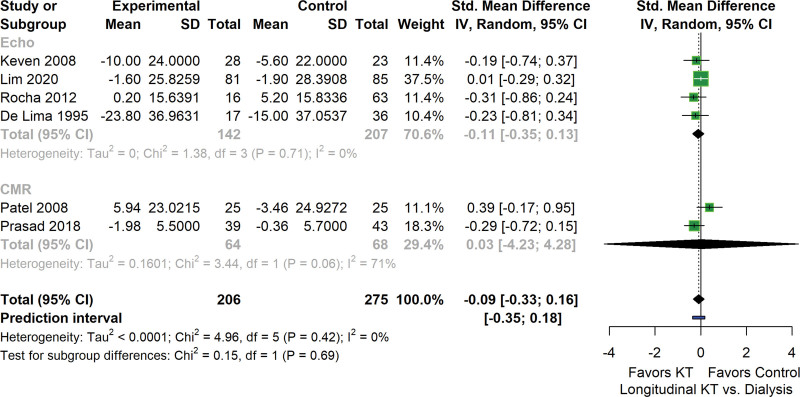
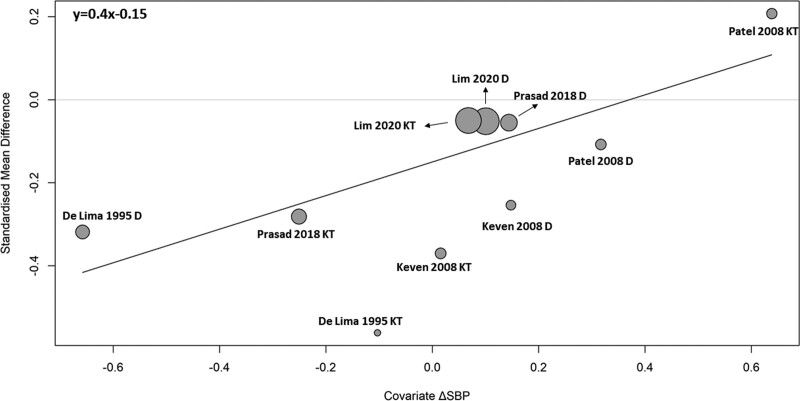
Results: From 7416 records, 46 studies met the inclusion criteria with 4122 included participants in total. Longitudinal studies demonstrated an improvement of LVMI after KT -0.44 g/m2 (-0.60 to -0.28). Blood pressure was identified as a predictor of LVMI change. A younger age at the time of KT and well-controlled anemia were also associated with regression of LVH. In studies longitudinally comparing patients on dialysis and renal transplant recipients, no difference was detected -0.09 g/m2 (-0.33 to 0.16). Meta-regression using changes of systolic blood pressure as a covariate showed an association between higher blood pressure and an increase in LVMI, regardless of the modality of renal replacement treatment.
Conclusions: In conclusion, our results indicated a potential cardiovascular benefit, defined as the regression of LVH, after KT. This benefit was primarily attributed to improved blood pressure control rather than the transplantation itself.
Copyright © 2024 The Author(s). Transplantation Direct. Published by Wolters Kluwer Health, Inc.
Conflict of interest statement
J.K. received lecture fees and honoraria from Sanofi Genzyme, Alexion, Shire Takeda, Amicus, Chiesi, and Novartis. K.S.-O. received lecture fees and honoraria from Boehringer Ingelheim, AstraZeneca, Bayer, Vifor, Alexion, Novartis, BioPorto Diagnostics, and Abionyx. B.M.W.S. received lecture fees and honoraria from ADVITOS, Amgen, AstraZeneca, Bayer Vital, Berlin Chemie-Menarini, CytoSorbents, Daichii Sankyo, Miltenyi, and Pocard. The other authors declare no conflicts of interest.
Figures
References
-
- Levy D, Garrison RJ, Savage DD, et al. . Prognostic implications of echocardiographically determined left ventricular mass in the Framingham Heart Study. N Engl J Med. 1990;322:1561–1566. - PubMed
-
- De Simone G, Izzo R, Chinali M, et al. . Does information on systolic and diastolic function improve prediction of a cardiovascular event by left ventricular hypertrophy in arterial hypertension? Hypertension. 2010;56:99–104. - PubMed
-
- Bombelli M, Facchetti R, Carugo S, et al. . Left ventricular hypertrophy increases cardiovascular risk independently of in-office and out-of-office blood pressure values. J Hypertens. 2009;27:2458–2464. - PubMed
-
- Bombelli M, Facchetti R, Cuspidi C, et al. . Prognostic significance of left atrial enlargement in a general population: results of the PAMELA study. Hypertension. 2014;64:1205–1211. - PubMed
LinkOut - more resources
Full Text Sources
Miscellaneous
