. 2024 May 1;7(5):e247535.
doi: 10.1001/jamanetworkopen.2024.7535.

β-Blocker Use and Clinical Outcomes in Patients With COPD Following Acute Myocardial Infarction

Affiliations

β-Blocker Use and Clinical Outcomes in Patients With COPD Following Acute Myocardial Infarction

David C LaFon et al. JAMA Netw Open. .

Abstract

Importance: While β-blockers are associated with decreased mortality in cardiovascular disease (CVD), exacerbation-prone patients with chronic obstructive pulmonary disease (COPD) who received metoprolol in the Beta-Blockers for the Prevention of Acute Exacerbations of Chronic Obstructive Pulmonary Disease (BLOCK-COPD) trial experienced increased risk of exacerbations requiring hospitalization. However, the study excluded individuals with established indications for the drug, raising questions about the overall risk and benefit in patients with COPD following acute myocardial infarction (AMI).

Objective: To investigate whether β-blocker prescription at hospital discharge is associated with increased risk of mortality or adverse cardiopulmonary outcomes in patients with COPD and AMI.

Design, setting, and participants: This prospective, longitudinal cohort study with 6 months of follow-up enrolled patients aged 35 years or older with COPD who underwent cardiac catheterization for AMI at 18 BLOCK-COPD network hospitals in the US from June 2020 through May 2022.

Exposure: Prescription for any β-blocker at hospital discharge.

Main outcomes and measures: The primary outcome was time to the composite outcome of death or all-cause hospitalization or revascularization. Secondary outcomes included death, hospitalization, or revascularization for CVD events, death or hospitalization for COPD or respiratory events, and treatment for COPD exacerbations.

Results: Among 3531 patients who underwent cardiac catheterization for AMI, prevalence of COPD was 17.1% (95% CI, 15.8%-18.4%). Of 579 total patients with COPD and AMI, 502 (86.7%) were prescribed a β-blocker at discharge. Among the 562 patients with COPD included in the final analysis, median age was 70.0 years (range, 38.0-94.0 years) and 329 (58.5%) were male; 553 of the 579 patients (95.5%) had follow-up information. Among those discharged with β-blockers, there was no increased risk of the primary end point of all-cause mortality, revascularization, or hospitalization (hazard ratio [HR], 1.01; 95% CI, 0.66-1.54; P = .96) or of cardiovascular events (HR, 1.11; 95% CI, 0.65-1.92; P = .69), COPD-related or respiratory events (HR, 0.75; 95% CI, 0.34-1.66; P = .48), or treatment for COPD exacerbations (rate ratio, 1.01; 95% CI, 0.53-1.91; P = .98).

Conclusions and relevance: In this cohort study, β-blocker prescription at hospital discharge was not associated with increased risk of adverse outcomes in patients with COPD and AMI. These findings support use of β-blockers in patients with COPD and recent AMI.


Conflict of interest statement

Conflict of Interest Disclosures: Dr LaFon reported receiving grants from the National Institutes of Health (NIH), Merck Corporation, and Jeffrey Modell Foundation and personal fees from the Merck Corporation outside the submitted work. Dr Helgeson reported receiving grants from the US Department of Defense (DOD) during the conduct of the study and from Fisher & Paykel Healthcare outside the submitted work. Ms Lindberg reported receiving grants from the DOD during the conduct of the study. Ms Voelker reported receiving grants from the DOD during the conduct of the study. Dr Bhatt reported receiving personal fees from Sanofi, Regeneron, GSK, Boehringer Ingelheim, Apreo, IntegrityCE, and Medscape and grants from Nuvaira and Genentech outside the submitted work. Dr Cassady reported receiving grants from the DOD during the conduct of the study. Dr Criner reported receiving grants from Temple University during the conduct of the study; receiving grants from GSK, Chiesi, Pulmonx, AstraZeneca, and Gilead outside the submitted work; serving on data and safety monitoring boards for Chiesi, Sanofi, and Olympus education outside the submitted work; and receiving consulting fees from GSK, AstraZeneca Chiesi, Regeneron, Sanofi, and Apreo. Dr Hatipoglu reported receiving grants from the DOD and a subaward from the University of Alabama at Birmingham on a DOD grant during the conduct of the study. Dr Kaminsky reported receiving grants from the University of Vermont Larner College of Medicine during the conduct of the study, being a speaker for MGC Diagnostics, Inc, and Vitalograph, Inc, and receiving author fees from Elsevier, Inc, and UpToDate, Inc. Dr Kunisaki reported receiving grants from the DOD during the conduct of the study and receiving personal fees from Allergan/AbbVie for consulting and from Nuvaira and Organicell for serving on data and safety monitoring boards outside the submitted work. Dr Lazarus reported receiving grants from the DOD and being a principal investigator of BLOCK-MI, the DOD-sponsored network that designed and conducted this study, during the conduct of the study; receiving grants from and being a principal investigator of the American Lung Association Airway Clinical Research Centers Network outside the submitted work; and receiving grants from the Pulmonary Trials Cooperative (PTC) and being a principal investigator of the National Heart, Lung, and Blood Institute (NHLBI)–supported PTC Network outside the submitted work. Dr McEvoy reported receiving grants from the DOD during the conduct of the study and from the NHLBI outside the submitted work. Dr Reed reported receiving grants from the DOD during the conduct of the study. Dr Sciurba reported receiving institutional grant support from Sanofi/Regeneron, AstraZeneca, Verona Pharma, Nuvaira, Gala Therapeutics, Pulmonx, the NIH, the Agency for Healthcare Research and Quality, and the COPD Foundation during the conduct of the study and personal fees from Sanofi/Regeneron, AstraZeneca, GSK, and Boehringer Ingelheim for serving on advisory boards outside the submitted work. Dr Stringer reported receiving grants from Genentech, AstraZeneca, Roche, and Puretech during the conduct of the study; serving as director of a pulmonary rehabilitation program for Little Company of Mary and as codirector of the Harbor–UCLA Medical Center’s Long Haul COVID Clinic; being a principal investigator of the Long Haul COVID Exercise Rehabilitation Study funded by the Pulmonary Education and Research Foundation at Harbor–UCLA Medical Center; performing clinical trials research with Genentech, Roche, AstraZeneca, Puretech, the NIH, and the DOD; and being an author of a textbook for Lippincott Williams & Wilkins. Dr Dransfield reported receiving grants from the DOD during the conduct of the study; receiving grants from the NIH and the American Lung Association and personal fees from GSK, Apreo, Teva, Genentech, Novartis, and AstraZeneca outside the submitted work; receiving personal fees from and being the Editor in Chief of the Journal of the COPD Foundation outside the submitted work; and serving on the board of directors of the COPD Foundation. No other disclosures were reported.

Figures

Figure 1.
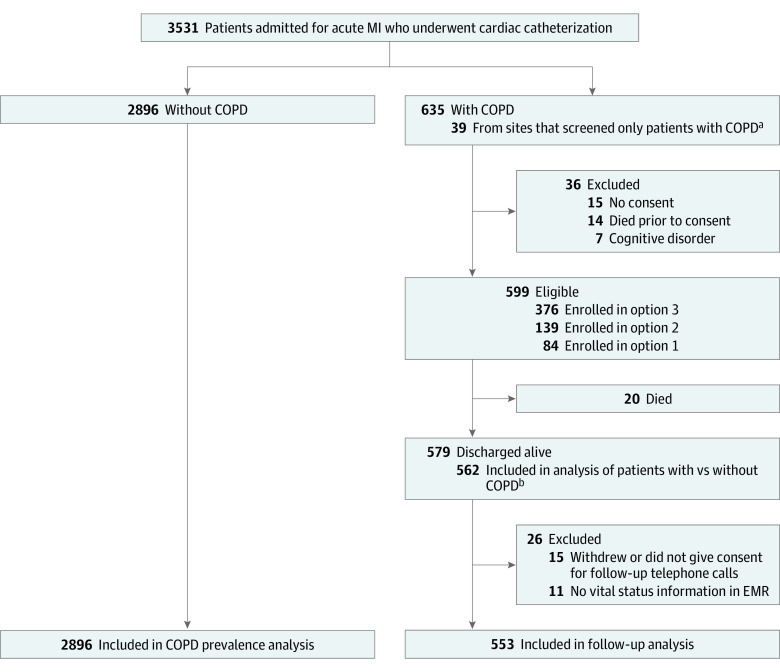
Figure 1.. Screening, Enrollment, and Follow-Up
Option 1 was an in-person visit during hospitalization with follow-up telephone calls and electronic medical record (EMR) review at 3 and 6 months; option 2 was EMR review during hospitalization and telephone calls and EMR review at 3 and 6 months; and option 3 was EMR review during hospitalization and follow-up EMR review at 3 and 6 months. COPD indicates chronic obstructive pulmonary disease; MI, myocardial infarction. aExcluded from COPD prevalence estimate. bExcluded from 2 sites that screened only patients with COPD.
Figure 2.
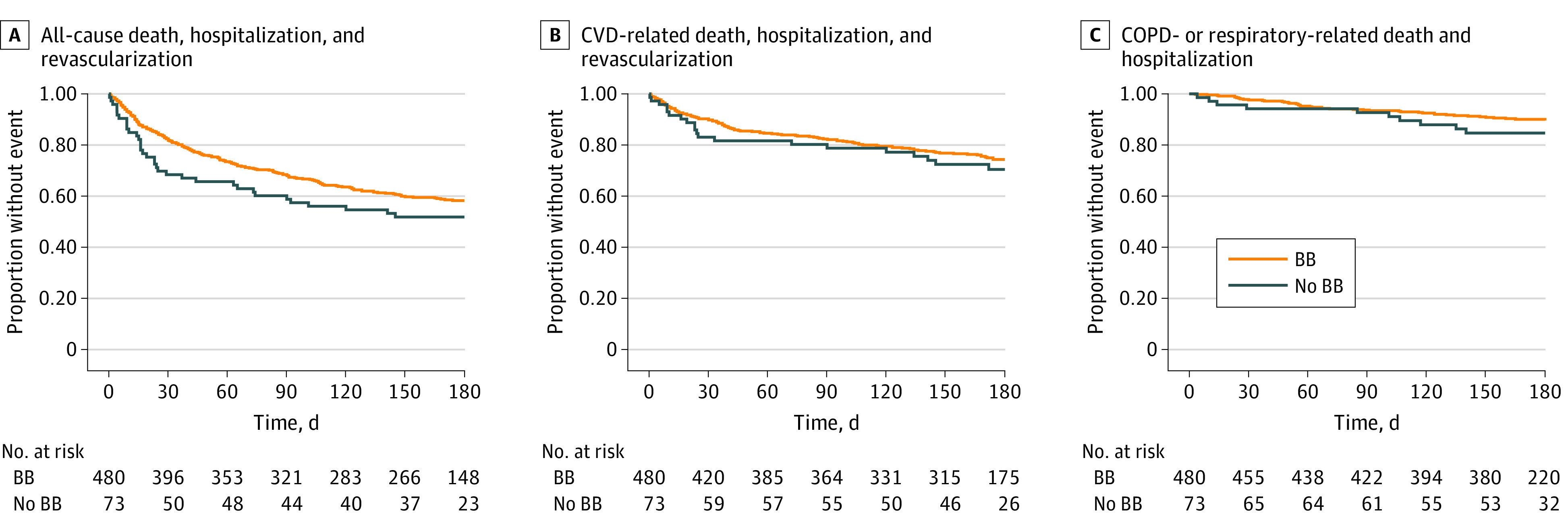
Figure 2.. Kaplan-Meier Estimates of Primary and Secondary Outcomes
BB indicates β-blocker; COPD, chronic obstructive pulmonary disease; and CVD, cardiovascular disease.

References

    1. GBD 2017 Causes of Death Collaborators . Global, regional, and national age-sex-specific mortality for 282 causes of death in 195 countries and territories, 1980-2017: a systematic analysis for the Global Burden of Disease Study 2017. Lancet. 2018;392(10159):1736-1788. doi: 10.1016/S0140-6736(18)32203-7 - DOI - PMC - PubMed
    1. Bhatt SP, Dransfield MT. Chronic obstructive pulmonary disease and cardiovascular disease. Transl Res. 2013;162(4):237-251. doi: 10.1016/j.trsl.2013.05.001 - DOI - PubMed
    1. Chen W, Thomas J, Sadatsafavi M, FitzGerald JM. Risk of cardiovascular comorbidity in patients with chronic obstructive pulmonary disease: a systematic review and meta-analysis. Lancet Respir Med. 2015;3(8):631-639. doi: 10.1016/S2213-2600(15)00241-6 - DOI - PubMed
    1. Hjalmarson A, Elmfeldt D, Herlitz J, et al. Effect on mortality of metoprolol in acute myocardial infarction: a double-blind randomised trial. Lancet. 1981;2(8251):823-827. doi: 10.1016/S0140-6736(81)91101-6 - DOI - PubMed
    1. Gottlieb SS, McCarter RJ, Vogel RA. Effect of beta-blockade on mortality among high-risk and low-risk patients after myocardial infarction. N Engl J Med. 1998;339(8):489-497. doi: 10.1056/NEJM199808203390801 - DOI - PubMed

Publication types

MeSH terms