


Photobiomodulation in experimental models of Alzheimer's disease: state-of-the-art and translational perspectives
- PMID: 38773642
- PMCID: PMC11106984
- DOI: 10.1186/s13195-024-01484-x
Photobiomodulation in experimental models of Alzheimer's disease: state-of-the-art and translational perspectives
Abstract
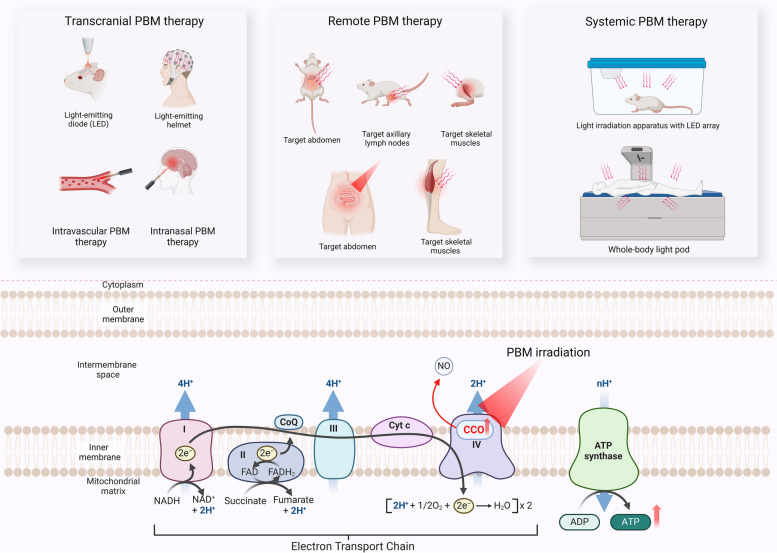
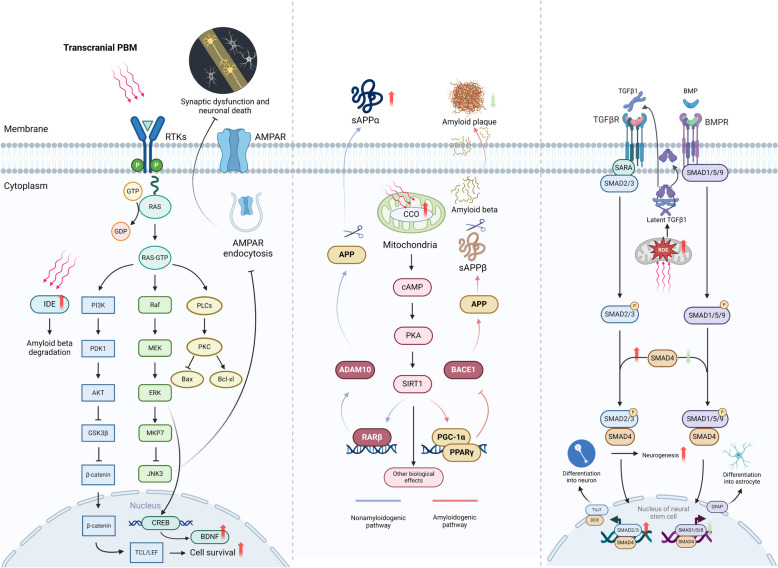
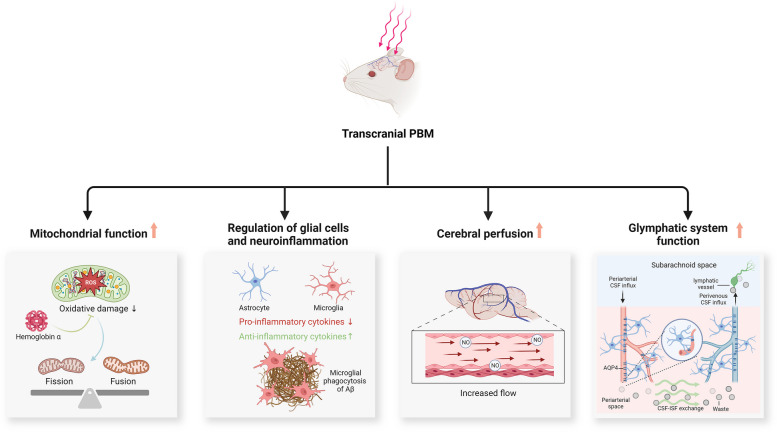
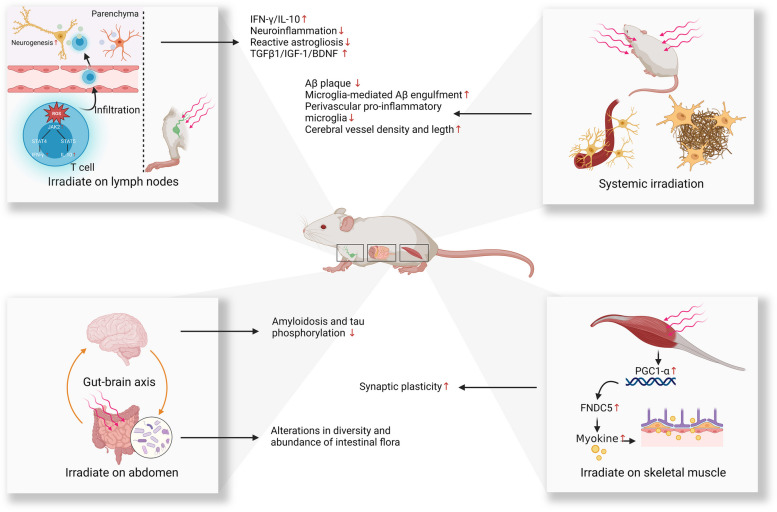
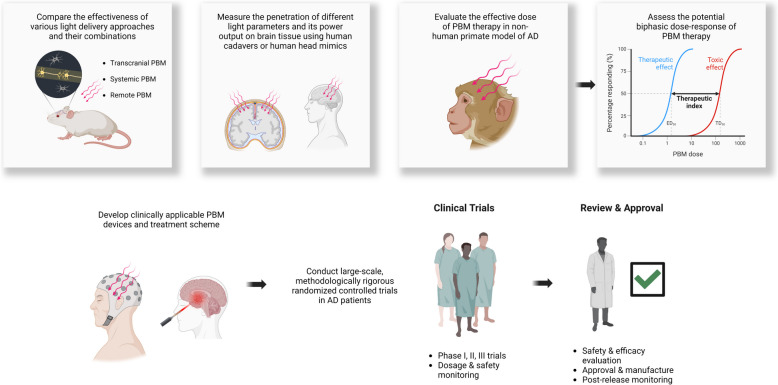
Alzheimer's disease (AD) poses a significant public health problem, affecting millions of people across the world. Despite decades of research into therapeutic strategies for AD, effective prevention or treatment for this devastating disorder remains elusive. In this review, we discuss the potential of photobiomodulation (PBM) for preventing and alleviating AD-associated pathologies, with a focus on the biological mechanisms underlying this therapy. Future research directions and guidance for clinical practice for this non-invasive and non-pharmacological therapy are also highlighted. The available evidence indicates that different treatment paradigms, including transcranial and systemic PBM, along with the recently proposed remote PBM, all could be promising for AD. PBM exerts diverse biological effects, such as enhancing mitochondrial function, mitigating the neuroinflammation caused by activated glial cells, increasing cerebral perfusion, improving glymphatic drainage, regulating the gut microbiome, boosting myokine production, and modulating the immune system. We suggest that PBM may serve as a powerful therapeutic intervention for AD.
Keywords: Alzheimer’s disease (AD); Experimental models; Neurodegeneration; Photobiomodulation (PBM); Therapy.
© 2024. The Author(s).
Conflict of interest statement
The authors declare no competing interests.
Figures
References
-
- 2023 Alzheimer’s disease facts and figures. Alzheimers Dement. 2023;19:1598–695. - PubMed
Publication types
MeSH terms
LinkOut - more resources
Full Text Sources
Medical
