


The impact of historical redlining on neurosurgeon distribution and reimbursement in modern neighborhoods
- PMID: 38774047
- PMCID: PMC11106381
- DOI: 10.3389/fpubh.2024.1364323
The impact of historical redlining on neurosurgeon distribution and reimbursement in modern neighborhoods
Abstract
Background: This study examines the lasting impact of historical redlining on contemporary neurosurgical care access, highlighting the need for equitable healthcare in historically marginalized communities.
Objective: To investigate how redlining affects neurosurgeon distribution and reimbursement in U.S. neighborhoods, analyzing implications for healthcare access.
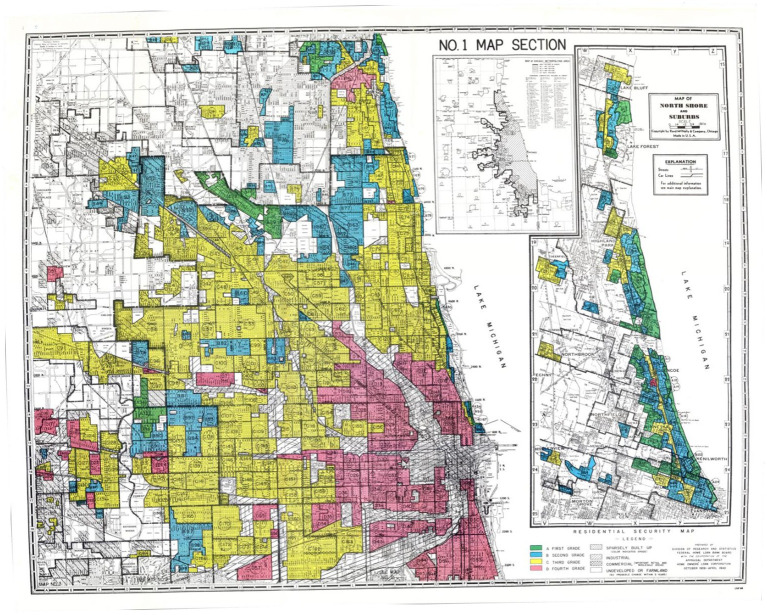
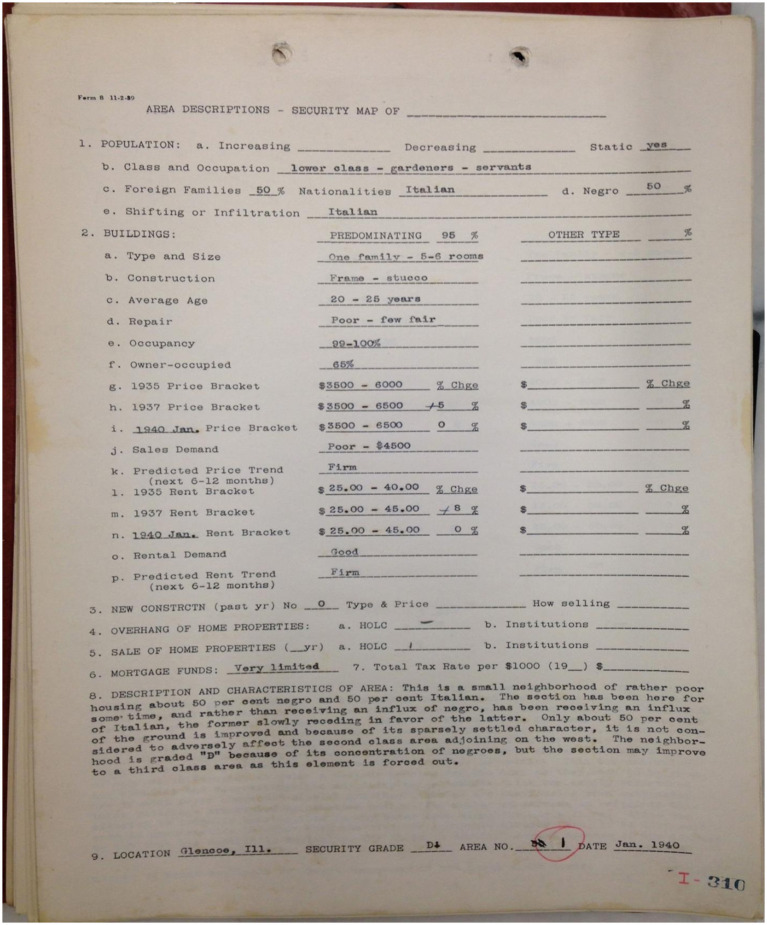
Methods: An observational study was conducted using data from the Center for Medicare and Medicaid Services (CMS) National File, Home Owner's Loan Corporation (HOLC) neighborhood grades, and demographic data to evaluate neurosurgical representation across 91 U.S. cities, categorized by HOLC Grades (A, B, C, D) and gentrification status.
Results: Of the 257 neighborhoods, Grade A, B, C, and D neighborhoods comprised 5.40%, 18.80%, 45.8%, and 30.0% of the sample, respectively. Grade A, B, and C neighborhoods had more White and Asian residents and less Black residents compared to Grade D neighborhoods (p < 0.001). HOLC Grade A (OR = 4.37, 95%CI: 2.08, 9.16, p < 0.001), B (OR = 1.99, 95%CI: 1.18, 3.38, p = 0.011), and C (OR = 2.37, 95%CI: 1.57, 3.59, p < 0.001) neighborhoods were associated with a higher representation of neurosurgeons compared to Grade D neighborhoods. Reimbursement disparities were also apparent: neurosurgeons practicing in HOLC Grade D neighborhoods received significantly lower reimbursements than those in Grade A neighborhoods ($109,163.77 vs. $142,999.88, p < 0.001), Grade B neighborhoods ($109,163.77 vs. $131,459.02, p < 0.001), and Grade C neighborhoods ($109,163.77 vs. $129,070.733, p < 0.001).
Conclusion: Historical redlining continues to shape access to highly specialized healthcare such as neurosurgery. Efforts to address these disparities must consider historical context and strive to achieve more equitable access to specialized care.
Keywords: access; healthcare; neurosurgery; redlining; structural racism.
Copyright © 2024 Kabangu, Dugan, Joseph, Hernandez, Newsome-Cuby, Fowler, Bah, Fry and Eden.
Conflict of interest statement
The authors declare that the research was conducted in the absence of any commercial or financial relationships that could be construed as a potential conflict of interest.
Figures
References
-
- Plascak JJ, Beyer K, Xu X, Stroup AM, Jacob G, Llanos AAM. Association between residence in historically redlined districts indicative of structural racism and racial and ethnic disparities in breast Cancer outcomes. JAMA Netw Open. (2022) 5:e2220908. doi: 10.1001/jamanetworkopen.2022.20908, PMID: - DOI - PMC - PubMed
-
- Deo SV, Motairek I, Nasir K, Mentias A, Elgudin Y, Virani SS, et al. Association between historical neighborhood redlining and cardiovascular outcomes among US veterans with atherosclerotic cardiovascular diseases. JAMA Netw Open. (2023) 6:e2322727. doi: 10.1001/jamanetworkopen.2023.22727, PMID: - DOI - PMC - PubMed
-
- Nardone A, Casey JA, Morello-Frosch R, Mujahid M, Balmes JR, Thakur N. Associations between historical residential redlining and current age-adjusted rates of emergency department visits due to asthma across eight cities in California: an ecological study. Lancet Planet Health. (2020) 4:e24–31. doi: 10.1016/S2542-5196(19)30241-4, PMID: - DOI - PMC - PubMed
Publication types
MeSH terms
LinkOut - more resources
Full Text Sources
