


Drugs targeting CTGF in the treatment of pulmonary fibrosis
- PMID: 38774993
- PMCID: PMC11109635
- DOI: 10.1111/jcmm.18448
Drugs targeting CTGF in the treatment of pulmonary fibrosis
Abstract
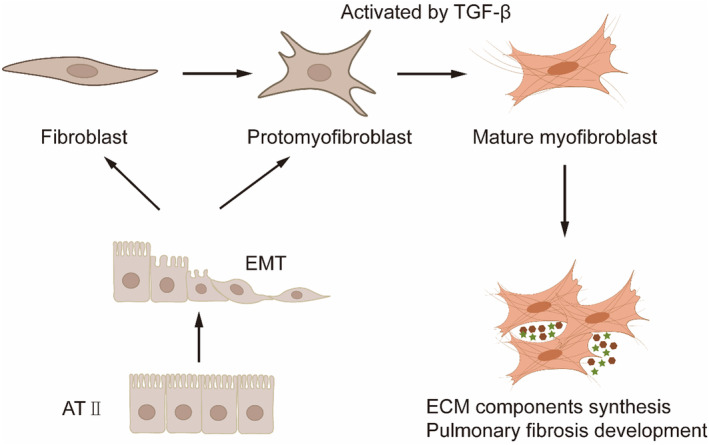
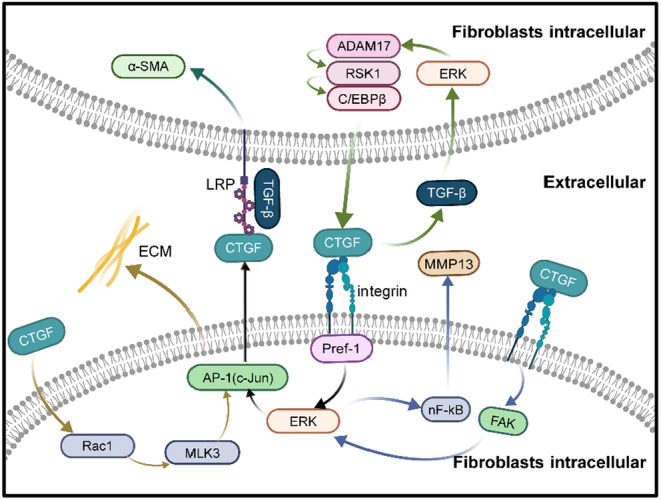
Pulmonary fibrosis represents the final alteration seen in a wide variety of lung disorders characterized by increased fibroblast activity and the accumulation of substantial amounts of extracellular matrix, along with inflammatory damage and the breakdown of tissue architecture. This condition is marked by a significant mortality rate and a lack of effective treatments. The depositing of an excessive quantity of extracellular matrix protein follows the damage to lung capillaries and alveolar epithelial cells, leading to pulmonary fibrosis and irreversible damage to lung function. It has been proposed that the connective tissue growth factor (CTGF) plays a critical role in the advancement of pulmonary fibrosis by enhancing the accumulation of the extracellular matrix and exacerbating fibrosis. In this context, the significance of CTGF in pulmonary fibrosis is examined, and a summary of the development of drugs targeting CTGF for the treatment of pulmonary fibrosis is provided.
Keywords: CTGF; drugs; pulmonary fibrosis; treatment.
© 2024 The Author(s). Journal of Cellular and Molecular Medicine published by Foundation for Cellular and Molecular Medicine and John Wiley & Sons Ltd.
Conflict of interest statement
The authors confirm that there are no conflicts of interest.
Figures
References
Publication types
MeSH terms
Substances
LinkOut - more resources
Full Text Sources
Medical
Miscellaneous
