Review
. 2024 Jul 11;73(8):1376-1387.
doi: 10.1136/gutjnl-2024-331914.

Heavy arch: from inflammatory bowel diseases to metabolic disorders

Affiliations
Review

Heavy arch: from inflammatory bowel diseases to metabolic disorders

Timon E Adolph et al. Gut. .

Abstract

Background: Metabolic disorders and inflammatory bowel diseases (IBD) have captured the globe during Westernisation of lifestyle and related dietary habits over the last decades. Both disease entities are characterised by complex and heterogeneous clinical spectra linked to distinct symptoms and organ systems which, on a first glimpse, do not have many commonalities in clinical practice. However, experimental studies indicate a common backbone of inflammatory mechanisms in metabolic diseases and gut inflammation, and emerging clinical evidence suggests an intricate interplay between metabolic disorders and IBD.

Objective: We depict parallels of IBD and metabolic diseases, easily overlooked in clinical routine.

Design: We provide an overview of the recent literature and discuss implications of metabolic morbidity in patients with IBD for researchers, clinicians and healthcare providers.

Conclusion: The Western lifestyle and diet and related gut microbial perturbation serve as a fuel for metabolic inflammation in and beyond the gut. Metabolic disorders and the metabolic syndrome increasingly affect patients with IBD, with an expected negative impact for both disease entities and risk for complications. This concept implies that tackling the obesity pandemic exerts beneficial effects beyond metabolic health.

Keywords: CHRONIC LIVER DISEASE; INFLAMMATORY BOWEL DISEASE; NONALCOHOLIC STEATOHEPATITIS.


Conflict of interest statement

Competing interests: None declared.

Figures
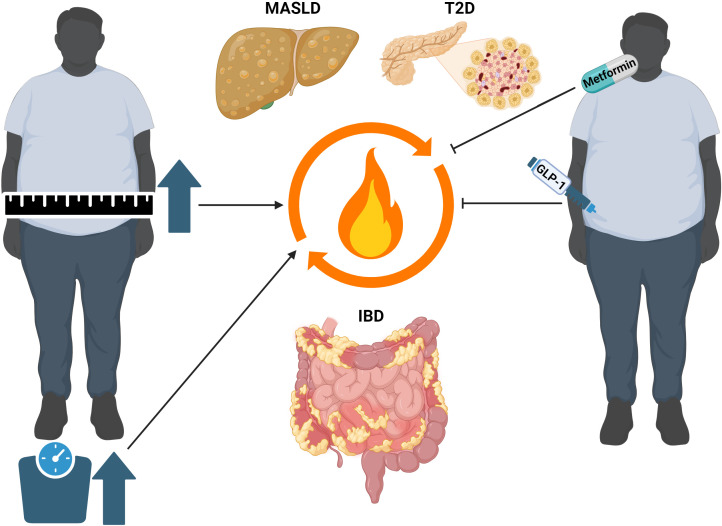
Figure 1
Figure 1
Clinical link between obesity and metabolic disorders with inflammatory bowel disease (IBD). Obesity and associated metabolic disorders such as metabolic dysfunction-associated steatotic liver disease (MASLD) and type 2 diabetes (T2D) seem to negatively influence the course of IBD. For example, visceral adiposity is associated with risk for flares in ulcerative colitis (UC) and Crohn’s disease (CD), and steatotic liver disease serves as an independent risk factor for the development of CD. In turn, the diagnosis of IBD increases the risk of developing MASLD and liver fibrosis when compared with the general population. Moreover, the treatment with antidiabetic agents with proven effects in metabolic diseases seems to reduce the risk for developing IBD and disease burden in patients with IBD.
Figure 2
Figure 2
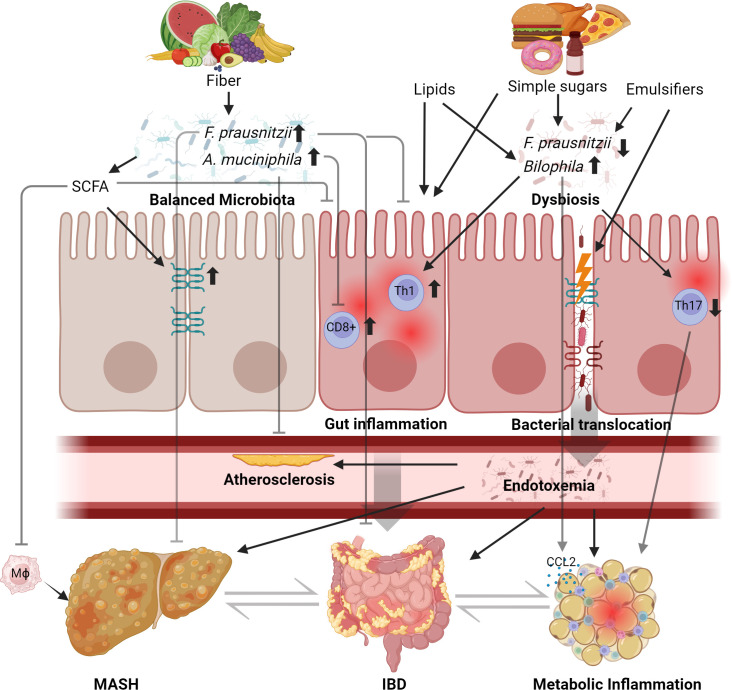
Mechanisms of diet-induced metabolic inflammation in mice. Studies in rodents demonstrated that dietary patterns and perturbation of the commensal microbiota affect susceptibility to gut inflammation and metabolic diseases, in humans exemplified by inflammatory bowel disease (IBD) and metabolic dsyfunction-associated steatohepatitis (MASH). A healthy diet, for example, a plant-based diet rich in fibres, supports the growth of arguably beneficial commensals such as Faecalibacterium prausnitzii and other commensals that produce short-chain fatty acids (SCFA). The diet and microbial commensalism may promote health or disease by modulation of the immune system. For example, liver injury and insulin resistance decreased in high-fat diet-fed mice supplemented with F. prausnitzii and F. prausnitzii attenuated experimental colitis. Microbial SCFA protects against experimental liver disease and macrophage infiltration, increases gut barrier function and ameliorates experimental gut inflammation . Similarly, supplementation of Akkermansia muciniphila (which vanishes in Western microbiomes) attenuates endotoxaemia-induced metabolic inflammation and atherosclerosis and ameliorates colitis severity by preventing the infiltration of CD8+ T cells. By contrast, a Western diet containing, for example, dietary emulsifiers, simple carbohydrates (sugar) and long-chain fatty acids and cholesterol (lipids) may worsen intestinal inflammation and promote metabolic disorders, in part by alteration and function of the commensal gut microbiota. For example, a Western diet perturbs gut barrier dysfunction and evokes endotoxaemia fuelling metabolic inflammation in and beyond the gut of mice. IBD, inflammatory bowel disease.
Figure 3
Figure 3
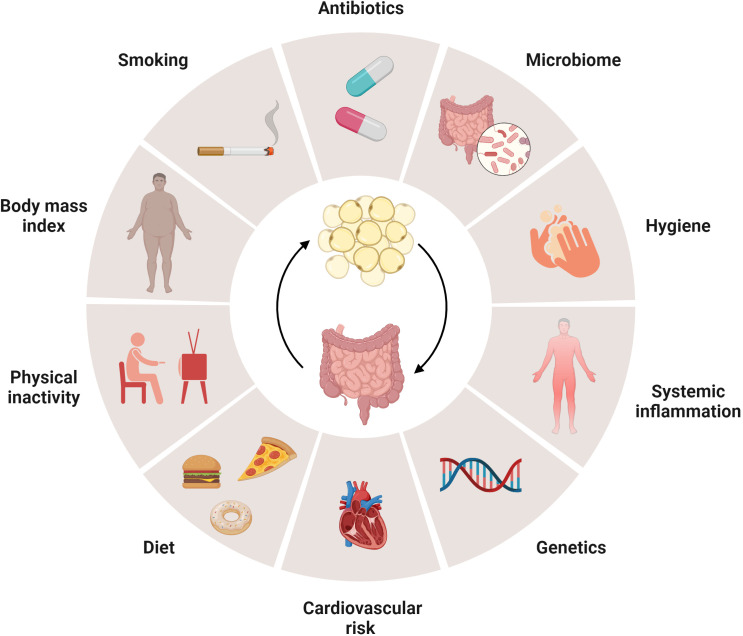
Metabolic inflammation in obesity and related disorders and in inflammatory bowel disease (IBD). The pathophysiology of metabolic disorders including metabolic syndrome (MS), type 2 diabetes (T2D) or metabolic dysfunction-associated steatotic liver disease (MASLD) shares considerable similarities with IBD, which is supported by experimental studies summarised in figure 2. Westernisation of lifestyle is considered to promote the development of these disease entities as incidence and prevalence are rising worldwide, with several risk factors that are shared by metabolic diseases and IBD. Experimental models indicate that similar mechanisms, such as gut microbial dysbiosis and nutrient excess, promote metabolic inflammation in obesity and related disorders and IBD alike.

References

    1. Grundy SM. Metabolic syndrome pandemic. Arterioscler Thromb Vasc Biol 2008;28:629–36. 10.1161/ATVBAHA.107.151092 - DOI - PubMed
    1. International Diabetes Federation . IDF Diabetes Atlas. 10th edn. Brussels, Belgium, 2021. Available: https://www.diabetesatlas.org
    1. Koliaki C, Dalamaga M, Liatis S. Update on the obesity epidemic: after the sudden rise, is the upward trajectory beginning to flatten Curr Obes Rep 2023;12:514–27. 10.1007/s13679-023-00527-y - DOI - PMC - PubMed
    1. Ng SC, Shi HY, Hamidi N, et al. Worldwide incidence and prevalence of inflammatory bowel disease in the 21st century: a systematic review of population-based studies. Lancet 2017;390:2769–78. 10.1016/S0140-6736(17)32448-0 - DOI - PubMed
    1. Kaplan GG, Windsor JW. The four Epidemiological stages in the global evolution of inflammatory bowel disease. Nat Rev Gastroenterol Hepatol 2021;18:56–66. 10.1038/s41575-020-00360-x - DOI - PMC - PubMed

Publication types

MeSH terms