


Enhanced antimicrobial efficacy and energy efficiency of low irradiance 405-nm light for bacterial decontamination
- PMID: 38777923
- PMCID: PMC11111507
- DOI: 10.1007/s00203-024-03999-1
Enhanced antimicrobial efficacy and energy efficiency of low irradiance 405-nm light for bacterial decontamination
Abstract
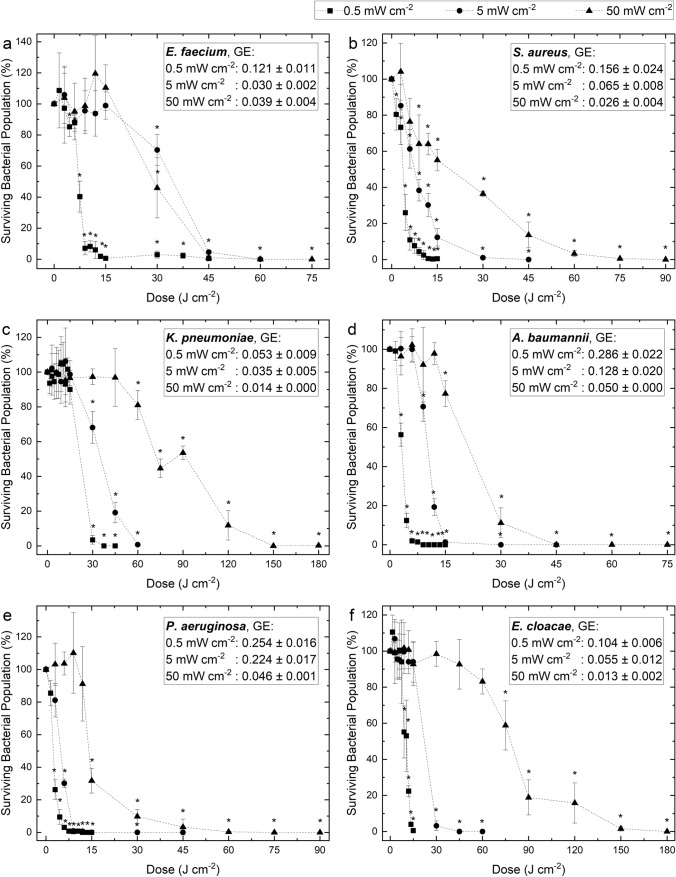
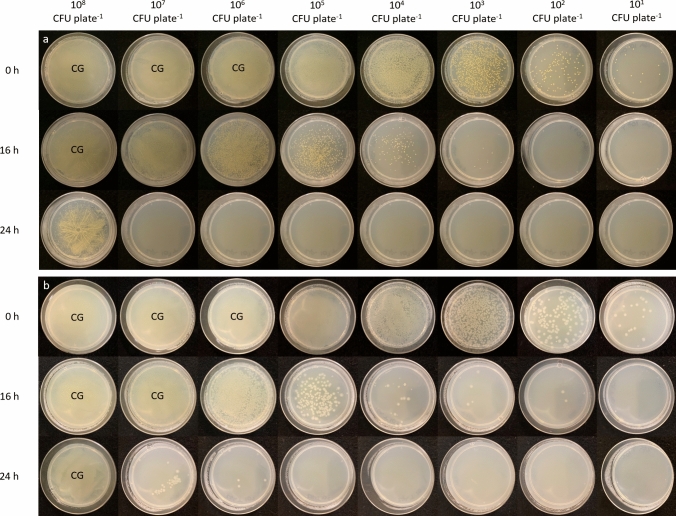
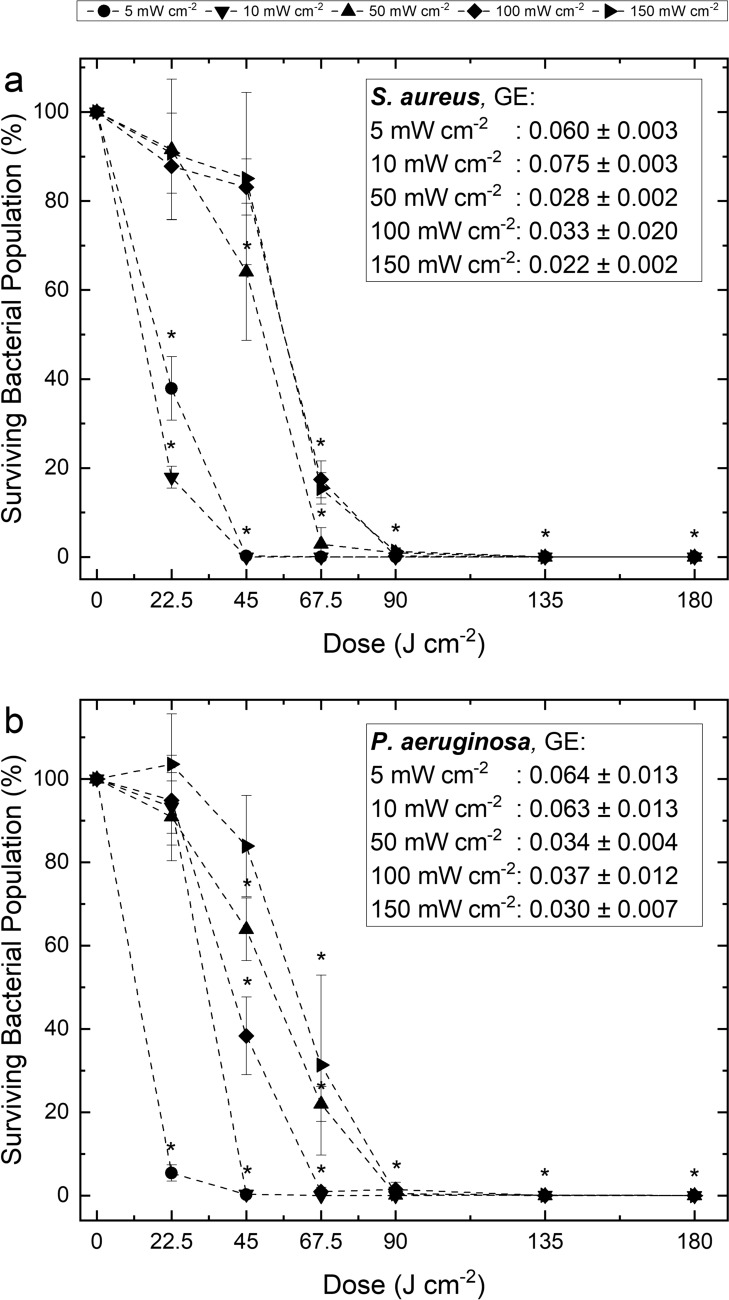
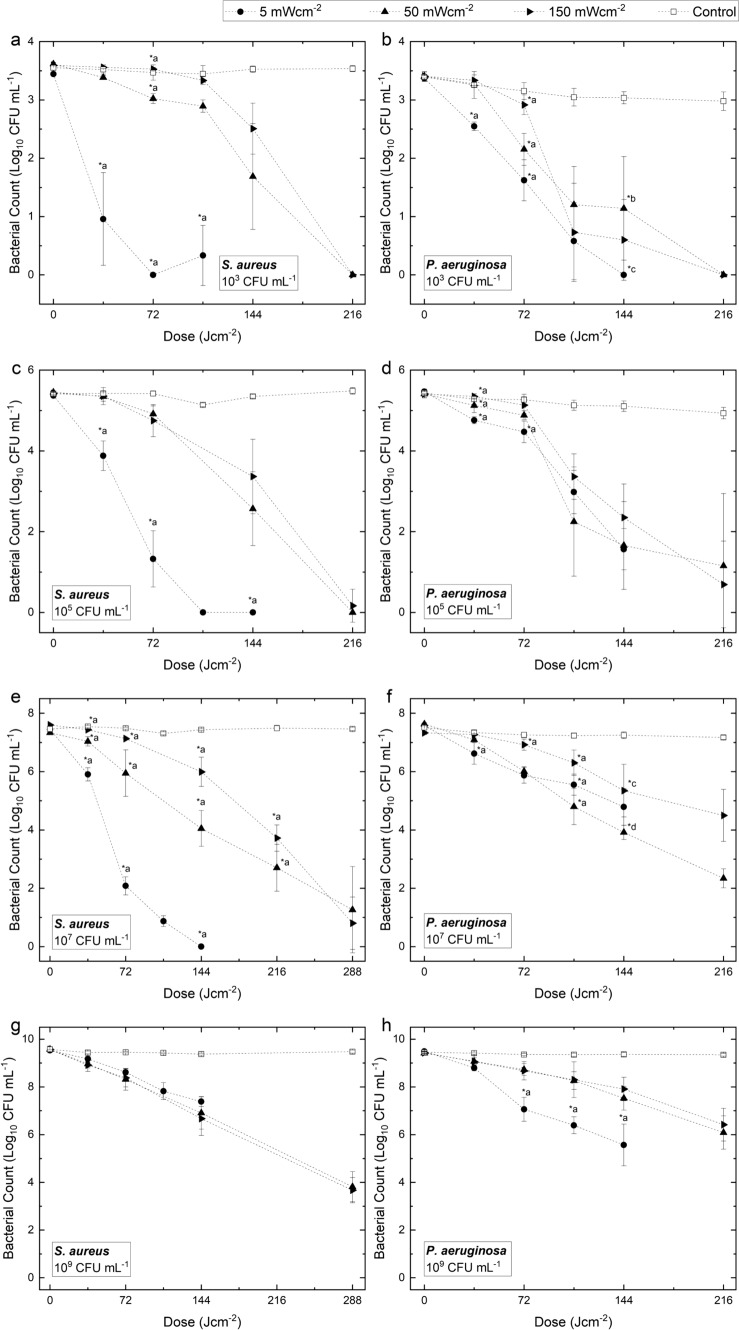
Due to its increased safety over ultraviolet light, there is interest in the development of antimicrobial violet-blue light technologies for infection control applications. To ensure compatibility with exposed materials and tissue, the light irradiances and dose regimes used must be suitable for the target application. This study investigates the antimicrobial dose responses and germicidal efficiency of 405 nm violet-blue light when applied at a range of irradiance levels, for inactivation of surface-seeded and suspended bacteria. Bacteria were seeded onto agar surfaces (101-108 CFUplate-1) or suspended in PBS (103-109 CFUmL-1) and exposed to increasing doses of 405-nm light (≤ 288 Jcm-2) using various irradiances (0.5-150 mWcm-2), with susceptibility at equivalent light doses compared. Bacterial reductions ≥ 96% were demonstrated in all cases for lower irradiance (≤ 5 mWcm-2) exposures. Comparisons indicated, on a per unit dose basis, that significantly lower doses were required for significant reductions of all species when exposed at lower irradiances: 3-30 Jcm-2/0.5 mWcm-2 compared to 9-75 Jcm-2/50 mWcm-2 for low cell density (102 CFUplate-1) surface exposures and 22.5 Jcm-2/5 mWcm-2 compared to 67.5 Jcm-2/150 mWcm-2 for low density (103 CFUmL-1) liquid exposures (P ≤ 0.05). Similar patterns were observed at higher densities, excluding S. aureus exposed at 109 CFUmL-1, suggesting bacterial density at predictable levels has minimal influence on decontamination efficacy. This study provides fundamental evidence of the greater energy efficacy of 405-nm light for inactivation of clinically-significant pathogens when lower irradiances are employed, further supporting its relevance for practical decontamination applications.
Keywords: 405 nm light; Antibacterial; Antimicrobial photoinactivation; ESKAPE pathogens; Low irradiance; Violet-blue light.
© 2024. The Author(s).
Conflict of interest statement
The intellectual property rights of the 405-nm light environmental decontamination system belong to the University of Strathclyde, and J.G.A., M.M. and S.J.M. are co-inventors.
Figures
References
-
- Amodeo D, Manzi P, Palma ID, Puccio A, Nante N, Barcaccia M, Marini D, Pietrella D. Efficacy of violet-blue (405 nm) LED lamps for disinfection of high-environmental-contact surfaces in healthcare facilities: Leading to the inactivation of microorganisms and reduction of MRSA contamination. Pathogens. 2023;12:1338. doi: 10.3390/pathogens12111338. - DOI - PMC - PubMed
-
- Bache SE, Maclean M, MacGregor SJ, Anderson JG, Gettinby G, Coia JE, Taggart I. Clinical studies of the high-intensity narrow-spectrum light environmental decontamination system (HINS-light EDS), for continuous disinfection in the burn unit inpatient and outpatient settings. Burns. 2012;38:69–76. doi: 10.1016/j.burns.2011.03.008. - DOI - PubMed
MeSH terms
Grants and funding
LinkOut - more resources
Full Text Sources
Molecular Biology Databases
