


Radiating diversification and niche conservatism jointly shape the inverse latitudinal diversity gradient of Potentilla L. (Rosaceae)
- PMID: 38778263
- PMCID: PMC11112792
- DOI: 10.1186/s12870-024-05083-8
Radiating diversification and niche conservatism jointly shape the inverse latitudinal diversity gradient of Potentilla L. (Rosaceae)
Abstract
Background: The latitudinal diversity gradient (LDG), characterized by an increase in species richness from the poles to the equator, is one of the most pervasive biological patterns. However, inverse LDGs, in which species richness peaks in extratropical regions, are also found in some lineages and their causes remain unclear. Here, we test the roles of evolutionary time, diversification rates, and niche conservatism in explaining the inverse LDG of Potentilla (ca. 500 species). We compiled the global distributions of ~ 90% of Potentilla species, and reconstructed a robust phylogenetic framework based on whole-plastome sequences. Next, we analyzed the divergence time, ancestral area, diversification rate, and ancestral niche to investigate the macroevolutionary history of Potentilla.
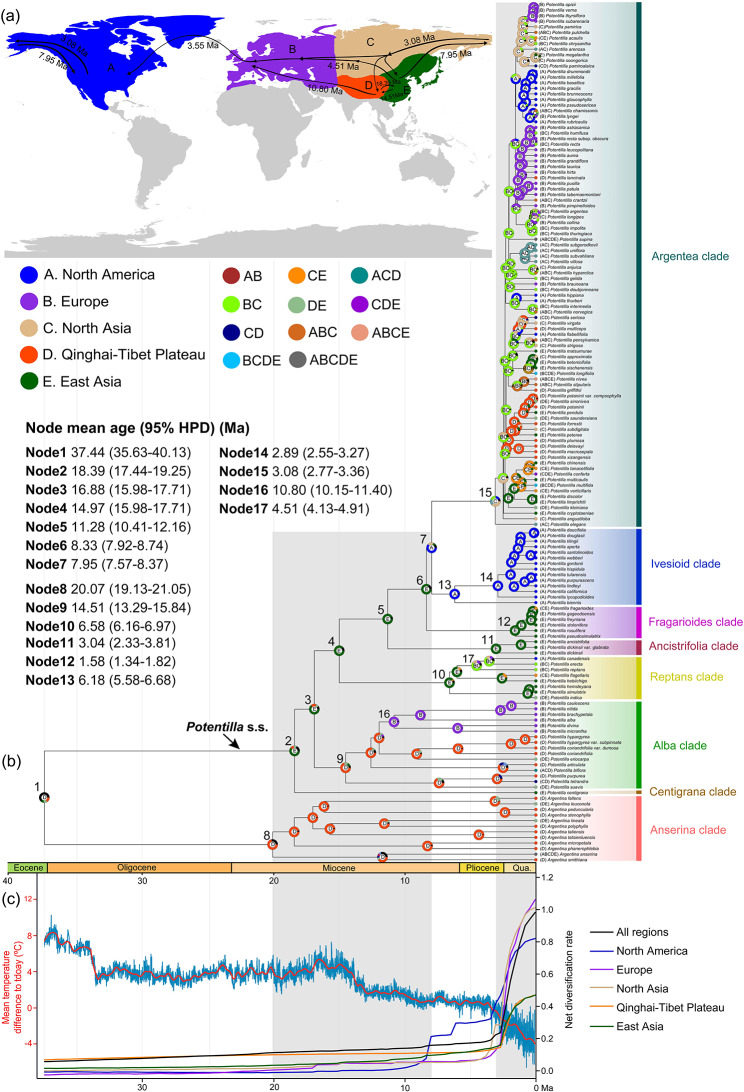
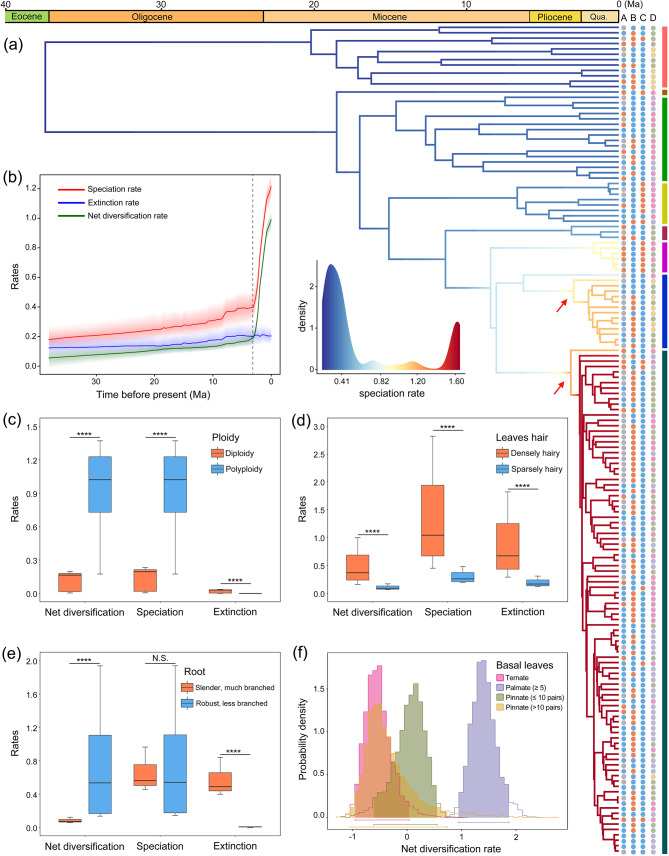
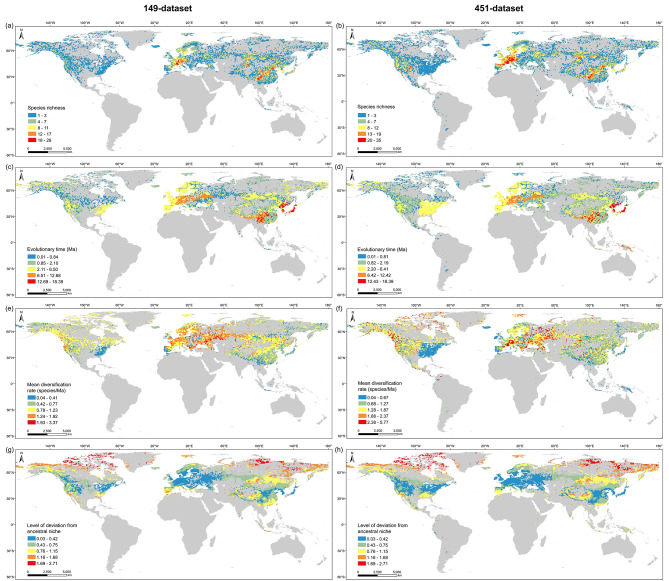
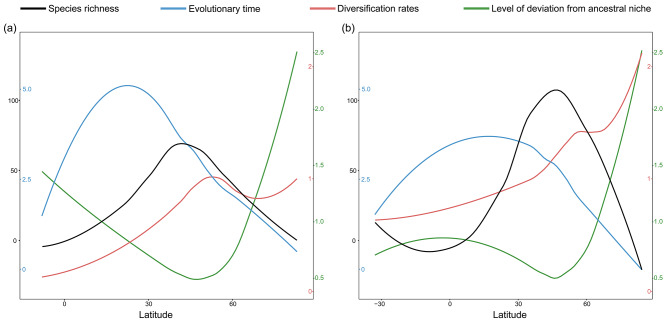
Results: The genus originated in the Qinghai-Tibet Plateau during the late Eocene and gradually spread to other regions of the Northern Hemisphere posterior to the late Miocene. Rapid cooling after the late Pliocene promoted the radiating diversification of Potentilla. The polyploidization, as well as some cold-adaptive morphological innovations, enhanced the adaptation of Potentilla species to the cold environment. Ancestral niche reconstruction suggests that Potentilla likely originated in a relatively cool environment. The species richness peaks at approximately 45 °N, a region characterized by high diversification rates, and the environmental conditions are similar to the ancestral climate niche. Evolutionary time was not significantly correlated with species richness in the latitudinal gradient.
Conclusions: Our results suggest that the elevated diversification rates in middle latitude regions and the conservatism in thermal niches jointly determined the inverse LDG in Potentilla. This study highlights the importance of integrating evolutionary and ecological approaches to explain the diversity pattern of biological groups on a global scale.
Keywords: Potentilla; Diversification; Evolutionary time; Inverse latitudinal diversity gradient; Niche conservatism; Species richness.
© 2024. The Author(s).
Conflict of interest statement
The authors declare no competing interests.
Figures
References
-
- Branstetter MG, Longino JT, Reyes-Lopez JL, Brady SG, Schultz TR. Out of the temperate zone: a phylogenomic test of the biogeographical conservatism hypothesis in a contrarian clade of ants. J Biogeogr. 2022;49(9):1640–53. doi: 10.1111/jbi.14462. - DOI
-
- Pyron RA, Burbrink FT. Can the tropical conservatism hypothesis explain temperate species richness patterns? An inverse latitudinal biodiversity gradient in the New World snake tribe Lampropeltini. Global Ecol Biogeogr. 2009;18(4):406–15. doi: 10.1111/j.1466-8238.2009.00462.x. - DOI
MeSH terms
Grants and funding
LinkOut - more resources
Full Text Sources
Medical
Research Materials
