


DNA methylation analysis of floral parts revealed dynamic changes during the development of homostylous Fagopyrum tataricum and heterostylous F. esculentum flowers
- PMID: 38783206
- PMCID: PMC11112930
- DOI: 10.1186/s12870-024-05162-w
DNA methylation analysis of floral parts revealed dynamic changes during the development of homostylous Fagopyrum tataricum and heterostylous F. esculentum flowers
Abstract
Background: Proper flower development is essential for plant reproduction, a crucial aspect of the plant life cycle. This process involves precisely coordinating transcription factors, enzymes, and epigenetic modifications. DNA methylation, a ubiquitous and heritable epigenetic mechanism, is pivotal in regulating gene expression and shaping chromatin structure. Fagopyrum esculentum demonstrates anti-hypertensive, anti-diabetic, anti-inflammatory, cardio-protective, hepato-protective, and neuroprotective properties. However, the heteromorphic heterostyly observed in F. esculentum poses a significant challenge in breeding efforts. F. tataricum has better resistance to high altitudes and harsh weather conditions such as drought, frost, UV-B radiation damage, and pests. Moreover, F. tataricum contains significantly higher levels of rutin and other phenolics, more flavonoids, and a balanced amino acid profile compared to common buckwheat, being recognised as functional food, rendering it an excellent candidate for functional food applications.
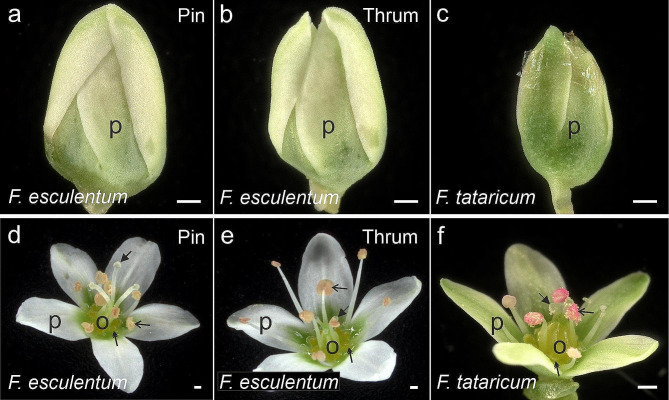
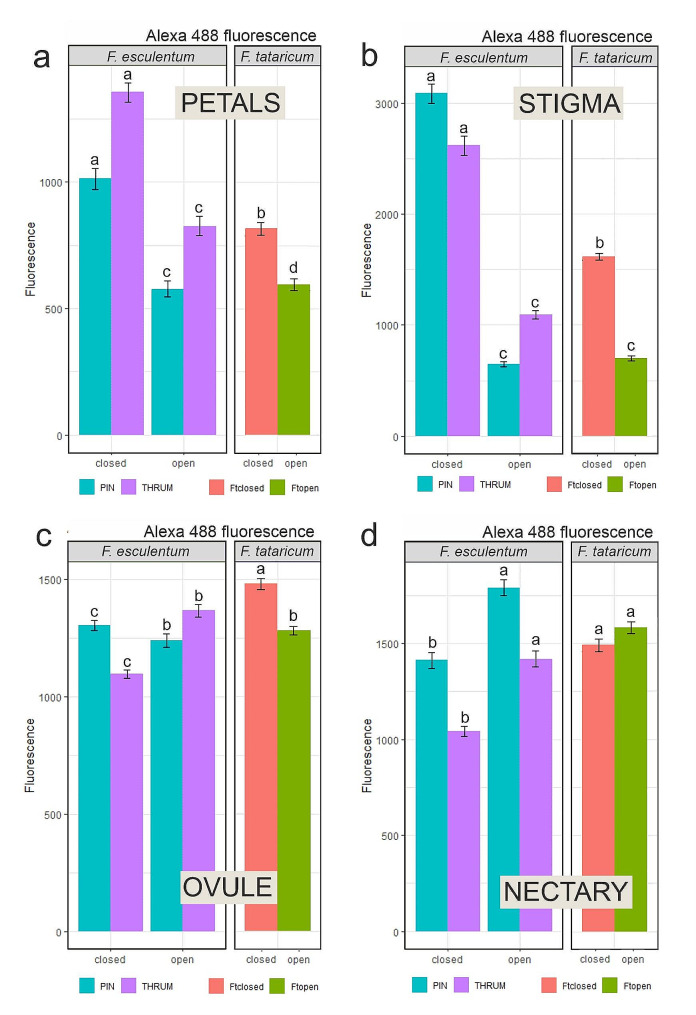
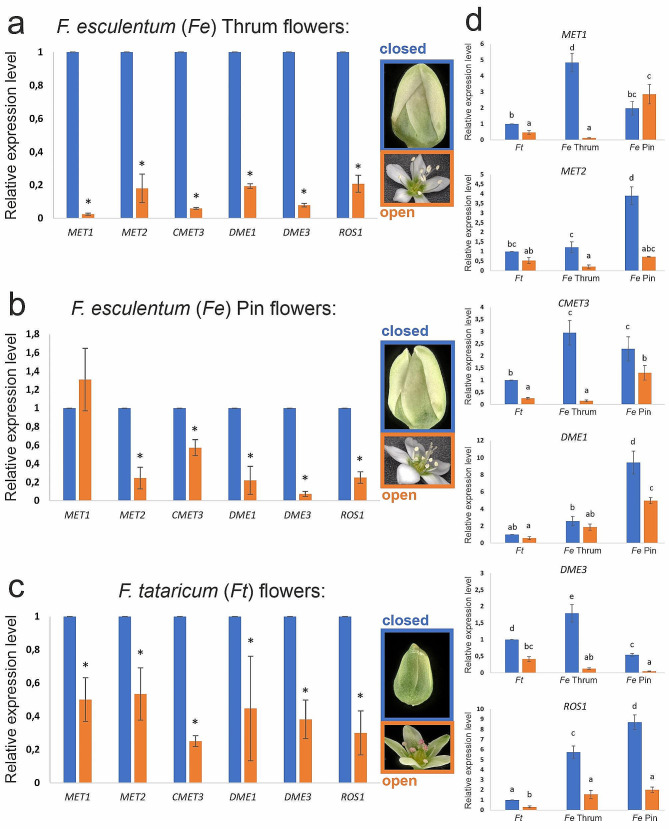
Results: This study aimed to compare the DNA methylation profiles between the Pin and Thrum flower components of F. esculentum, with those of self-fertile species of F. tataricum, to understand the potential role of this epigenetic mechanism in Fagopyrum floral development. Notably, F. tataricum flowers are smaller than those of F. esculentum (Pin and Thrum morphs). The decline in DNA methylation levels in the developed open flower components, such as petals, stigmas and ovules, was consistent across both species, except for the ovule in the Thrum morph. Conversely, Pin and Tartary ovules exhibited a minor decrease in DNA methylation levels. The highest DNA methylation level was observed in Pin stigma from closed flowers, and the most significant decrease was in Pin stigma from open flowers. In opposition, the nectaries of open flowers exhibited higher levels of DNA methylation than those of closed flowers. The decrease in DNA methylation might correspond with the downregulation of genes encoding methyltransferases.
Conclusions: Reduced overall DNA methylation and the expression of genes associated with these epigenetic markers in fully opened flowers of both species may indicate that demethylation is necessary to activate the expression of genes involved in floral development.
Keywords: Fagopyrum esculentum; Fagopyrum tataricum; DNA methylation; Epigenetics; Flowers; Gene expression; Heterostyly.
© 2024. The Author(s).
Conflict of interest statement
The authors declare no competing interests.
Figures

References
-
- Jha R, Zhang K, He Y, Mendler-Drienyovszki N, Magyar-Tábori K, Quinet M, Germ M, Kreft I, Meglič V, Ikeda K et al. Global nutritional challenges and opportunities: Buckwheat, a potential bridge between nutrient deficiency and food security. Trends Food Sci Technol 2024, 145.
-
- Kwon SJ, Roy SK, Choi JY, Park JH, Cho SW, Sarker K, Woo SH. Recent research updates on functional components in buckwheat. J Agr Sci. 2018;34(1):1–8.
-
- Sinkovič L, Kokalj D, Vidrih R, Meglič V. Milling fractions fatty acid composition of common (Fagopyrum esculentum Moench) and tartary (Fagopyrum tataricum (L.) Gaertn) buckwheat. J Stored Prod Res 2020, 85. - PubMed
MeSH terms
Grants and funding
LinkOut - more resources
Full Text Sources
