


Assistive technology for adults on the autism spectrum: A systematic survey
- PMID: 38784821
- PMCID: PMC11114460
- DOI: 10.1080/10447318.2022.2163568
Assistive technology for adults on the autism spectrum: A systematic survey
Abstract
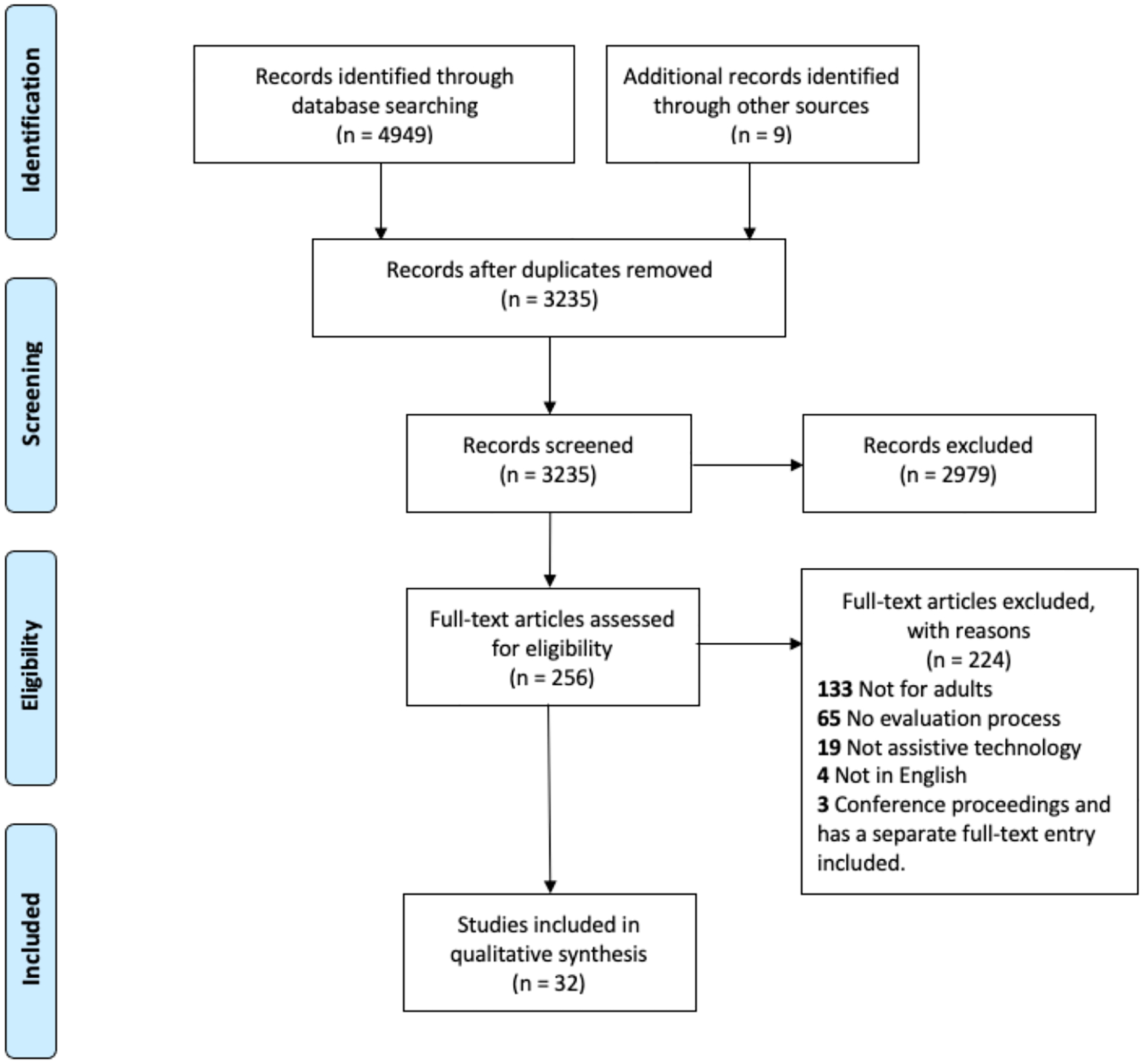
While the needs and care for children on the autism spectrum have been widely investigated, the intervention and services available to autistic adults have been overlooked for a long time. This survey paper reviewed 32 articles that described and evaluated assistive technologies that have been developed and evaluated through a complete circle of interactive product design from ideation, prototype, and user evaluation. These assistive technologies aim to improve independence and living quality in autistic adults. We extracted information from the perspective of requirement gathering, technology designing, and effectiveness of evaluation in the design cycle. We found a general lack of requirements-driven design, and the evaluation process was not standardized either. The lack of requirement gathering results in designs purely based on existing literature without targeting actual user needs. Our synthesis of included paper contributes to developing iterative design considerations in assistive technologies for autistic adults. We also suggest that assistive technologies for autistic adults shift some attention from assisting only autistic adults who require at least substantial support to embracing also those who have been living independently but rather have difficulties in social interaction. Assistive technologies for them have the potentials to help them consolidate and enhance their experiences in independent living.
Keywords: assistive technology; autism spectrum disorder; autistic adults; user-centered design.
Figures


References
-
- Abdallah W, Vella F, Vigouroux N, Van den Bossche A, & Val T (2019). A collaborative talking assistive technology for people with autism spectrum disorders. In Lecture Notes in Computer Science (including subseries Lecture Notes in Artificial Intelligence and Lecture Notes in Bioinformatics): Vol. 11573 LNCS (Issue July, pp. 3–12). Springer International Publishing. 10.1007/978-3-030-23563-5_1 - DOI
-
- Alabbas NA, & Miller DE (2019). Challenges and assistive technology during typical Routines: Perspectives of caregivers of children with autism spectrum disorders and other disabilities. International Journal of Disability, Development and Education, 66(3), 273–283. 10.1080/1034912X.2019.1578864 - DOI
-
- Ali M, & Saad E (2016). The Effectiveness of Social Stories among Children and Adolescents with Autism Spectrum Disorders: Meta- Analysis. Psycho-Educational Research Reviews, 5(2), 51–60. https://perrjournal.com/index.php/perrjournal/article/view/306
-
- American Psychiatric Association. (2013). Diagnostic and statistical manual of mental disorders (5th ed.). American Psychiatric Association. 10.1176/appi.books.9780890425596 - DOI
Grants and funding
LinkOut - more resources
Full Text Sources