


Brachytherapy in craniopharyngiomas: a systematic review and meta-analysis of long-term follow-up
- PMID: 38790011
- PMCID: PMC11127349
- DOI: 10.1186/s12885-024-12397-1
Brachytherapy in craniopharyngiomas: a systematic review and meta-analysis of long-term follow-up
Abstract
Objective: Brachytherapy has been indicated as an alternative option for treating cystic craniopharyngiomas (CPs). The potential benefits of brachytherapy for CPs have not yet been clarified. The purpose of this work was to conduct a meta-analysis to analyze the long-term efficacy and adverse reactions profile of brachytherapy for CPs.
Materials and methods: The relevant databases were searched to collect the clinical trials on brachytherapy in patients with CPs. Included studies were limited to publications in full manuscript form with at least 5-year median follow-up, and adequate reporting of treatment outcomes and adverse reactions data. Stata 12.0 was used for data analysis.
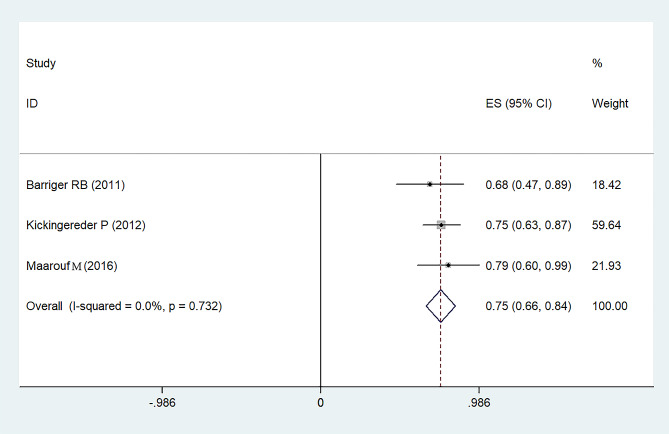
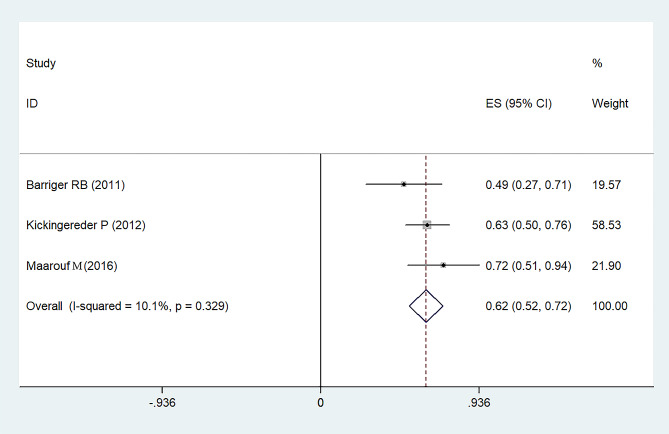
Results: According to the inclusion and exclusion criteria, a total of 6 clinical trials involving 266 patients with CPs were included in this meta-analysis. The minimum average follow-up was 5 years. The results of the meta-analysis showed that 1-year, 2-3 years and 5 years progression free survival rates (PFS) are 75% (95%CI: 66-84%), 62% (95%CI: 52-72%) and 57% (95%CI: 22-92%), respectively. At the last follow-up, less than 16% of patients with visual outcomes worser than baseline in all included studies. While, for endocrine outcomes, less than 32% of patients worser than baseline level.
Conclusion: In general, based on the above results, brachytherapy should be considered as a good choice for the treatment of CP.
Keywords: Brachytherapy; Craniopharyngiomas; Efficacy; Irradiation.
© 2024. The Author(s).
Conflict of interest statement
The authors declare no competing interests.
Figures



References
Publication types
MeSH terms
Grants and funding
LinkOut - more resources
Full Text Sources
Medical
Miscellaneous
