


lncRNA Biomarkers of Glioblastoma Multiforme
- PMID: 38790894
- PMCID: PMC11117901
- DOI: 10.3390/biomedicines12050932
lncRNA Biomarkers of Glioblastoma Multiforme
Abstract
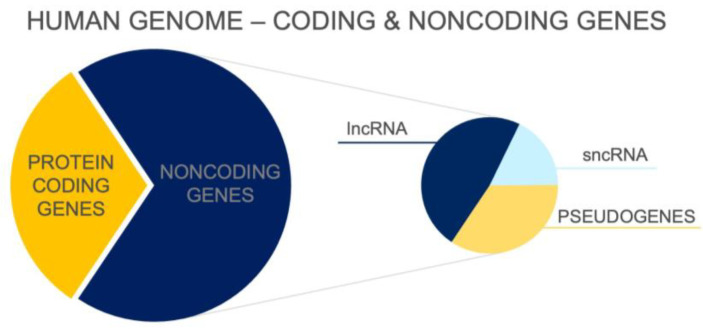
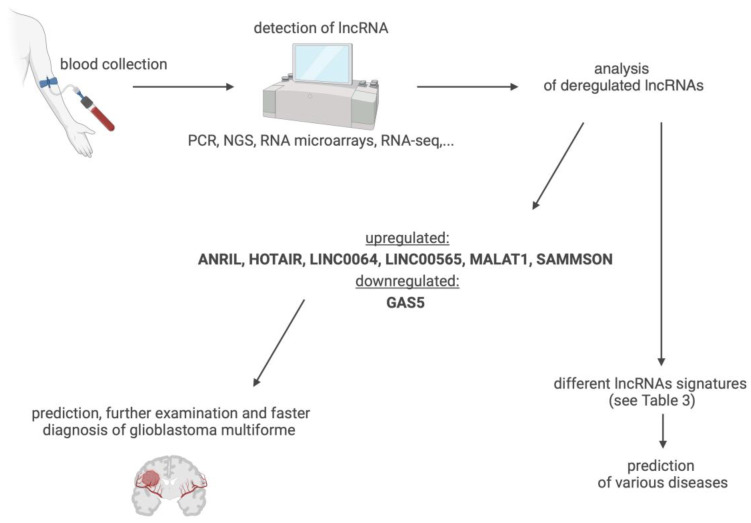
Long noncoding RNAs (lncRNAs) are RNA molecules of 200 nucleotides or more in length that are not translated into proteins. Their expression is tissue-specific, with the vast majority involved in the regulation of cellular processes and functions. Many human diseases, including cancer, have been shown to be associated with deregulated lncRNAs, rendering them potential therapeutic targets and biomarkers for differential diagnosis. The expression of lncRNAs in the nervous system varies in different cell types, implicated in mechanisms of neurons and glia, with effects on the development and functioning of the brain. Reports have also shown a link between changes in lncRNA molecules and the etiopathogenesis of brain neoplasia, including glioblastoma multiforme (GBM). GBM is an aggressive variant of brain cancer with an unfavourable prognosis and a median survival of 14-16 months. It is considered a brain-specific disease with the highly invasive malignant cells spreading throughout the neural tissue, impeding the complete resection, and leading to post-surgery recurrences, which are the prime cause of mortality. The early diagnosis of GBM could improve the treatment and extend survival, with the lncRNA profiling of biological fluids promising the detection of neoplastic changes at their initial stages and more effective therapeutic interventions. This review presents a systematic overview of GBM-associated deregulation of lncRNAs with a focus on lncRNA fingerprints in patients' blood.
Keywords: AC016405.3; ADAMTs9-AS2; AGAP2-AS1; AHIF; ANRIL; CASC2; CASC7; CASC9; CCND2-AS1; CRNDE; DCST1-AS1; DGCR5; DLEU1-AS1; ECONEXIN; FAM66C; GAS5; H19; HMMR-AS1; HOTAIR; HOTAIRM1; HOTTIP; HOXA-AS2; HOXB13-1; HULC; KTN1-AS1; LINC-ROR; LINC00461; LINC00467; LINC00565; LINC00641; LINC01393; LINC01426; LINC01446; LINC01494; LINC01503; LINC01711; LINC02283; MAFG-DT; MALAT1; MATN1-AS1; MDC1-AS; MEG3; MIAT; MIR210HG; MNX1-AS1; NCK1-AS1; NEAT1; PART1; PARTICLE; PCA1; PCAT1; PVT1; RBPMS-AS1; RPSAP52; RUNX1-IT1; SAMMSON; SOX2-OT; TALNEC2; TP73-AS1; TSLC1-AS1; TUG1; TUNAR; TUSC7; UCA1; XIST; ZBED3-AS1; ZEB1-AS1; biomarker; blood; glioblastoma multiforme; glioma; liquid biopsy; lnc-TALC; lncRNA; lncRNA-ATB; noncoding RNA; plasma; serum.
Conflict of interest statement
The authors declare no conflict of interest.
Figures
References
Publication types
Grants and funding
LinkOut - more resources
Full Text Sources
Research Materials
Miscellaneous
