


Effect of Surgeon Volume on Mechanical Complications after Resection Arthroplasty with Articulating Spacer
- PMID: 38793072
- PMCID: PMC11122508
- DOI: 10.3390/jpm14050490
Effect of Surgeon Volume on Mechanical Complications after Resection Arthroplasty with Articulating Spacer
Abstract
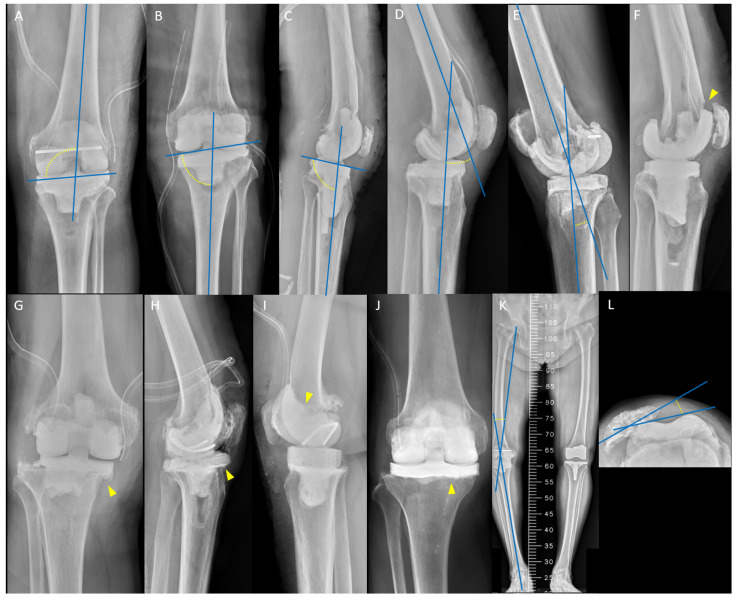
Two-stage revision with an antibiotic-loaded cement articulating spacer is a standard treatment for chronic prosthetic knee infection (PKI); however, mechanical complications can occur during the spacer period. There is limited evidence on the association between surgeon volume and mechanical complications after resection arthroplasty (RA) using an articulating spacer. This study aimed to compare the rates of mechanical complications and reoperation after RA with articulating spacers by surgeons with high volumes (HV) and low volumes (LV) of RA performed and analyzed the risk factors for mechanical failure. The retrospective study investigated 203 patients treated with PKIs who underwent RA with articulating spacers and were divided according to the number of RAs performed by the surgeons: HV (≥14 RAs/year) or LV (<14 RAs/year). Rates of mechanical complications and reoperations were compared. Risk factors for mechanical complications were analyzed. Of the 203 patients, 105 and 98 were treated by two HV and six LV surgeons, respectively. The mechanical complication rate was lower in HV surgeons (3.8%) than in LV surgeons (36.7%) (p < 0.001). The reoperation rate for mechanical complications was lower in HV surgeons (0.9%) than in LV surgeons (24.5%) (p < 0.001). Additionally, 47.2% of patients required hinge knees after mechanical spacer failure. Medial proximal tibial angle < 87°, recurvatum angle > 5°, and the use of a tibial spacer without a cement stem extension were risk factors for mechanical complications. Based on these findings, we made the following three conclusions: (1) HV surgeons had a lower rate of mechanical complications and reoperation than LV surgeons; (2) mechanical complications increased the level of constraint in final revision knee arthroplasty; and (3) all surgeons should avoid tibial spacer varus malalignment and recurvatum deformity and always use a cement stem extension with a tibial spacer.
Keywords: articulating spacer; high volume; low volume; mechanical complications; prosthetic knee infection; resection arthroplasty.
Conflict of interest statement
The authors declare no conflicts of interest.
Figures



References
-
- DeBoer D.K. Comparison of Traditional Molded, First-Generation Premolded, and Second-Generation Premolded Antibiotic-Loaded Polymethylmethacrylate Articulating Spacers for Treatment of Chronic Prosthetic Joint Infection of the Knee. J. Arthroplast. 2020;35:S53–S56. doi: 10.1016/j.arth.2019.11.008. - DOI - PubMed
-
- Piple A.S., Wang J.C., Kebaish K.J., Mills E.S., Oakes D.A., Lieberman J.R., Christ A.B., Heckmann N.D. Does Prednisone Dose Affect Rates of Periprosthetic Joint Infection Following Primary Total Hip and Total Knee Arthroplasty? J. Arthroplast. 2023;38:1024–1031. doi: 10.1016/j.arth.2022.12.033. - DOI - PubMed
-
- Nahhas C.R., Chalmers P.N., Parvizi J., Sporer S.M., Berend K.R., Moric M., Chen A.F., Austin M.S., Deirmengian G.K., Morris M.J., et al. A Randomized Trial of Static and Articulating Spacers for the Treatment of Infection Following Total Knee Arthroplasty. J. Bone Jt. Surg. Am. 2020;102:778–787. - PubMed
LinkOut - more resources
Full Text Sources
