


Resilient Stress Reactivity Profiles Predict Mental Health Gains from Online Contemplative Training: A Randomized Clinical Trial
- PMID: 38793075
- PMCID: PMC11121773
- DOI: 10.3390/jpm14050493
Resilient Stress Reactivity Profiles Predict Mental Health Gains from Online Contemplative Training: A Randomized Clinical Trial
Abstract
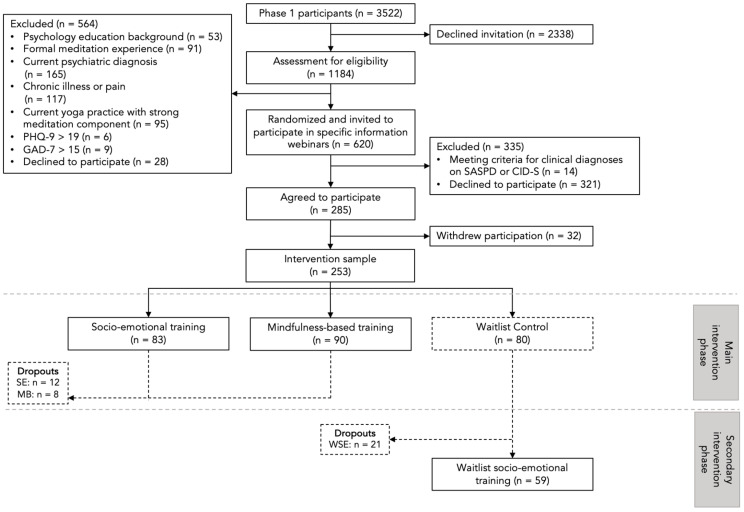
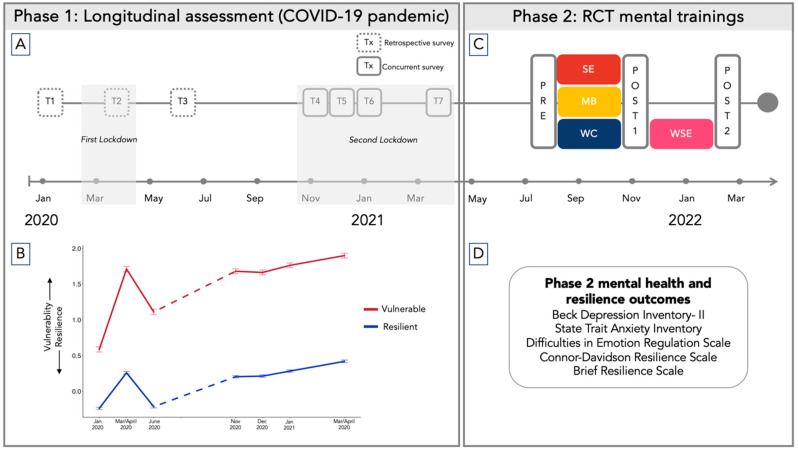
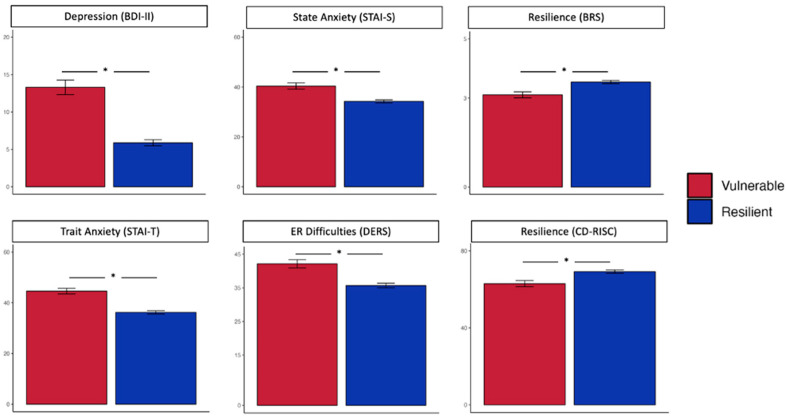
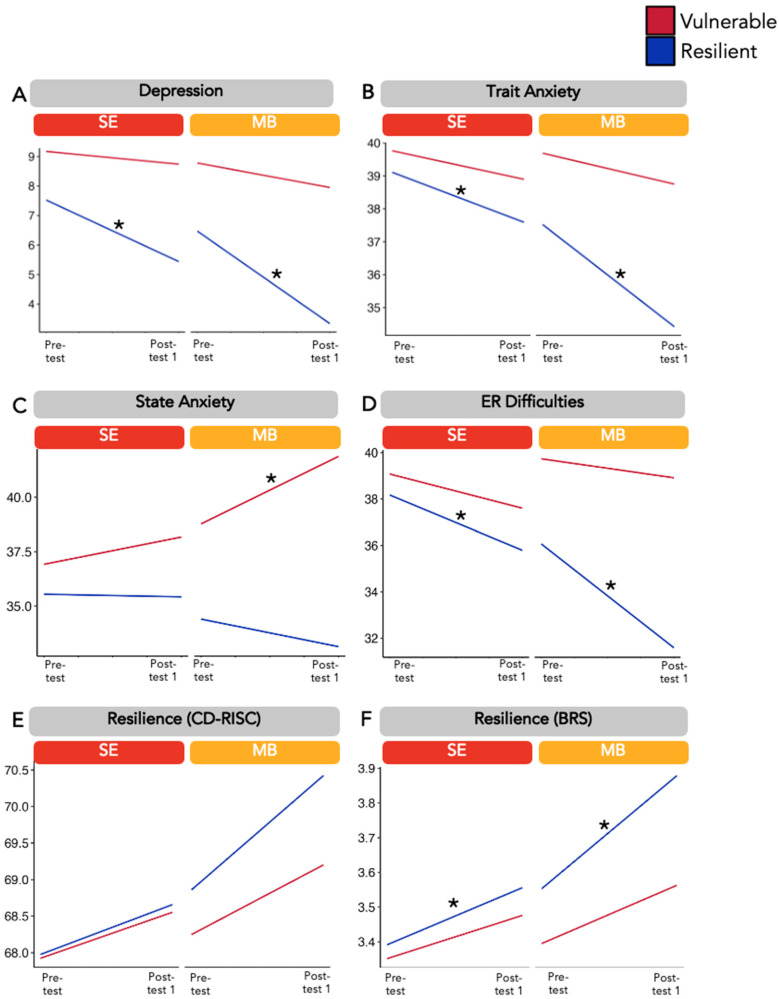
Low-dose app-based contemplative interventions for mental health are increasingly popular, but heterogeneity in intervention responses indicates that a personalized approach is needed. We examined whether different longitudinal resilience-vulnerability trajectories, derived over the course of the COVID-19 pandemic, predicted differences in diverse mental health outcomes after mindfulness and socio-emotional dyadic online interventions. The CovSocial project comprised a longitudinal assessment (phase 1) and an open-label efficacy trial (phase 2). A community sample of 253 participants received 12 min daily app-based socio-emotional dyadic or mindfulness-based interventions, with weekly online coaching for 10 weeks. Before and after the intervention, participants completed validated self-report questionnaires assessing mental health. Stress reactivity profiles were derived from seven repeated assessments during the COVID-19 pandemic (January 2020 to March/April 2021) and were categorized into resilient (more plasticity) or vulnerable (less plasticity) stress recovery profiles. After both interventions, only individuals with resilient stress reactivity profiles showed significant improvements in depression symptomatology, trait anxiety, emotion regulation, and stress recovery. Those with vulnerable profiles did not show significant improvements in any outcome. Limitations of this study include the relatively small sample size and potential biases associated with participant dropout. Brief app-based mental interventions may be more beneficial for those with greater levels of stress resiliency and plasticity in response to stressors. More vulnerable individuals might require more intense and personalized intervention formats.
Keywords: dyads; mental health; mental training; mindfulness; personalization; plasticity; socio-affective; stress reactivity.
Conflict of interest statement
T.S. was honorary co-founder and scientific and curriculum advisor for Humanize from 2021 to summer 2023. Humanize is a start-up that is inspired by T.S.’s mental intervention research as well as her ReConnect Masterclasses and courses focusing on dyadic interventions, including the Affect Dyad, and is releasing modified and extended versions of these dyad intervention programs on a commercial digital platform and app. These additional roles of T.S. have been formally approved by the Max Planck Society. T.S. no longer has an active role or shares in Humanize.
Figures
References
-
- Wasil A.R., Gillespie S., Patel R., Petre A., Venturo-Conerly K.E., Shingleton R.M., Weisz J.R., DeRubeis R.J. Reassessing evidence-based content in popular smartphone apps for depression and anxiety: Developing and applying user-adjusted analyses. J. Consult. Clin. Psychol. 2020;88:983–993. doi: 10.1037/ccp0000604. - DOI - PubMed
Grants and funding
LinkOut - more resources
Full Text Sources
Medical
Miscellaneous
