


The Lipid-Heart Hypothesis and the Keys Equation Defined the Dietary Guidelines but Ignored the Impact of Trans-Fat and High Linoleic Acid Consumption
- PMID: 38794685
- PMCID: PMC11123895
- DOI: 10.3390/nu16101447
The Lipid-Heart Hypothesis and the Keys Equation Defined the Dietary Guidelines but Ignored the Impact of Trans-Fat and High Linoleic Acid Consumption
Abstract
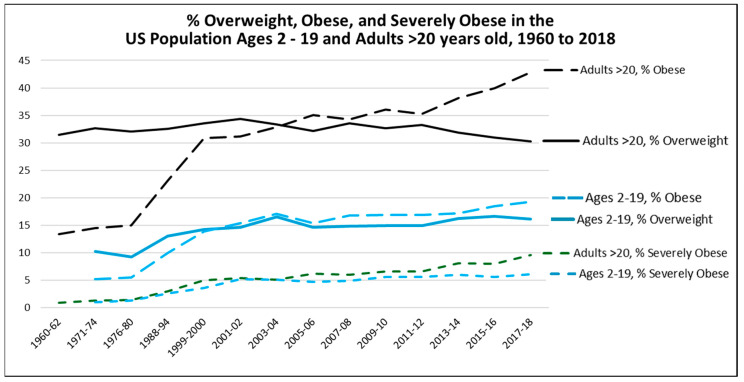
In response to a perceived epidemic of coronary heart disease, Ancel Keys introduced the lipid-heart hypothesis in 1953 which asserted that high intakes of total fat, saturated fat, and cholesterol lead to atherosclerosis and that consuming less fat and cholesterol, and replacing saturated fat with polyunsaturated fat, would reduce serum cholesterol and consequently the risk of heart disease. Keys proposed an equation that would predict the concentration of serum cholesterol (ΔChol.) from the consumption of saturated fat (ΔS), polyunsaturated fat (ΔP), and cholesterol (ΔZ): ΔChol. = 1.2(2ΔS - ΔP) + 1.5ΔZ. However, the Keys equation conflated natural saturated fat and industrial trans-fat into a single parameter and considered only linoleic acid as the polyunsaturated fat. This ignored the widespread consumption of trans-fat and its effects on serum cholesterol and promoted an imbalance of omega-6 to omega-3 fatty acids in the diet. Numerous observational, epidemiological, interventional, and autopsy studies have failed to validate the Keys equation and the lipid-heart hypothesis. Nevertheless, these have been the cornerstone of national and international dietary guidelines which have focused disproportionately on heart disease and much less so on cancer and metabolic disorders, which have steadily increased since the adoption of this hypothesis.
Keywords: Ancel Keys; cholesterol; dietary guidelines; heart disease; lipid–heart hypothesis; polyunsaturated fat; saturated fat; trans-fat.
Conflict of interest statement
The authors declare no conflicts of interest.
Figures
References
-
- U.S. Department of Agriculture. U.S. Department of Health and Human Services . Dietary Guidelines for Americans. U.S. Department of Health and Human Services; Washington, DC, USA: 1980. Nutrition and Your Health.
-
- Page I.H., Allen E.V., Chamberlain F.L., Keys A., Stamler J., Stare F.J. Dietary Fat and Its Relation to Heart Attacks and Strokes. Circulation. 1961;23:133–136. doi: 10.1161/01.CIR.23.1.133. - DOI
-
- U.S. Department of Agriculture. U.S. Department of Health and Human Services . Dietary Guidelines for Americans, 2020–2025. 9th ed. U.S. Department of Health and Human Services; Washington, DC, USA: 2020. pp. 5, 44.
-
- Astrup A., Magkos F., Bier D.M., Brenna J.T., de Oliveira Otto M.C., Hill J.O., King J.C., Mente A., Ordovas J.M., Volek J.S., et al. Saturated fats and health: A reassessment and proposal for food-based recommendations: JACC state-of-the-art review. J. Am. Coll. Cardiol. 2020;76:844–857. doi: 10.1016/j.jacc.2020.05.077. - DOI - PubMed
Publication types
MeSH terms
Substances
LinkOut - more resources
Full Text Sources
