


Effect of IL-6R blockade on plasma lipids and clinical outcomes among hospitalized patients with COVID-19 infection
- PMID: 38795859
- PMCID: PMC11237931
- DOI: 10.1016/j.jlr.2024.100568
Effect of IL-6R blockade on plasma lipids and clinical outcomes among hospitalized patients with COVID-19 infection
Abstract
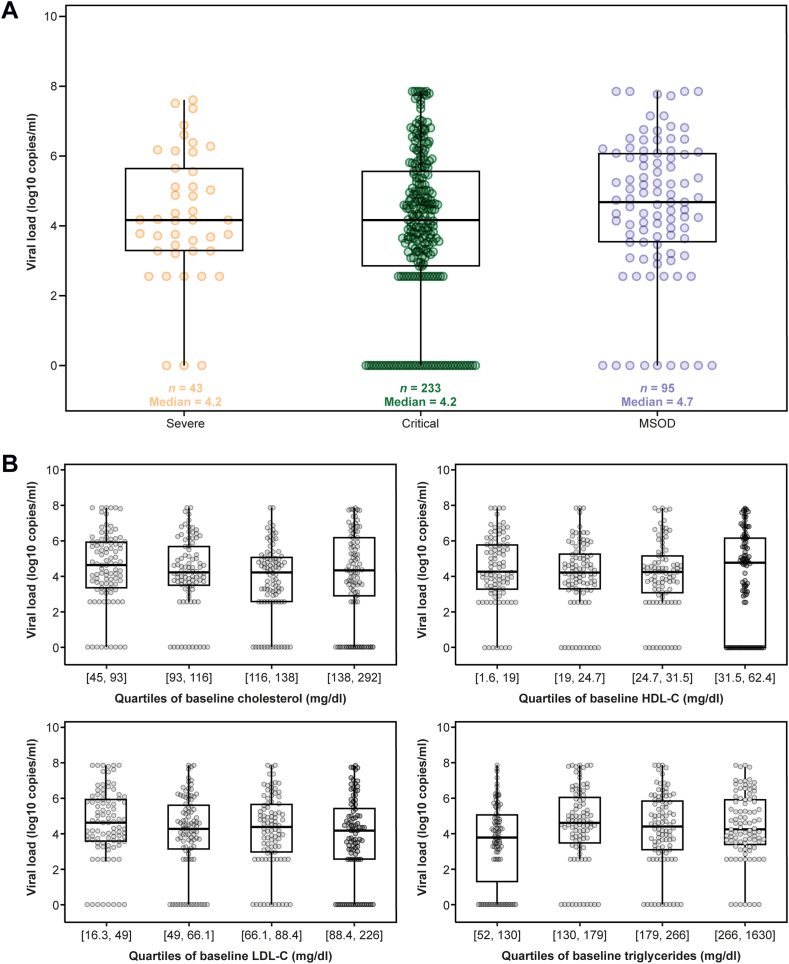
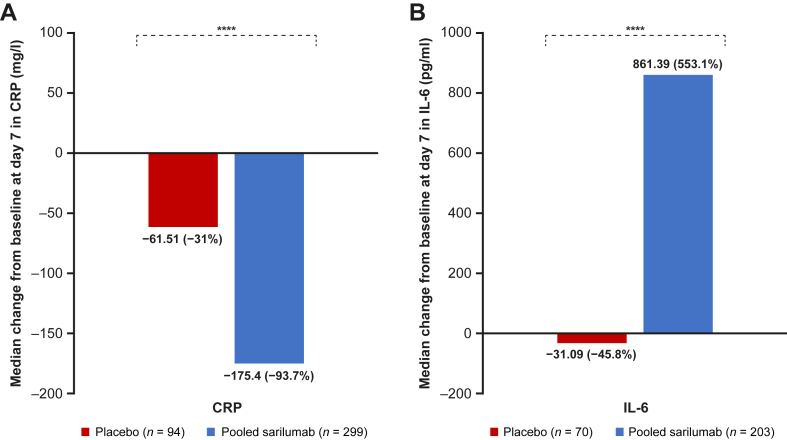
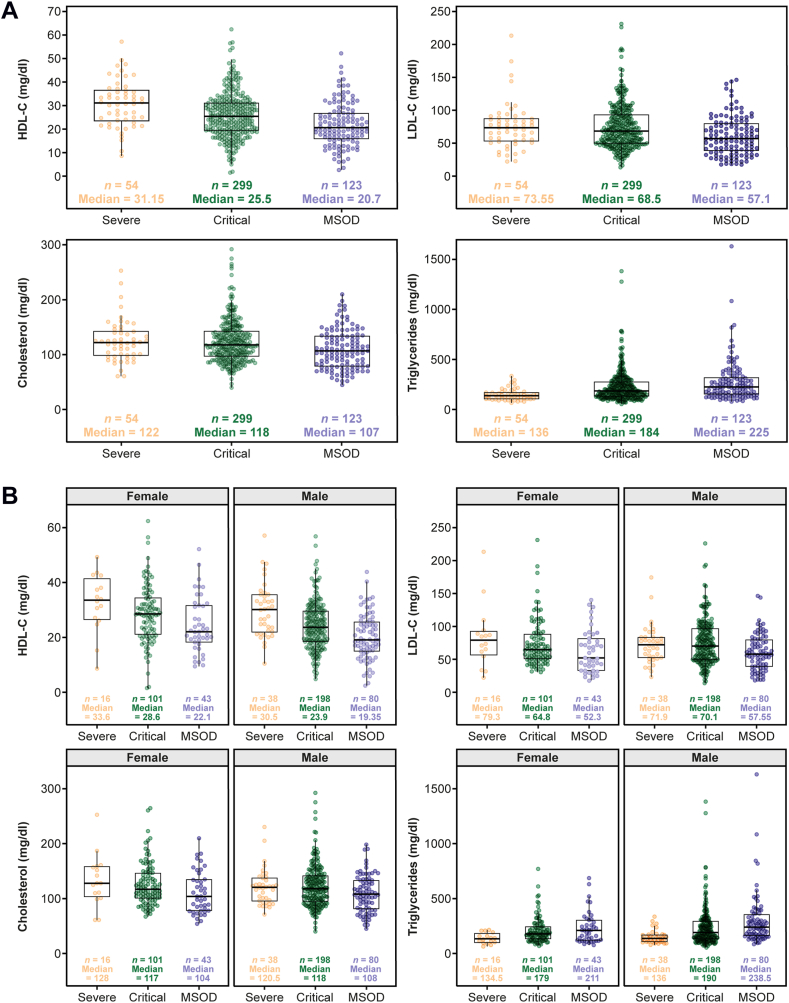
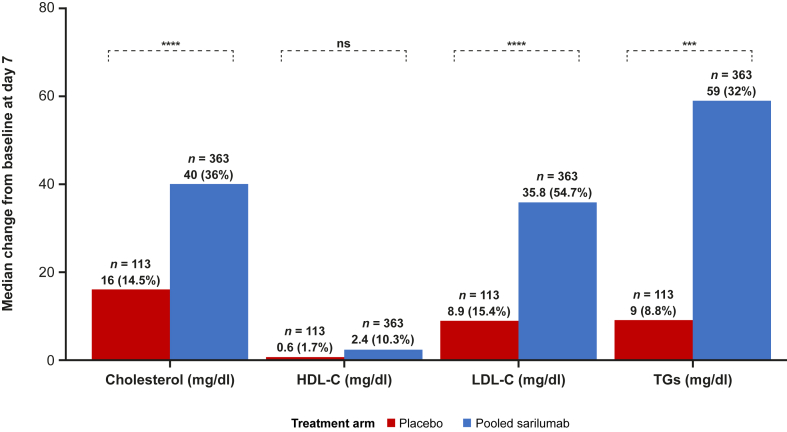
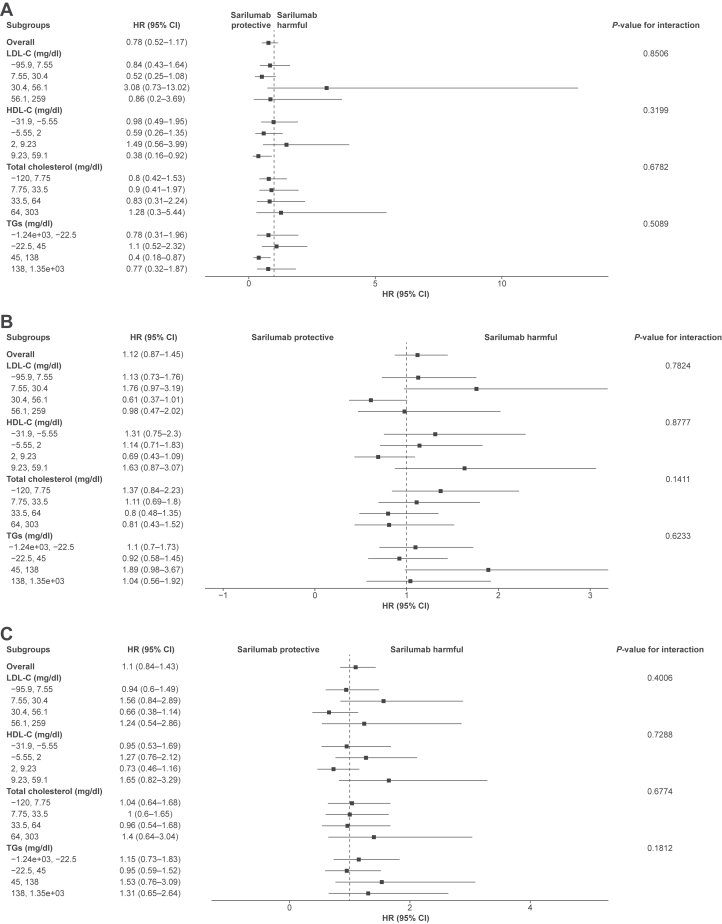
Plasma lipid levels are modulated by systemic infection and inflammation; it is unknown whether these changes reflect inflammatory responses or caused directly by pathogen presence. We explored the hypothesis that anti-inflammatory intervention via interleukin 6 receptor (IL-6R) blockade would influence plasma lipid levels during severe infection and evaluated the association of plasma lipid changes with clinical outcomes. Sarilumab (monoclonal antibody blocking IL-6R) efficacy was previously assessed in patients with coronavirus disease 2019 (COVID-19) (NCT04315298). This analysis determined whether strong inflammatory reduction by sarilumab in patients with COVID-19 pneumonia of increasing severity (severe, critical, multisystem organ dysfunction) affected plasma lipid changes between day 1 and day 7 of study therapy. Baseline lipid levels reflected the presence of acute systemic infection, characterized by very low HDL-C, low LDL-C, and moderately elevated triglycerides (TGs). Disease severity was associated with progressively more abnormal lipid levels. At day 7, median lipid levels increased more in the sarilumab versus placebo group (HDL-C +10.3%, LDL-C +54.7%, TG +32% vs. HDL-C +1.7%, LDL-C +15.4%, TG +8.8%, respectively). No significant association between lipid changes and clinical outcomes was observed. In conclusion, severe-to-critical COVID-19 pneumonia causes profound HDL-C depression that is only modestly responsive to strong anti-IL-6R inflammatory intervention. Conversely, LDL-C depression is strongly responsive to IL-6R blockade, with LDL-C levels likely returning to the predisease set point. These results advance our understanding of the complex relationship between serum lipids and infection/inflammation and suggest that HDL-C depression during acute contagious disease is driven by infection and not IL-6-mediated inflammation.
Keywords: COVID-19; CRP; HDL; LDL; SARS-CoV-2; inflammation; interleukin 6; lipids; lipoproteins; monoclonal antibody; triglycerides.
Copyright © 2024 The Authors. Published by Elsevier Inc. All rights reserved.
Conflict of interest statement
Conflict of interest K. M., M. W. S., A. B., P. B., G. P. G., and S. F. are employees of and stockholders in Regeneron Pharmaceuticals, Inc.
Figures
References
-
- Feingold K.R., Grunfeld C. In: Endotext. Feingold K.R., Anawalt B., Blackman M.R., Boyce A., Chrousos G., Corpas E., et al., editors. MDText.com, Inc; South Dartmouth, MA: 2000. The effect of inflammation and infection on lipids and lipoproteins.
-
- Catapano A.L., Pirillo A., Bonacina F., Norata G.D. HDL in innate and adaptive immunity. Cardiovasc. Res. 2014;103:372–383. - PubMed
-
- Pirillo A., Catapano A.L., Norata G.D. In: High density lipoproteins: From biological understanding to clinical exploitation. von Eckardstein A., Kardassis D., editors. Springer; New York, NY: 2015. HDL in infectious diseases and sepsis; pp. 483–508.
-
- Grao-Cruces E., Lopez-Enriquez S., Martin M.E., Montserrat-de la Paz S. High-density lipoproteins and immune response: a review. Int. J. Biol. Macromol. 2022;195:117–123. - PubMed
Publication types
MeSH terms
Substances
LinkOut - more resources
Full Text Sources
Medical
Research Materials
Miscellaneous
