


Intercellular transfer of MHC molecules in T cell alloimmunity and allotransplantation
- PMID: 38797478
- PMCID: PMC11414654
- DOI: 10.1016/j.bj.2024.100749
Intercellular transfer of MHC molecules in T cell alloimmunity and allotransplantation
Abstract
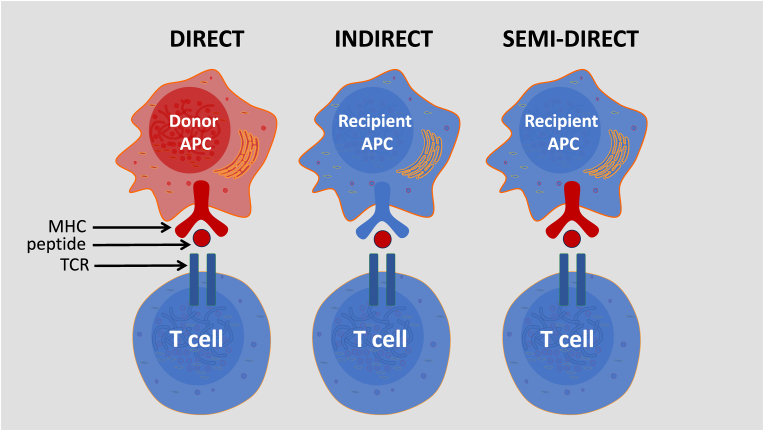
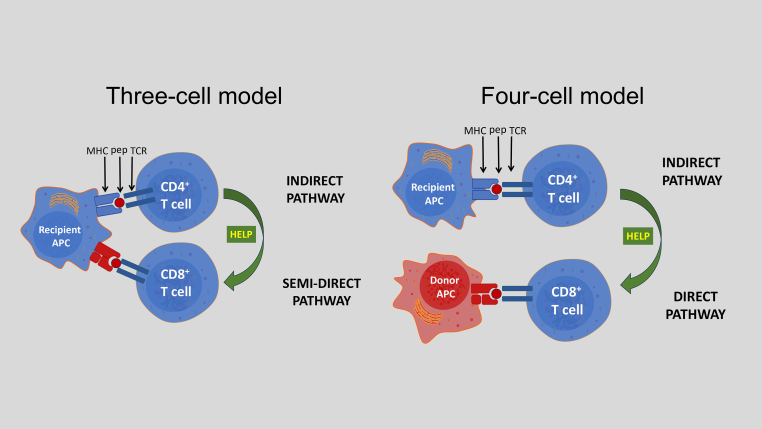
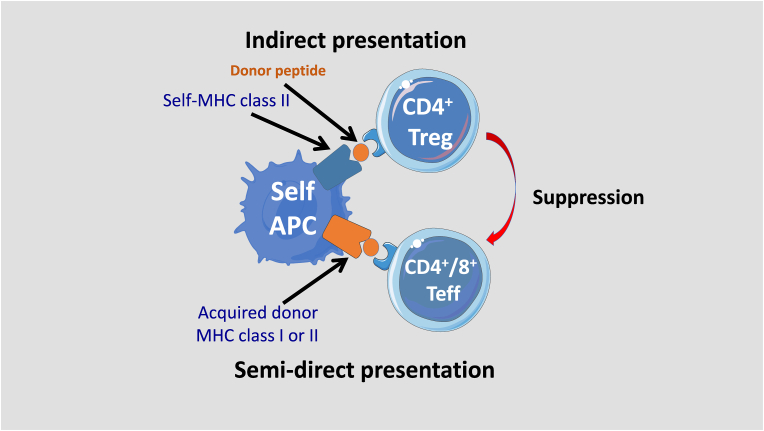
After transplantation of allogeneic tissues and organs, recognition by recipient T cells of donor MHC molecules initiates the pro-inflammatory adaptive immune response leading to allograft rejection. T cell allorecognition has long been known to be mediated via two distinct pathways: the direct pathway in which T cells recognize intact allogeneic MHC molecules displayed on donor cells and the indirect pathway whereby T cells recognize donor MHC peptides processed and presented by recipient antigen-presenting cells (APCs). It is believed that direct allorecognition is the driving force behind early acute allograft rejection while indirect allorecognition is involved in chronic allograft rejection, a progressive condition characterized by graft vasculopathy and tissue fibrosis. Recently, we and others have reported that after transplantation of allogeneic skin and organs, donor MHC molecules are transferred from donor cells to the host's APCs via trogocytosis or extracellular vesicles. Recipient APCs having captured donor MHC molecules can either present them to T cells in their intact form on their surface (semi-direct pathway) or the form of peptides bound to self-MHC molecules (indirect pathway). The present article provides an overview of recent studies evaluating the role of intercellular exchange of MHC molecules in T cell alloimmunity and its contribution to allograft rejection and tolerance.
Copyright © 2024 The Authors. Published by Elsevier B.V. All rights reserved.
Figures
References
-
- Suchin EJ, Langmuir PB, Palmer E, Sayegh MH, Wells AD, Turka LA. Quantifying the frequency of alloreactive T cells in vivo: new answers to an old question. J Immunol. 2001;166(2) 973-81. - PubMed
-
- Matesic D, Lehmann PV, Heeger PS. High-resolution characterization of cytokine-producing alloreactivity in naive and allograft-primed mice. Transplantation. 1998;65(7) 906-14. - PubMed
-
- Ashwell JD, Chen C, Schwartz RH. High frequency and nonrandom distribution of alloreactivity in T cell clones selected for recognition of foreign antigen in association with self class II molecules. J Immunol. 1986;136(2) 389-95. - PubMed
Publication types
MeSH terms
Substances
Grants and funding
LinkOut - more resources
Full Text Sources
Research Materials
Miscellaneous
