


Neural correlates of stress-reactive rumination in depression - The role of childhood trauma and social anxiety
- PMID: 38800538
- PMCID: PMC11127161
- DOI: 10.1016/j.ynstr.2024.100640
Neural correlates of stress-reactive rumination in depression - The role of childhood trauma and social anxiety
Abstract
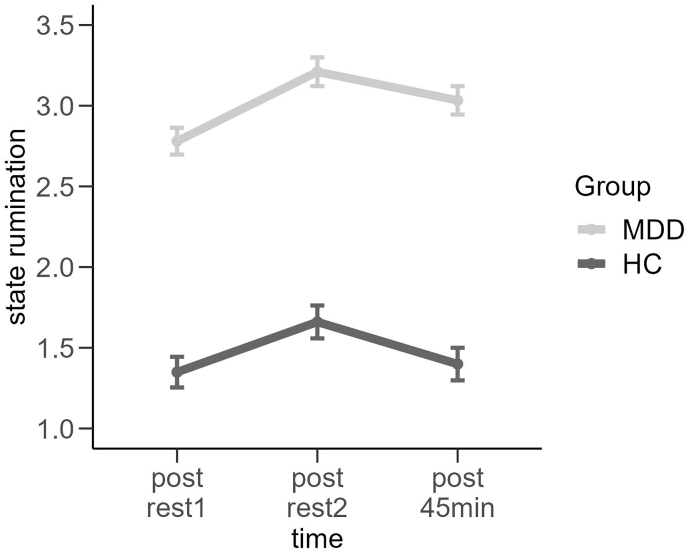
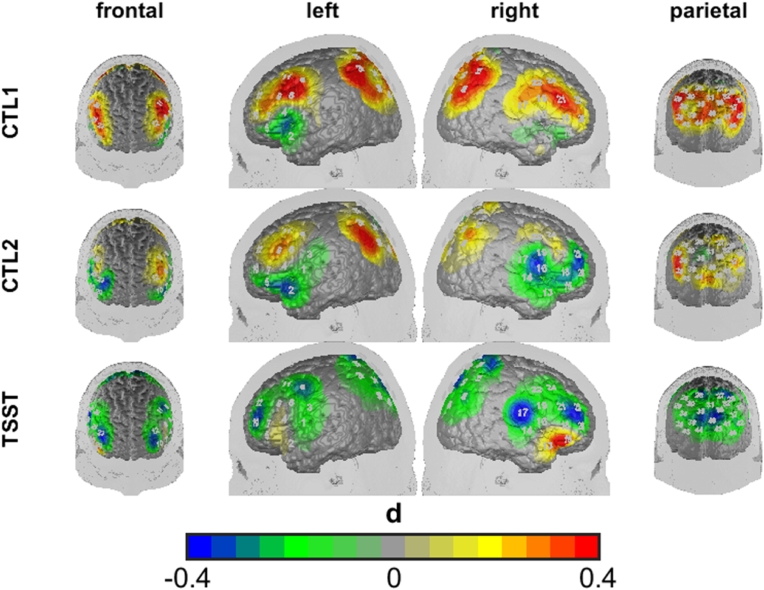
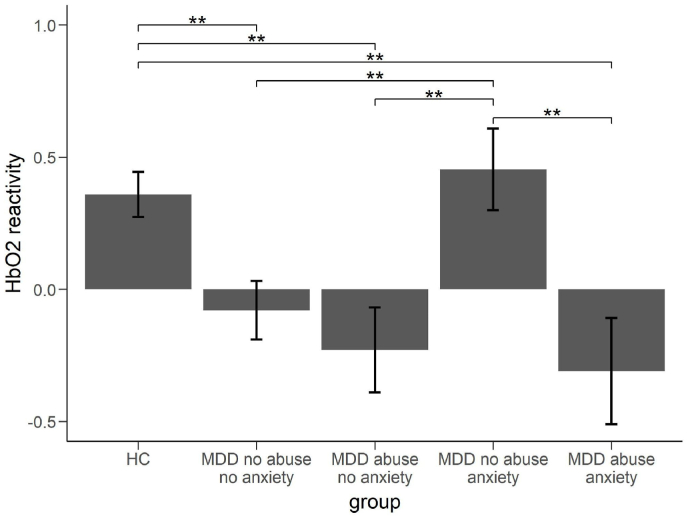
Recent work showed an association of prefrontal dysfunctions in patients with Major Depressive Disorder (MDD) and social stress induced rumination. However, up to date it is unclear which etiological features of MDD might cause prefrontal dysfunctions. In the study at hand, we aimed to replicate recent findings, that showed prefrontal activation alterations during the Trier Social Stress Test (TSST) and subsequently increased stress-reactive rumination in MDD compared to healthy controls. Moreover, we aimed to explore the role of adverse childhood experiences and other clinical variables in this relationship. N = 55 patients currently suffering from MDD and n = 42 healthy controls (HC) underwent the TSST, while cortical activity in areas of the Cognitive Control Network (CCN) was measured via functional near-infrared spectroscopy (fNIRS). The TSST successfully induced a stress reaction (physiologically, as well as indicated by subjective stress ratings) and state rumination in all subjects with moderate to large effect sizes. In comparison to HC, MDD patients showed elevated levels of state rumination with large effect sizes, as well as a typical pattern of reduced cortical oxygenation during stress in the CCN with moderate effect sizes. Self-reported emotional abuse and social anxiety were moderately positively associated with increased stress-reactive rumination. Within the MDD sample, emotional abuse was negatively and social anxiety positively associated with cortical oxygenation within the CCN with moderate to large effect sizes. In conclusion, our results replicate previous findings on MDD-associated prefrontal hypoactivity during stress and extends the research toward specific subtypes of depression.
Keywords: CCN; Childhood trauma; Cognitive control network; DLPFC; Emotional abuse; Functional near-infrared spectroscopy; Perseverative thinking; Repetitive negative thinking; Rumination; Social anxiety; Stress; Trier social stress test; fNIRS.
© 2024 The Authors.
Conflict of interest statement
The authors declare that they have no known competing financial interests or personal relationships that could have appeared to influence the work reported in this paper.
Figures
References
-
- Baeken C., Wu G.-R., Rogiers R., Remue J., Lemmens G.M., Raedt R.D. Cognitive behavioral based group psychotherapy focusing on repetitive negative thinking: decreased uncontrollability of rumination is related to brain perfusion increases in the left dorsolateral prefrontal cortex. J. Psychiatr. Res. 2021;136:281–287. doi: 10.1016/j.jpsychires.2021.02.011. - DOI - PubMed
-
- Bean C.A.L., Heggeness L.F., Kalmbach D.A., Ciesla J.A. Ruminative inertia and its association with current severity and lifetime course of depression. Clin. Psychol. Sci. 2020;8:1007–1016. doi: 10.1177/2167702620949174. - DOI
LinkOut - more resources
Full Text Sources
