Gambian Mothers Lack Obstetric Danger Sign Knowledge, But Educational Intervention Shows Promise
- PMID: 38800705
- PMCID: PMC11122691
- DOI: 10.5334/aogh.3930
Gambian Mothers Lack Obstetric Danger Sign Knowledge, But Educational Intervention Shows Promise
Abstract
Background: The Gambia has the 12th highest maternal mortality rate in the world, with 80% of deaths resulting from avoidable causes. Unawareness of pregnancy danger signs (DS) has been shown to be a barrier to seeking obstetric care, while app-based education intervention has shown promise.
Objective: We aim to assess patient awareness of DS, identify barriers to awareness, and evaluate potential for implementing smartphone-based technologies for education.
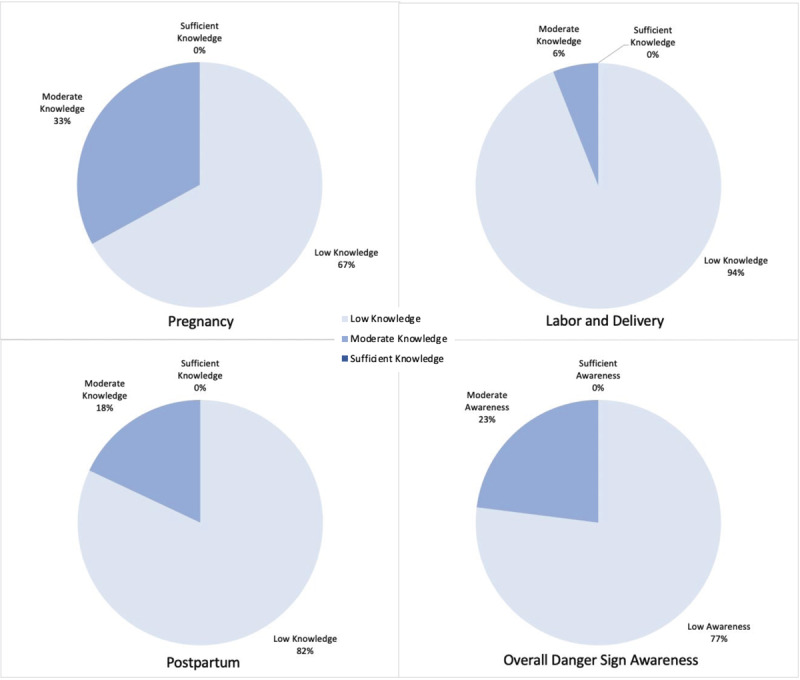
Methods: A cross-sectional semi-structured survey was administered to Gambian women (n = 100) across five hospitals/health centers. Data and informed consent were collected via an online survey portal. Analysis included bivariate analysis and descriptive statistics with p < 0.05 significance level. Recall of 0-2 DS per category was classified as "low" knowledge, 3-5 as "moderate" knowledge, and 6+ as "sufficient" knowledge. Cross-category recall was quantified for overall awareness level (0-6 = "low", 7-12 = "moderate", 13+ = "sufficient". N = 28 total DS).
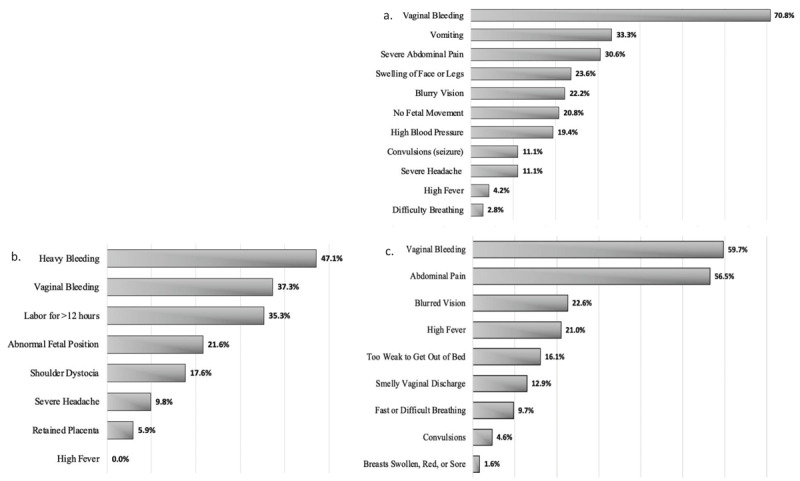
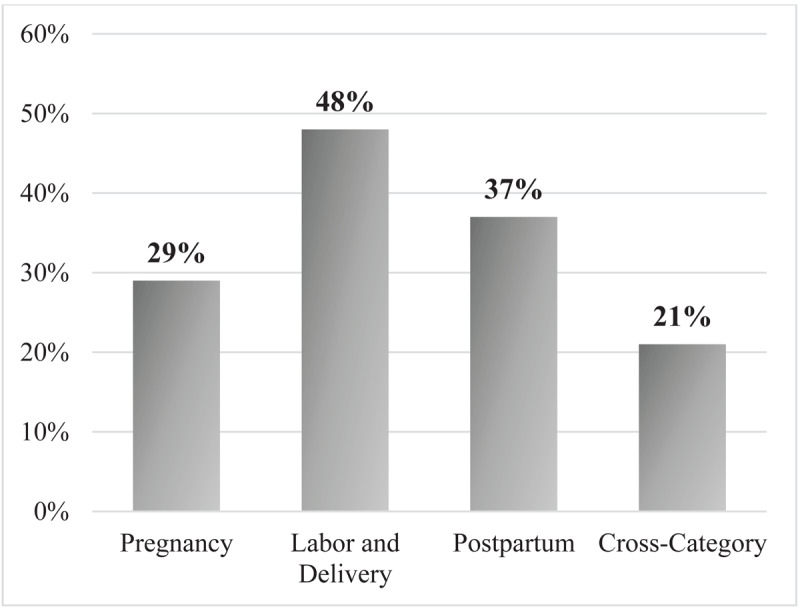
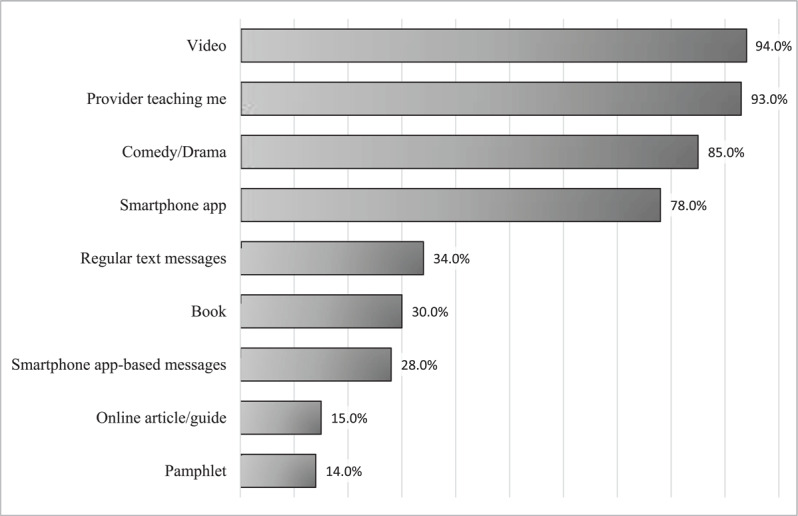
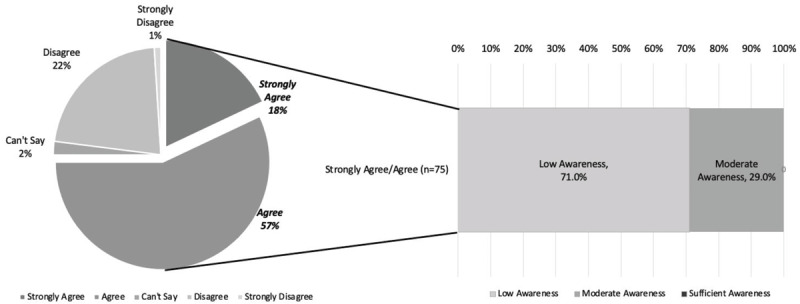
Findings: Although 75% of participants (n = 100) self-perceived "sufficient" knowledge of DS, the average recall was only two (SD = 2, n = 11) pregnancy DS, one labor and delivery DS (SD = 1, n = 8), and one postpartum DS (SD = 1, n = 9). Twenty-one women were unable to recall any danger signs. "Low" awareness was identified in 77% of women, while 23%, and 0% of women showed "moderate" and "sufficient" overall awareness, respectively. Education level was significantly correlated with overall danger sign recall (ρ(98) = .243, p = .015) and awareness level (ρ(98) = .265, p = .008). Monthly income was significantly correlated with awareness level (ρ(97) = .311, p = .002). Smartphone ownership was reported by 76% of women, and 97% expressed interest in using app-based video (94%) or provider (93%) teaching.
Conclusions: Women had low knowledge of obstetric danger signs, and true awareness of danger signs was remarkably lower than self-perceived knowledge. However, patients exhibited proper healthcare-seeking behavior when danger signs arose. Findings suggest that video- or messaging-based education from local healthcare providers may be effective DS educational interventions.
Keywords: complication; complications; educational status; global health; health literacy; labor; maternal care patterns; maternal child health center; maternal educational status; obstetric labor; pregnancy complication.
Copyright: © 2024 The Author(s).
Conflict of interest statement
Sharmila Anandasabapathy wishes to disclose that she is an advisor for Roche. The authors report no other disclosures or financial interests in the subject matter.
Figures
References
-
- WHO, UNICEF, UNFPA, WBG, United Nations Population Division. Trends in Maternal Mortality 2000–2017; 2019.
-
- WHO. The World Health Report 2005: Make Every Mother and Child Count; 2005. - PubMed
MeSH terms
LinkOut - more resources
Full Text Sources