


Information-seeking behaviour of primary care clinicians in Singapore at the point-of-care: A qualitative study
- PMID: 38804103
- PMCID: PMC11649596
- DOI: 10.1111/hir.12535
Information-seeking behaviour of primary care clinicians in Singapore at the point-of-care: A qualitative study
Abstract
Background: Clinicians' information-seeking behaviours impact patient care quality. Earlier studies indicated that barriers to accessing information deter clinicians from seeking answers to clinical questions.
Objectives: To explore primary care clinicians' information-seeking behaviour at point-of-care, focusing on when and how they seek answers to clinical questions.
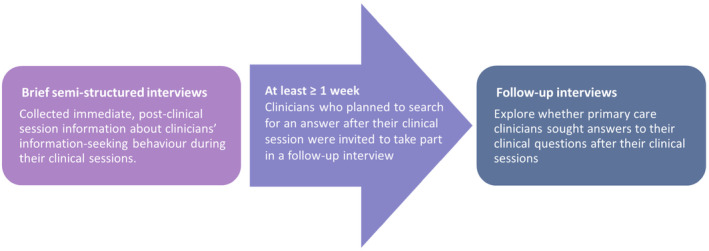
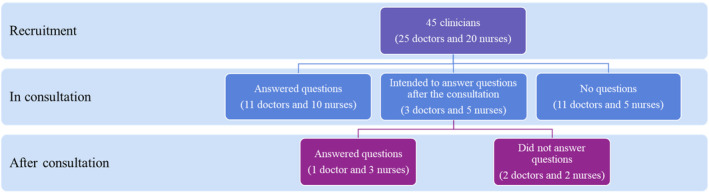
Methods: Semi-structured interviews were conducted with 45 clinicians after clinical sessions to investigate their information-seeking habits. Follow-up interviews were conducted after a week for those intending to address unanswered queries.
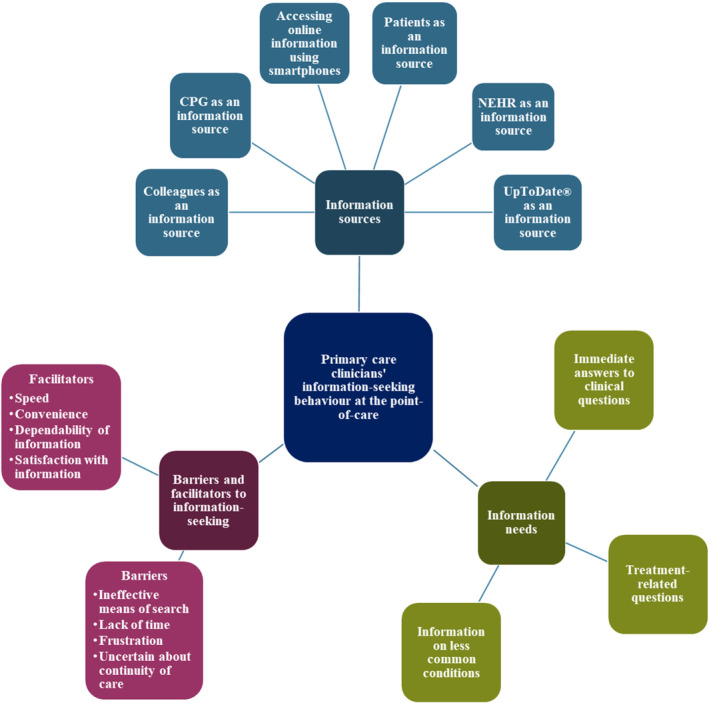
Results: Two thirds of clinicians encountered questions during care, with nearly three quarters resolving them during the session. Colleagues, guidelines and online platforms were common information sources, with smartphones being used to access Google, WhatsApp or UpToDate®. Facilitators included reliable sources and the drive to confirm knowledge, while barriers included ineffective search methods and high workload. Despite challenges, most clinicians expressed satisfaction with their information-seeking process.
Discussion: The findings underscore the increasing use of smartphones for accessing clinical information among Singaporean primary care clinicians and suggest the need for tailored training programmes and guidelines to optimise information-seeking practices.
Conclusion: Insights from this study can inform the development of training programmes and guidelines aimed at improving information-seeking practices among primary care clinicians, potentially enhancing patient care quality.
Keywords: Asia, south east; Mobile health (M‐Health); clinical guidelines; clinical questions; digital information resources; evidence‐based medicine; evidence‐based nursing; information literacy; internet access; primary care.
© 2024 The Authors Health Information and Libraries Journal published by John Wiley & Sons Ltd on behalf of Health Libraries Group.
Conflict of interest statement
The authors declared that they have no competing interests.
Figures
References
-
- Braun, L. , Wiesman, F. , den Herik Van, H. , & Hasman, A. (2006). Avoiding literature overload in the medical domain. Studies in Health Technology and Informatics, 124, 497–502. - PubMed
MeSH terms
Grants and funding
LinkOut - more resources
Full Text Sources
