


A new clustering model based on the seminal plasma/serum ratios of multiple trace element concentrations in male patients with subfertility
- PMID: 38807752
- PMCID: PMC11131575
- DOI: 10.1002/rmb2.12584
A new clustering model based on the seminal plasma/serum ratios of multiple trace element concentrations in male patients with subfertility
Erratum in
-
Correction to "A new clustering model based on the seminal plasma/serum ratios of multiple trace element concentrations in male patients with subfertility".Reprod Med Biol. 2024 Oct 8;23(1):e12613. doi: 10.1002/rmb2.12613. eCollection 2024 Jan-Dec. Reprod Med Biol. 2024. PMID: 39380720 Free PMC article.
Abstract
Purpose: To investigate whether seminal plasma (SP)/serum ratios of multiple trace elements (TEs) can classify patients with male subfertility.
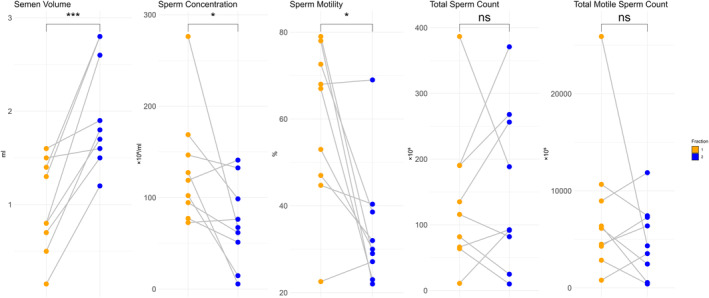
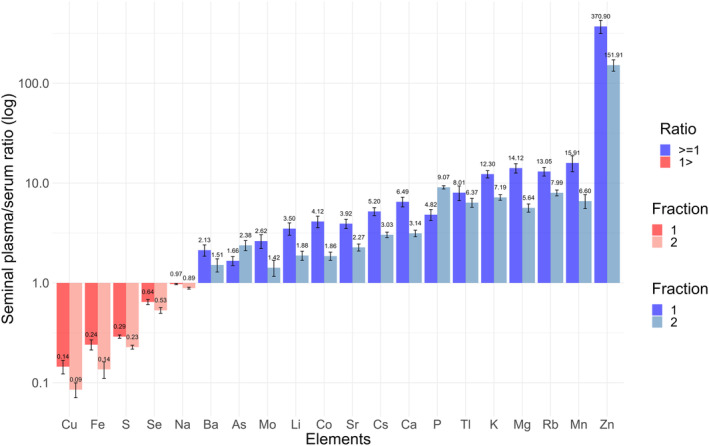
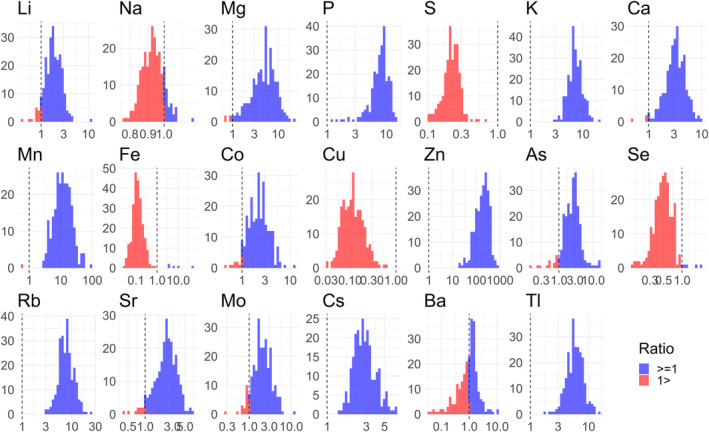
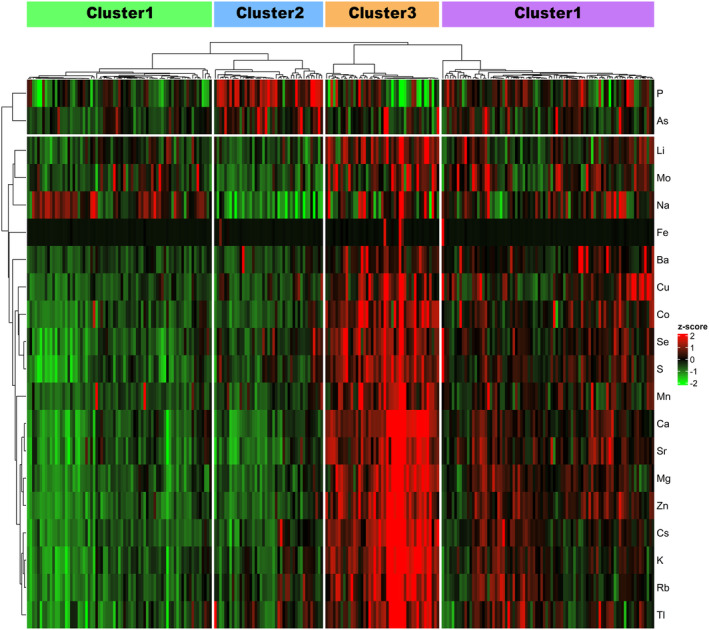
Methods: SP/serum ratios of 20 TEs (lithium, sodium, magnesium, phosphorus, sulfur, potassium, calcium, manganese, iron, cobalt, copper, zinc, arsenic, selenium, rubidium, strontium, molybdenum, cesium, barium, and thallium) were calculated for healthy volunteers (n = 4) and those consulting for male subfertility (n = 245). Volunteer semen samples were collected by split ejaculation into early and subsequent fractions, and SP/serum ratio data were compared between fractions. The patients' SP/serum ratio data were used in an unsupervised clustering analysis and qualitatively compared with the data from the fractions of ejaculation from the volunteers. Semen quality parameters and pregnancy outcomes were compared between patient clusters.
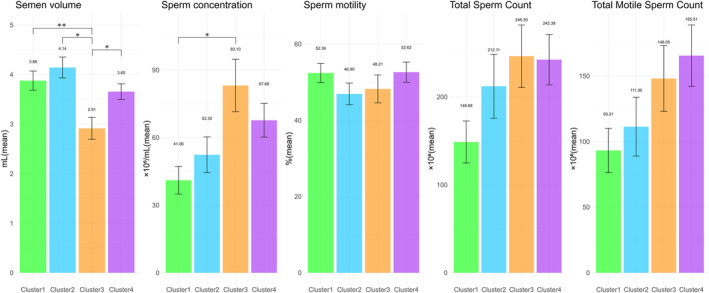
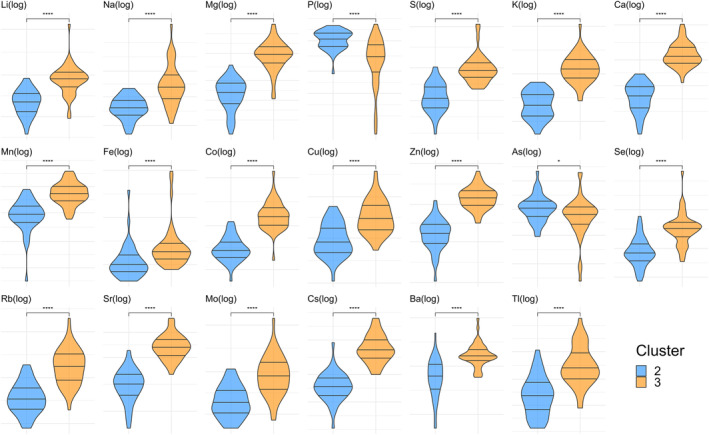
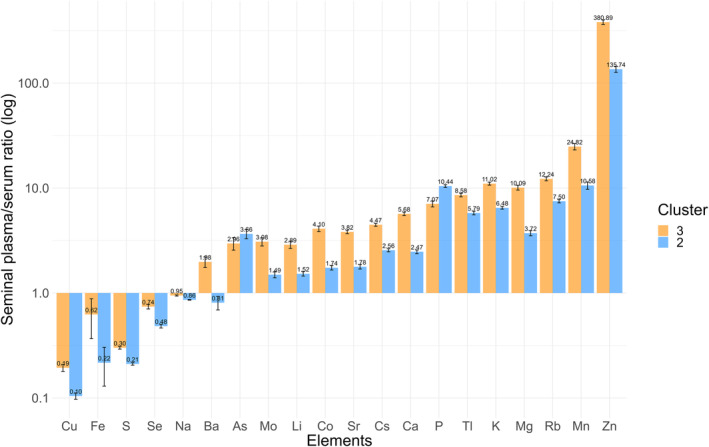
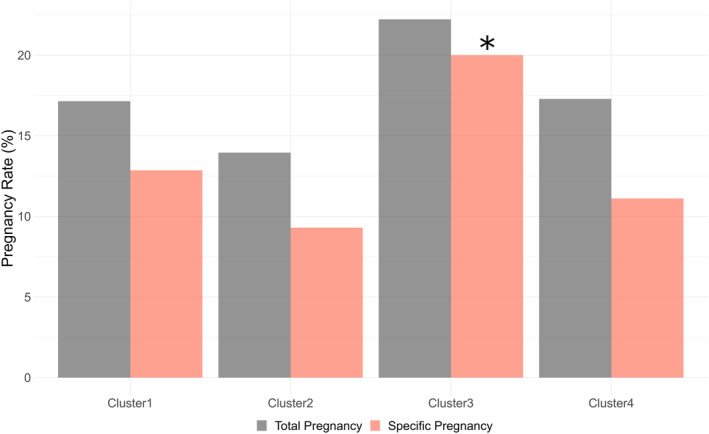
Results: The early fraction of volunteers was characterized by lower phosphorus and arsenic and 18 other higher TEs than the subsequent fraction. Cluster analysis classified patients into four distinct clusters, one sharing characteristics with the early fraction and another with the subsequent fraction. One cluster with the early fraction characteristics had significantly lower semen volume and higher pregnancy rates from spontaneous pregnancies or intrauterine insemination.
Conclusions: Classification of patients based on SP/serum ratios of multiple TEs represents the dominance of fractions of ejaculation samples.
Keywords: accessory gland; arsenic; phosphorus; split ejaculation sampling; trace element.
© 2024 Renatech Co., Ltd and The Author(s). Reproductive Medicine and Biology published by John Wiley & Sons Australia, Ltd on behalf of Japan Society for Reproductive Medicine.
Conflict of interest statement
The authors declare no conflict of interest.
Figures
References
-
- Gnoth C, Godehardt E, Frank‐Herrmann P, Friol K, Tigges J, Freundl G. Definition and prevalence of subfertility and infertility. Hum Reprod. 2005;20(5):1144–1147. Epub 2005 Mar 31. - PubMed
-
- Vander Borght M, Wyns C. Fertility and infertility: definition and epidemiology. Clin Biochem. 2018;62:2–10. - PubMed
-
- Guzick DS, Overstreet JW, Factor‐Litvak P, Brazil CK, Nakajima ST, Coutifaris C, et al. Sperm morphology, motility, and concentration in fertile and infertile men. N Engl J Med. 2001;345(19):1388–1393. - PubMed
LinkOut - more resources
Full Text Sources