


Spatial and temporal variation of net primary productivity of herbaceous marshes and its climatic drivers in China
- PMID: 38807779
- PMCID: PMC11130473
- DOI: 10.3389/fpls.2024.1380081
Spatial and temporal variation of net primary productivity of herbaceous marshes and its climatic drivers in China
Abstract
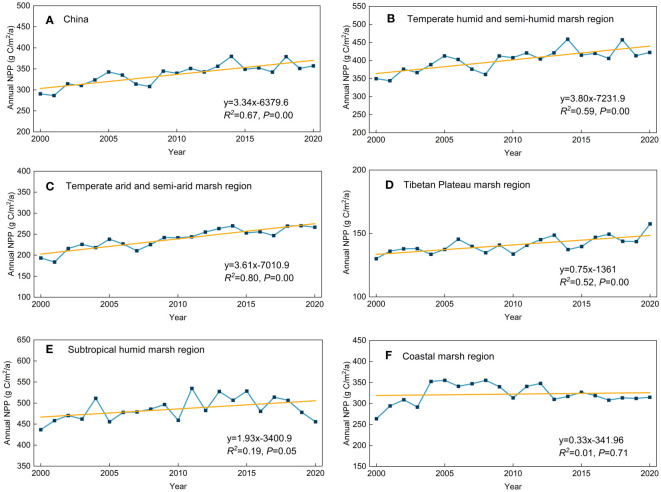
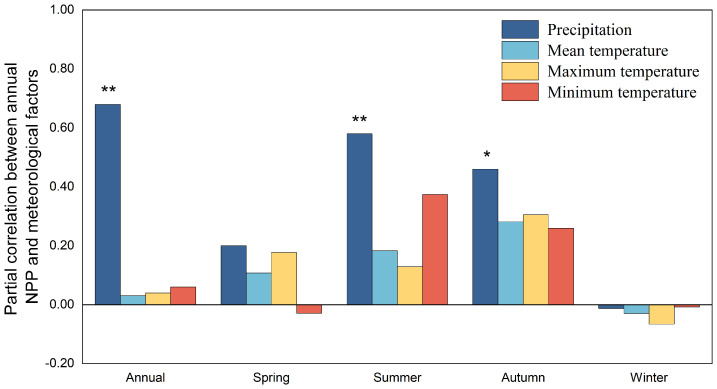
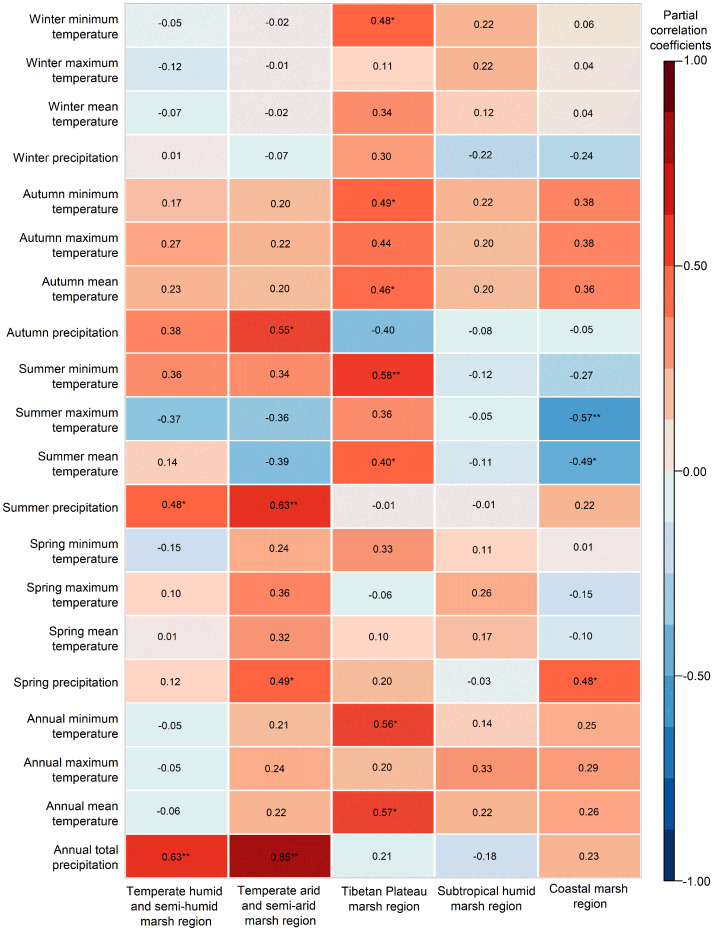
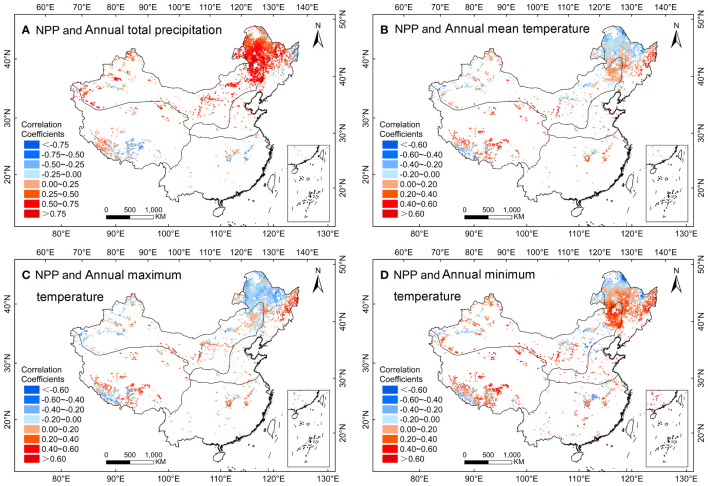
Herbaceous marshes are widely distributed in China and are vital to regional ecological security and sustainable development. Vegetation net primary productivity (NPP) is a vital indicator of vegetation growth. Climatic change can significantly affect NPP, but variations in NPP of herbaceous marsh and their responses to climate change in China remain unclear. Using meteorological data and MODIS NPP data during 2000-2020, this study analyzed the spatial and temporal variations of NPP and their responses to climate change in Chinese herbaceous marshes. We found that the annual NPP of herbaceous marshes in China increased significantly at a rate of 3.34 g C/m2/a from 2000 to 2020, with an average value of 336.60 g C/m2. The increased annual total precipitation enhanced the national average NPP, whereas annual mean temperature had no significant effect on the national average NPP. Regionally, precipitation had a significant positive effect on the NPP in temperate semi-arid and arid and temperate semi-humid and humid marsh regions. For the first time, we discovered asymmetry effects of daytime and nighttime temperatures on NPP in herbaceous marshes of China. In temperate humid and semi-humid marsh regions, increased summer daytime temperature decreased the NPP while increased summer nighttime temperature increased the NPP. In the Tibetan Plateau, increased autumn daytime temperature, as well as summer daytime and nighttime temperatures could increase the NPP of herbaceous marshes. This study highlights the different influences of seasonal climate change on the NPP of herbaceous marshes in China and indicates that the differential effects of daytime and nighttime temperatures should be considering in simulating the NPP of herbaceous marshes in terrestrial ecosystem models, especially under the background of global asymmetric diurnal warming.
Keywords: China; NPP; climate change; herbaceous marshes; vegetation.
Copyright © 2024 Wu, Shen, Zhang, Liu, Ding, Ma, Lu and Jiang.
Conflict of interest statement
The authors declare that the research was conducted in the absence of any commercial or financial relationships that could be construed as a potential conflict of interest.
Figures
References
-
- Bertness M. D., Ellison A. M. (1987). Determinants of pattern in a new-england salt-marsh community. Ecol. Monogr. 57, 129–147. doi: 10.2307/1942621 - DOI
-
- Bhowmik S. (2022). Ecological and economic importance of wetlands and their vulnerability: a review. Res. Anthology Ecosystem Conserv. Preserving Biodiversity, 11–27. doi: 10.4018/978-1-6684-5678-1.ch002 - DOI
-
- Chu X. J., Han G. X., Xing Q. H., Xia J. Y., Sun B. Y., Li X. G., et al. . (2019). Changes in plant biomass induced by soil moisture variability drive interannual variation in the net ecosystem CO2 exchange over a reclaimed coastal wetland. Agric. For. Meteorology 264, 138–148. doi: 10.1016/j.agrformet.2018.09.013 - DOI
-
- Clarkson B. R., Ausseil A. G. E., Gerbeaux P. (2013). Wetland ecosystem services. Ecosystem Serv. New Zealand: conditions Trends 1, 192–202.
LinkOut - more resources
Full Text Sources
