Menarche and Time to Cycle Regularity Among Individuals Born Between 1950 and 2005 in the US
- PMID: 38809557
- PMCID: PMC11137638
- DOI: 10.1001/jamanetworkopen.2024.12854
Menarche and Time to Cycle Regularity Among Individuals Born Between 1950 and 2005 in the US
Abstract
Importance: Early menarche is associated with adverse health outcomes. Trends toward earlier menarche have been observed in the US, but data remain limited on differences by sociodemographic factors and body mass index (BMI). Time from menarche to cycle regularity is another understudied early-life characteristic with health implications.
Objectives: To evaluate the temporal trends and disparities in menarche and time to regularity and explore early-life BMI as a mediator.
Design, setting, and participants: This ongoing cohort study enrolled participants from an ongoing mobile application-based US cohort from November 14, 2019, to March 20, 2023.
Exposures: Birth year (categorized as 1950-1969, 1970-1979, 1980-1989, 1990-1999, and 2000-2005).
Main outcomes and measures: Main outcomes were age at menarche and time to regularity, which were self-recalled at enrollment. In addition, early (aged <11 years), very early (aged <9 years), and late (aged ≥16 years) age at menarche was assessed.
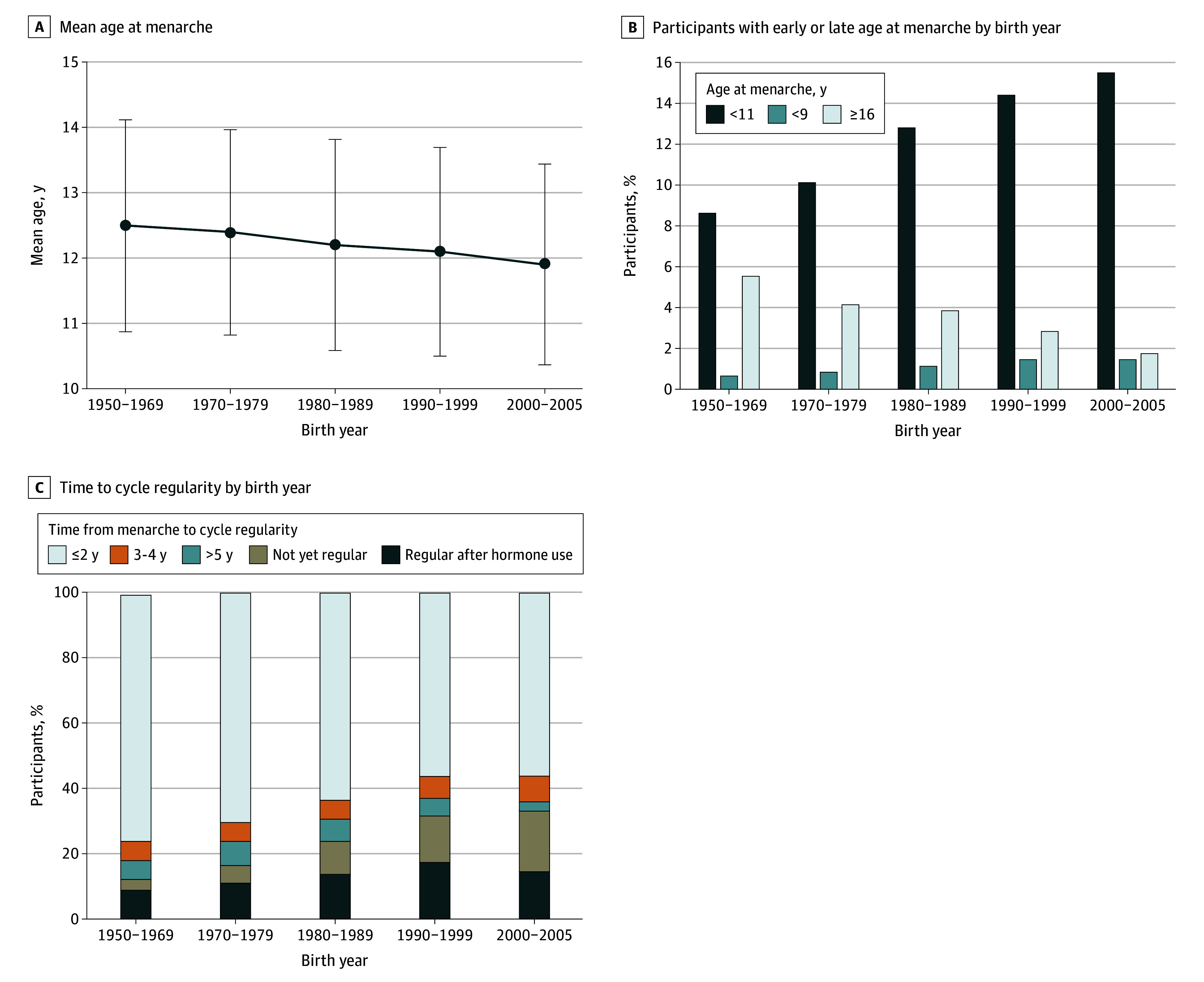
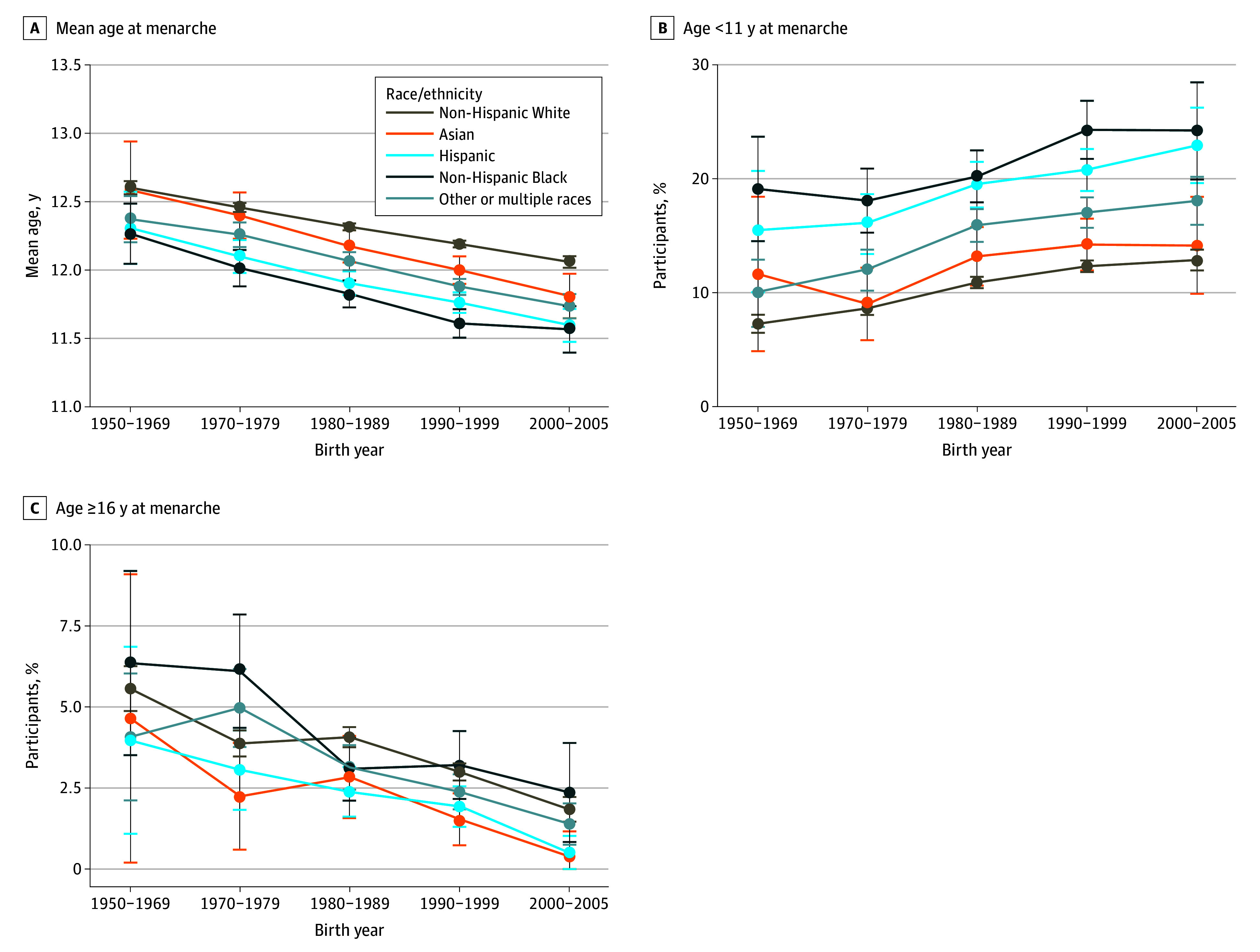
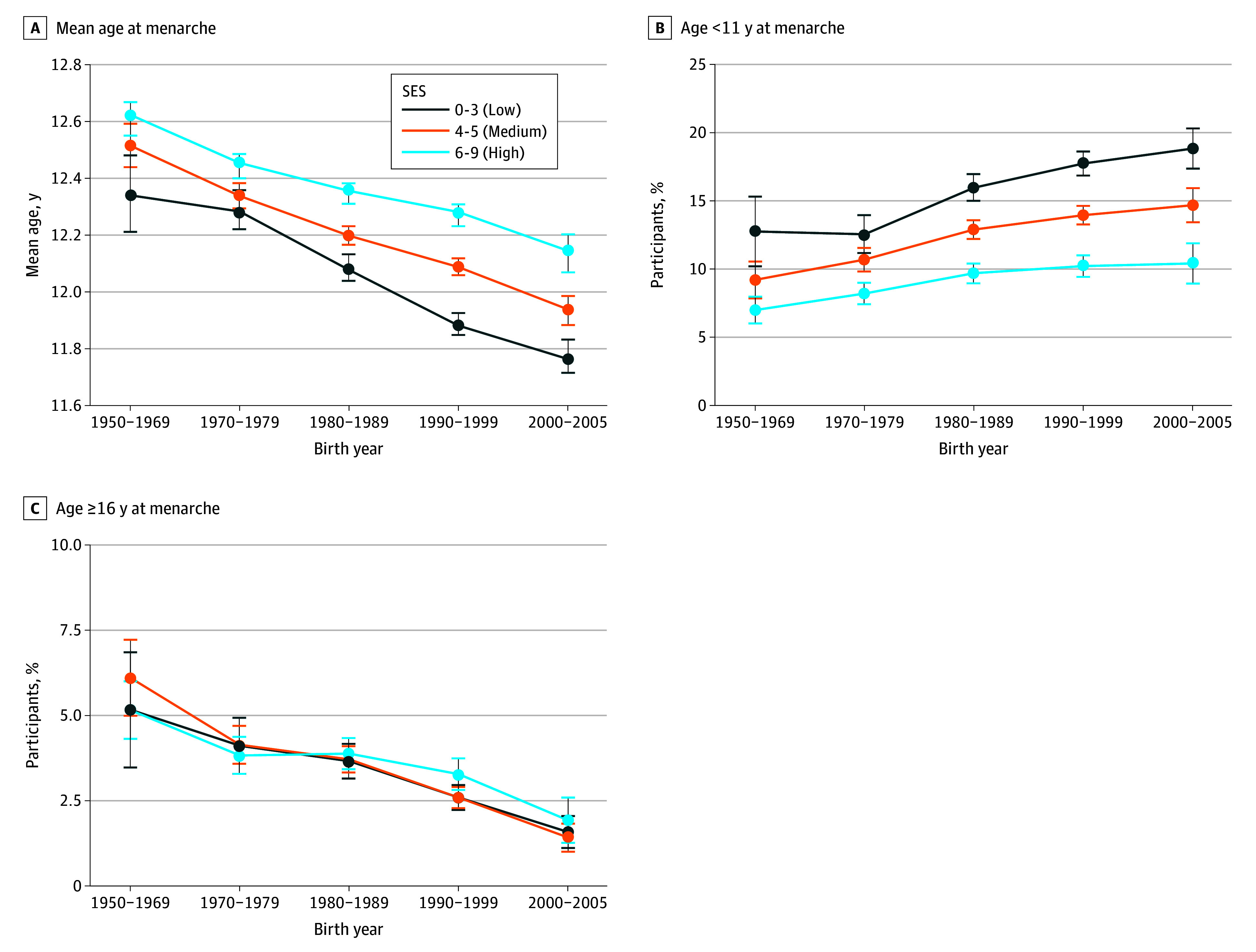
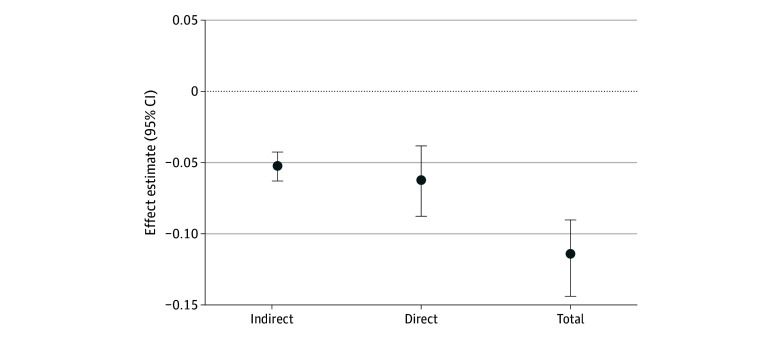
Results: Among the 71 341 female individuals who were analyzed (mean [SD] age at menarche, 12.2 [1.6] years; 2228 [3.1%] Asian, 3665 [5.1%] non-Hispanic Black, 4918 [6.9%] Hispanic, 49 518 [69.4%] non-Hispanic White, and 8461 [11.9%] other or multiple races or ethnicities), 5223 were born in 1950 to 1969, 12 226 in 1970 to 1979, 22 086 in 1980 to 1989, 23 894 in 1990 to 1999, and 7912 in 2000 to 2005. The mean (SD) age at menarche decreased from 12.5 (1.6) years in 1950 to 1969 to 11.9 (1.5) years in 2000 to 2005. The number of individuals experiencing early menarche increased from 449 (8.6%) to 1223 (15.5%), the number of individuals experiencing very early menarche increased from 31 (0.6%) to 110 (1.4%), and the number of individuals experiencing late menarche decreased from 286 (5.5%) to 137 (1.7%). For 61 932 participants with reported time to regularity, the number reaching regularity within 2 years decreased from 3463 (76.3%) to 4075 (56.0%), and the number not yet in regular cycles increased from 153 (3.4%) to 1375 (18.9%). The magnitude of the trend toward earlier menarche was greater among participants who self-identified as Asian, non-Hispanic Black, or other or multiple races (vs non-Hispanic White) (P = .003 for interaction) and among participants self-rated with low (vs high) socioeconomic status (P < .001 for interaction). Within a subset of 9865 participants with data on BMI at menarche, exploratory mediation analysis estimated that 46% (95% CI, 35%-61%) of the temporal trend in age at menarche was explained by BMI.
Conclusions and relevance: In this cohort study of 71 341 individuals in the US, as birth year increased, mean age at menarche decreased and time to regularity increased. The trends were stronger among racial and ethnic minority groups and individuals of low self-rated socioeconomic status. These trends may contribute to the increase in adverse health outcomes and disparities in the US.
Conflict of interest statement
Figures
Comment in
-
Menstruation as the Next Vital Sign.JAMA Netw Open. 2024 May 1;7(5):e2412778. doi: 10.1001/jamanetworkopen.2024.12778. JAMA Netw Open. 2024. PMID: 38809558 No abstract available.
References
-
- Heffner LJ, Schust DJ. The Reproductive System at a Glance. Vol 23. John Wiley & Sons; 2010.