


An integrated signature of clinical metrics and immune-related genes as a prognostic indicator for ST-segment elevation myocardial infarction patient survival
- PMID: 38813183
- PMCID: PMC11133808
- DOI: 10.1016/j.heliyon.2024.e31247
An integrated signature of clinical metrics and immune-related genes as a prognostic indicator for ST-segment elevation myocardial infarction patient survival
Abstract
Background: The immune-inflammatory pathway plays a critical role in myocardial infarction development. However, few studies have systematically explored immune-related genes in relation to myocardial infarction prognosis using bioinformatic analysis. Our study aims to identify differentially expressed immune-related genes(DEIRGs) in ST-segment elevation myocardial infarction (STEMI) patients and investigate their association with clinical outcomes.
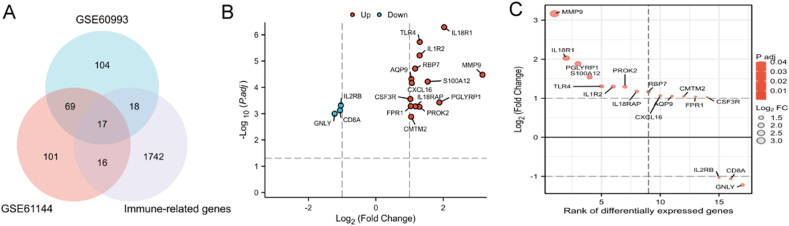
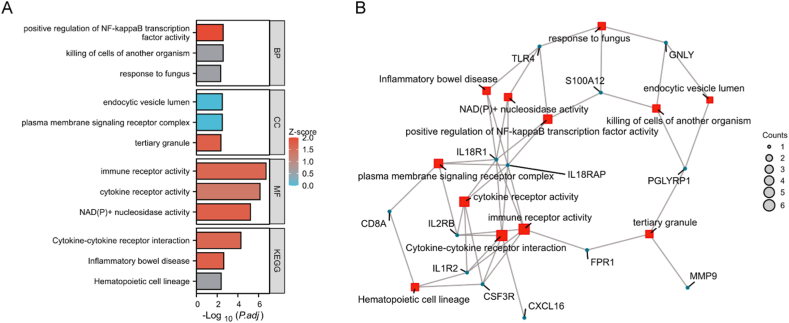
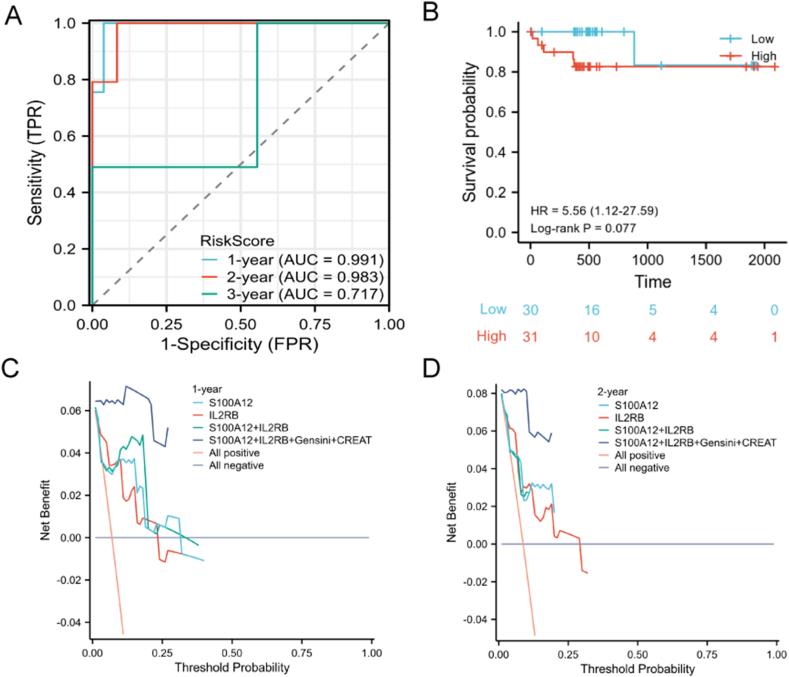
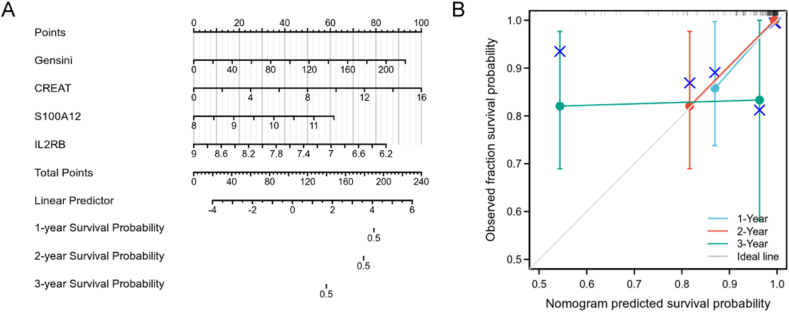
Materials and methods: We conducted a systematic review of Gene Expression Omnibus datasets, selecting GSE49925, GSE60993, and GSE61144 for analysis. DEIRGs were identified using GEO2R and overlapped across the chosen datasets. Functional enrichment analysis elucidated the DEIRGs' biological functions and pathways. We established an optimal prognostic prediction model using LASSO penalized Cox proportional hazards regression. The signature's clinical utility was evaluated through survival analysis, ROC curve assessment, and decision curve analysis. Additionally, we constructed a prognostic nomogram for survival rate prediction. External validation was performed using our own plasma samples.
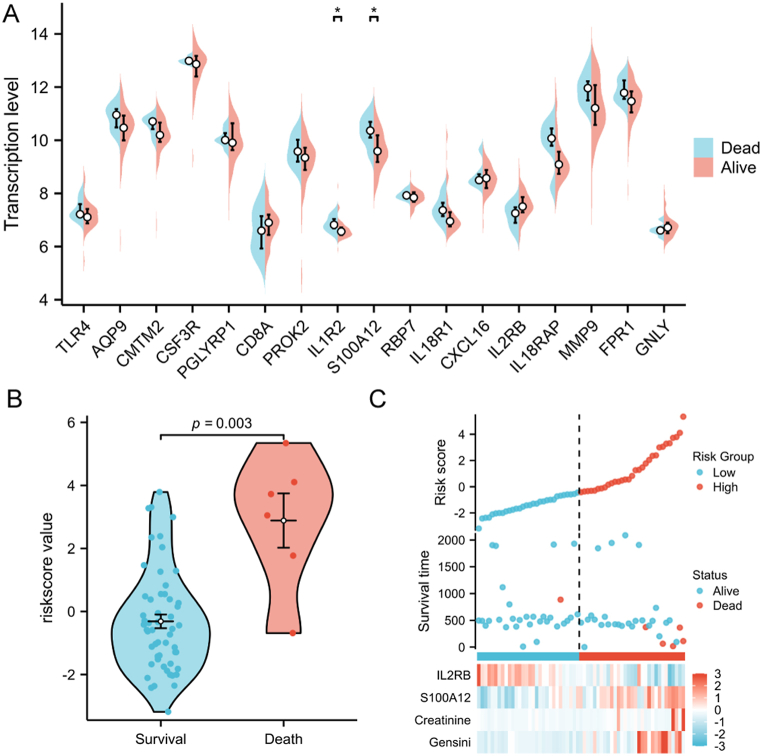
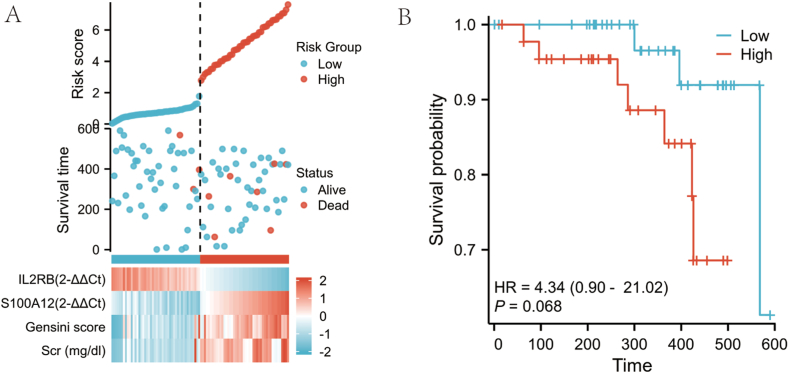
Results: The resulting prognostic signature integrated two dysregulated DEIRGs (S100A12 and IL2RB) and two clinical variables (serum creatinine level and Gensini score). This signature effectively stratified patients into low- and high-risk groups. Survival analysis, ROC curve analysis, and decision curve analysis demonstrated its robust predictive performance and clinical utility within the first two years post-disease onset. External validation confirmed significant outcome differences between risk groups.
Conclusions: Our study establishes a prognostic signature that combines DEIRGs and clinical variables for STEMI patients. The signature exhibits promising predictive capabilities for patient stratification and survival risk assessment.
Keywords: Acute coronary syndrome; Bioinformatics; IL2RB protein; Prognosis; S100A12 protein; Transcriptome.
© 2024 The Authors.
Conflict of interest statement
The authors declare that they have no known competing financial interests or personal relationships that could have appeared to influence the work reported in this paper.
Figures

References
-
- Tehrani D.M., Seto A.H. Third universal definition of myocardial infarction: update, caveats, differential diagnoses. Cleve. Clin. J. Med. 2013;80(12):777–786. - PubMed
-
- Fitchett D.H., Theroux P., Brophy J.M., et al. Assessment and management of acute coronary syndromes (ACS): a Canadian perspective on current guideline-recommended treatment--part 2: ST-segment elevation myocardial infarction. Can. J. Cardiol. 2011;27(Suppl A):S402–S412. - PubMed
-
- Koutsoukis A., Kanakakis I. Challenges and unanswered questions in STEMI management. Hellenic J. Cardiol. 2019;60(4):211–215. - PubMed
-
- Zhang L., Liu Z., Zhu Y., et al. Development and validation of a prognostic model for predicting post-discharge mortality risk in patients with ST-segment elevation myocardial infarction (STEMI) undergoing primary percutaneous coronary intervention (PPCI) J. Cardiothorac. Surg. 2024;19(1):163. - PMC - PubMed
LinkOut - more resources
Full Text Sources
Research Materials
Miscellaneous
