


Well-designed manufacturing work improves some cognitive abilities in individuals with cognitive impairments
- PMID: 38813372
- PMCID: PMC11135131
- DOI: 10.3389/fresc.2024.1377133
Well-designed manufacturing work improves some cognitive abilities in individuals with cognitive impairments
Abstract
Introduction: Employment is recognized as a fundamental human right, which correlates with better physical and mental health. Importantly, well-designed work, which considers the physical, social, and psychological impacts of work, can serve to enhance the cognitive abilities of workers. Although often overlooked, work for individuals with disabilities, including cognitive impairments, is equally important for their physical and mental well-being. What has not been established, however, is whether well-designed work can also enhance the cognitive abilities of individuals with cognitive impairments.
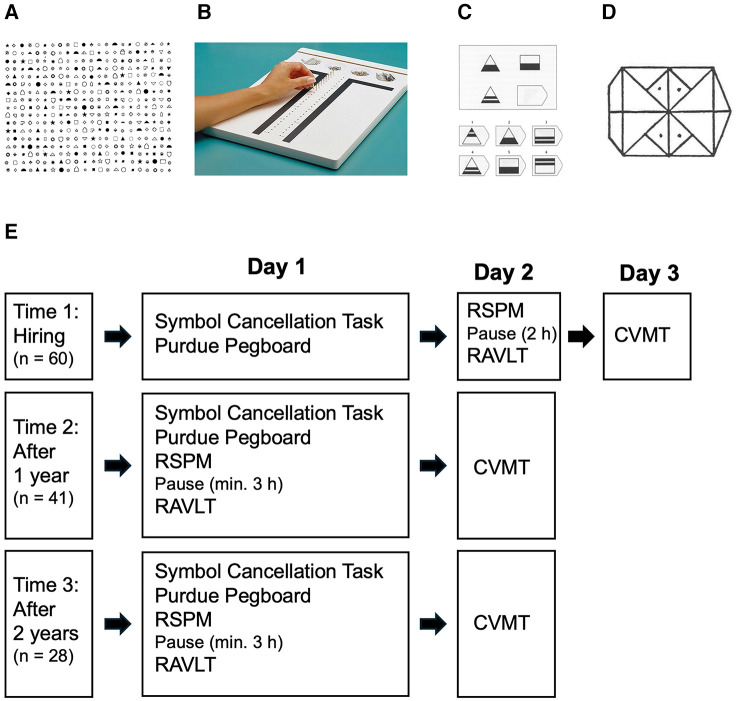
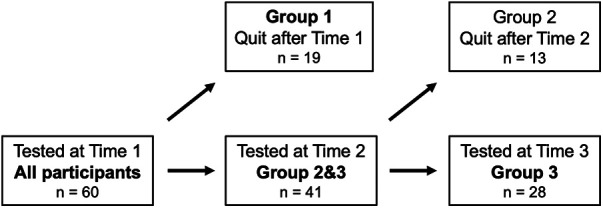
Methods: Using a longitudinal study design, we investigated the impact of well-designed work on the cognitive abilities of 60 participants (operators) at the AMIPI Foundation factories, which employ individuals with cognitive impairments to produce electrical cables and harnesses for the automobile industry. The same operators were assessed at three different time points: upon hiring (n = 60), and after working in the factory for 1 year (n = 41, since 19 left the factory) and 2 years (n = 28, since 13 more left the factory). We used five cognitive tests evaluating: (1) finger and manual dexterity, bimanual dexterity, and procedural memory using the Purdue Pegboard; (2) sustained and selective attention using the Symbol Cancellation Task; (3) short- and long-term declarative verbal memory and long-term verbal recognition memory using Rey's Audio-Verbal Learning Test; (4) short- and long-term visual recognition memory using the Continuous Visual Memory Test; and (5) abstract reasoning using Raven's Standard Progressive Matrices.
Results: We observed improvements in procedural memory, sustained and selective attention, and short- and long-term visual recognition memory after working in the factory for 1 or 2 years. We did not observe improvements in finger or manual dexterity or bimanual dexterity, nor short- or long-term declarative verbal memory or verbal recognition memory, nor abstract reasoning.
Discussion: We conclude that, in addition to improving physical and mental well-being, well-designed manufacturing work can serve as a training intervention improving some types of cognitive functioning in individuals with cognitive impairments.
Keywords: cognitive enhancement; cognitive training; fluid intelligence; intellectual disability; well-designed work.
© 2024 Banta Lavenex, Blandin, Gaborieau and Lavenex.
Conflict of interest statement
MB and CG were employees at the AMIPI Foundation for the duration of this study. PBL was remunerated by the AMIPI Foundation to conduct this study. The remaining author declares that the research was conducted in the absence of any commercial or financial relationships that could be construed as a potential conflict of interest. The author(s) declared that they were an editorial board member of Frontiers, at the time of submission. This had no impact on the peer review process and the final decision.
Figures
References
-
- United Nations. Universal Declaration of Human Rights (1948). Available online at: https://www.un.org/en/about-us/universal-declaration-of-human-rights (Accessed September 3, 2023).
-
- Hergenrather KC, Zeglin RJ, McGuire-Kuletz M, Rhodes SD. Employment as a social determinant of health: a systematic review of longitudinal studies exploring the relationship between employment status and physical health. Rehab Res Policy Educ. (2015) 29(1):2–26. 10.1891/2168-6653.29.1.2 - DOI
LinkOut - more resources
Full Text Sources
Miscellaneous
