


Economic cost-benefit analysis of person-centred medicines reviews by general practice pharmacists
- PMID: 38814513
- PMCID: PMC11286700
- DOI: 10.1007/s11096-024-01732-y
Economic cost-benefit analysis of person-centred medicines reviews by general practice pharmacists
Abstract
Background: Medicines reviews by general practice pharmacists improve patient outcomes, but little is known about the associated economic outcomes, particularly in patients at higher risk of medicines-related harm.
Aim: To conduct an economic cost-benefit analysis of pharmacists providing person-centred medicines reviews to patients with hyperpolypharmacy (prescribed ≥ 10 regular medicines) and/or at high risk of medicines-related harm across multiple general practice settings.
Method: Service delivery costs were calculated based on the pharmacist's salary, recorded timings, and a general practitioner fee. Direct cost savings were calculated from the cost change of patients' medicines post review, projected over 1 year. Indirect savings were calculated using two models, a population-based model for avoidance of hospital admissions due to adverse drug reactions and an intervention-based model applying a probability of adverse drug reaction avoidance. Sensitivity analyses were performed using varying workday scenarios.
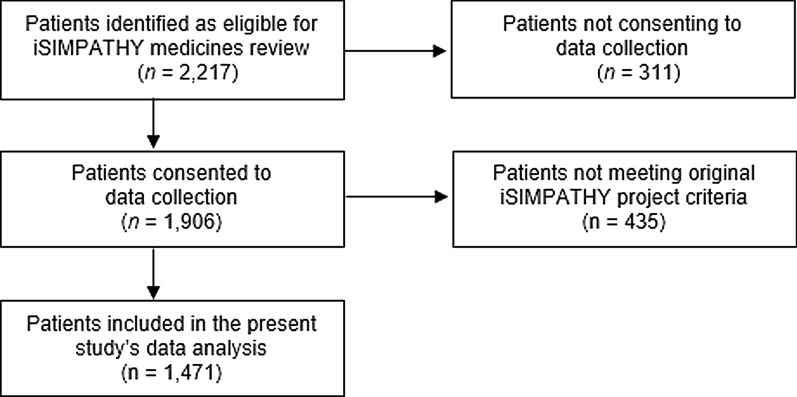
Results: Based on 1471 patients (88.4% with hyperpolypharmacy), the cost of service delivery was €153 per review. Using the population-based model, net cost savings ranging from €198 to €288 per patient review and from €73,317 to €177,696 per annum per pharmacist were calculated. Using the intervention-based model, net cost savings of €651-€741 per review, with corresponding annual savings of €240,870-€457,197 per annum per pharmacist, were calculated. Savings ratios ranged from 181 to 584% across all models and inputs.
Conclusion: Person-centred medicines reviews by general practice pharmacists for patients at high risk of medicines-related harm result in substantial cost savings. Wider investment in general practice pharmacists will be beneficial to minimise both patient harm and healthcare system expenditure.
Keywords: Cost; General practice; Pharmacist; Pharmacoeconomics; Polypharmacy.
© 2024. The Author(s).
Conflict of interest statement
The authors have no conflicts of interest to declare.
Figures
References
-
- Scottish Government Polypharmacy Model of Care Group. Polypharmacy Guidance, Realistic Prescribing 3rd ed, 2018. Scottish Government.
-
- Leelakanok N, Holcombe AL, Lund BC, et al. Association between polypharmacy and death: a systematic review and meta-analysis. J Am Pharm Assoc. 2017;57:729–38. - PubMed
MeSH terms
Grants and funding
LinkOut - more resources
Full Text Sources
