


Bacterial microbiota and proinflammatory cytokines in the anal sacs of treated and untreated atopic dogs: Comparison with a healthy control group
- PMID: 38814946
- PMCID: PMC11139270
- DOI: 10.1371/journal.pone.0298361
Bacterial microbiota and proinflammatory cytokines in the anal sacs of treated and untreated atopic dogs: Comparison with a healthy control group
Abstract
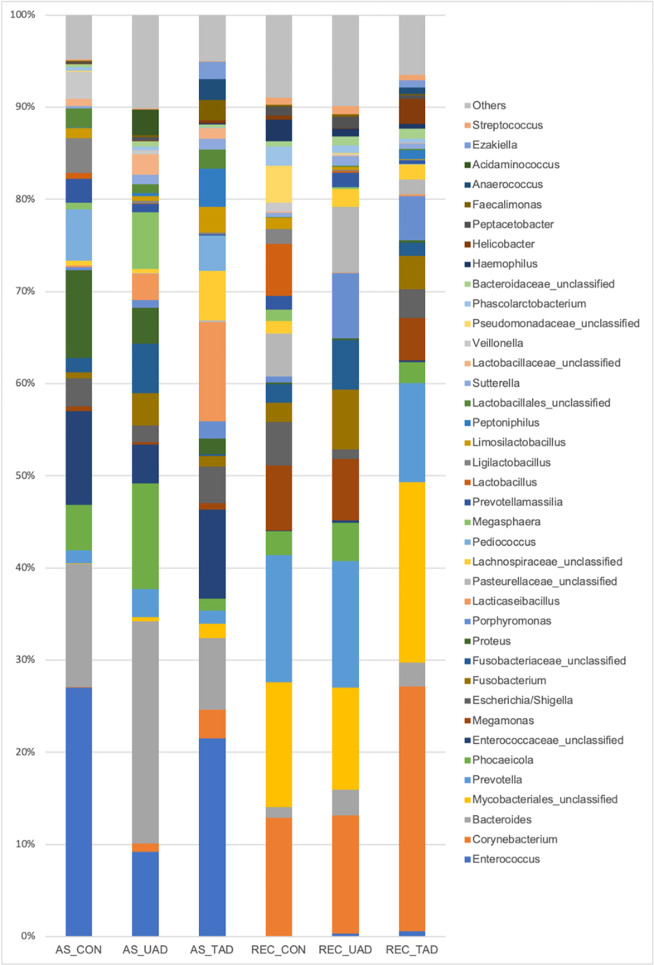
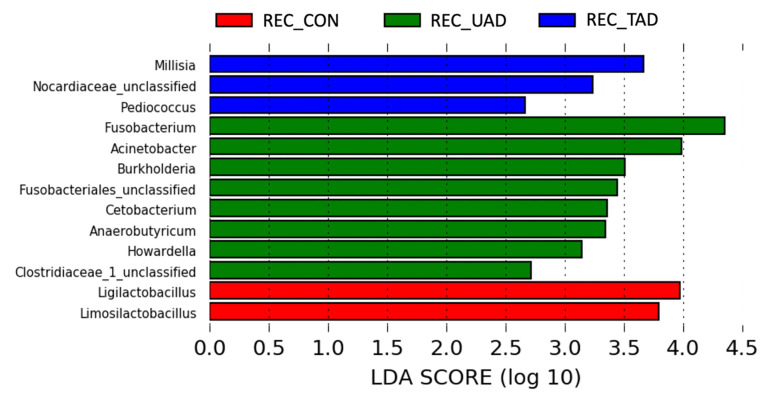
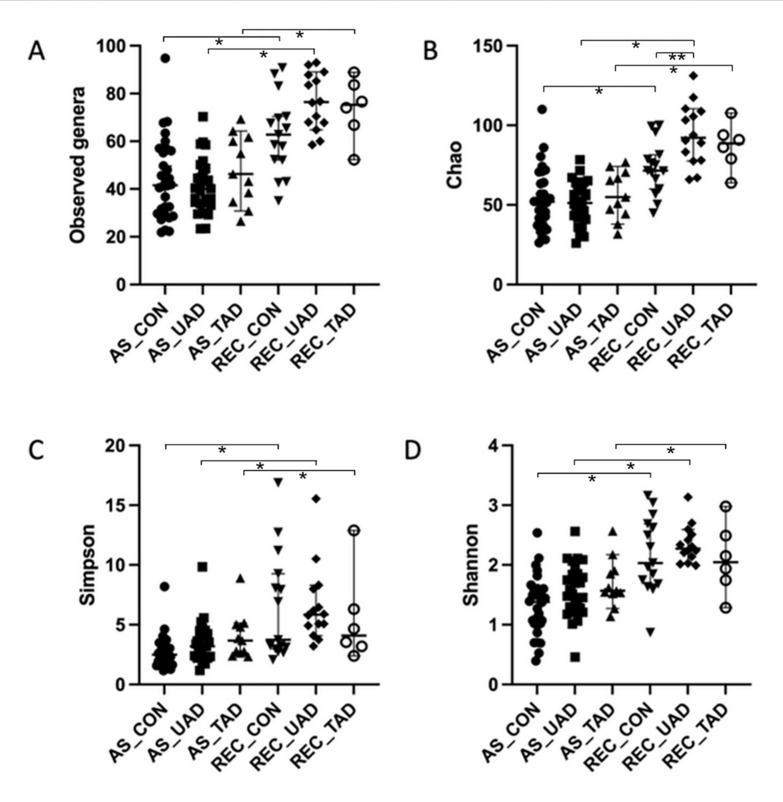
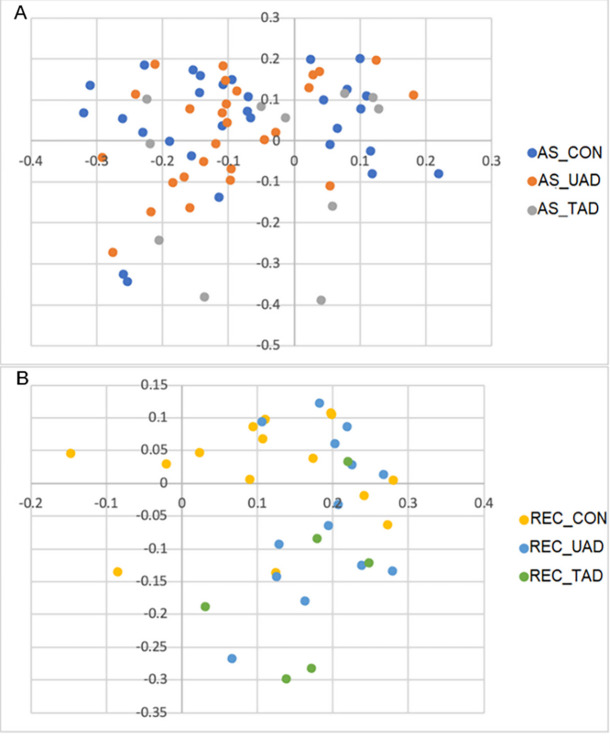
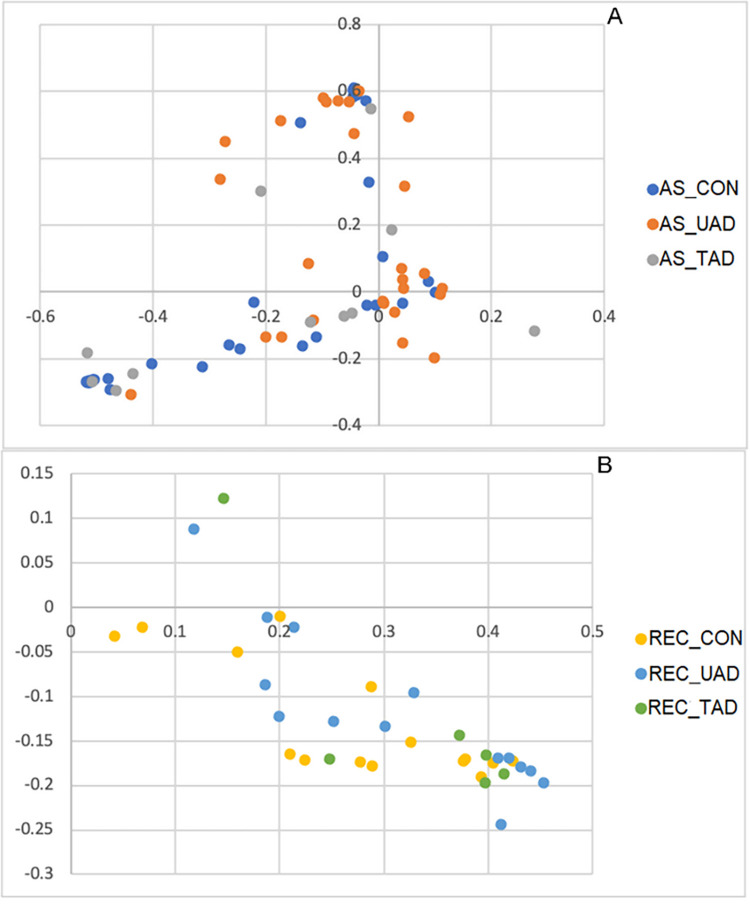
The pathogenesis of anal sacculitis has not been extensively investigated, although atopic dogs seem to be predisposed to the disease. The aim of this study was therefore to characterize and compare the bacterial microbiota and pro-inflammatory cytokines in the anal sacs of dogs from three groups (healthy dogs, untreated atopic dogs and atopic dogs receiving antipruritic treatment or allergen-specific immunotherapy) in order to determine whether changes could be at the origin of anal sacculitis in atopic dogs. Bacterial populations of anal sac secretions from fifteen healthy dogs, fourteen untreated and six treated atopic dogs were characterized by sequencing the V4 region of the 16S rRNA gene using Illumina technology. Proinflammatory cytokines were analyzed with the Luminex multiplex test. Community membership and structure were significantly different between the anal sacs of healthy and untreated atopic dogs (P = 0.002 and P = 0.003, respectively) and between those of untreated and treated atopic dogs (P = 0.012 and P = 0.017, respectively). However, the community structure was similar in healthy and treated atopic dogs (P = 0.332). Among the proinflammatory cytokines assessed, there was no significant difference between groups, except for interleukin 8 which was higher in the anal sacs of untreated atopic dogs compared to treated atopic dogs (P = 0.02), and tumor necrosis factor-alpha which was lower in the anal sacs of healthy dogs compared to treated atopic dogs (P = 0.04). These results reveal a dysbiosis in the anal sacs of atopic dogs, which may partially explain the predisposition of atopic dogs to develop bacterial anal sacculitis. Treatments received by atopic dogs (oclacitinib, desloratadine and allergen-specific immunotherapy) shift the microbiota of the anal sacs towards that of healthy dogs. Further studies are required to identify significant cytokines contributing to anal sacculitis in atopic dogs.
Copyright: © 2024 C. Bergeron et al. This is an open access article distributed under the terms of the Creative Commons Attribution License, which permits unrestricted use, distribution, and reproduction in any medium, provided the original author and source are credited.
Conflict of interest statement
The authors have declared that no competing interests exist.
Figures
References
-
- Pappalardo E, Martino PA, Noli C. Macroscopic, cytological and bacteriological evaluation of anal sac content in normal dogs and in dogs with selected dermatological diseases. Vet Dermatol. 2022. Dec;13(6):315–22. - PubMed
-
- Radlinsky M, Fossum TW. Surgery of the digestive system. In: Fossum TW, Cho J, Dewey CW, Hayashi K, Huntingford JL, MacPhail CM, et al., editors. Small Animal Surgery Fifth Edition. Philadelphia: Elsevier; 2019. p. 331–511.
-
- Glaze MB. Diseases of eyelids, claws, anal sacs, and ears. In: Miller WH, Griffin CE, Campbell KL, editors. Small animal dermatology. 7th ed. St. Louis: Elsevier Mosby; 2013. p. 724 à 773.
Publication types
MeSH terms
Substances
LinkOut - more resources
Full Text Sources
