


Relative frequencies and clinical features of Guillain-Barré Syndrome before and during the COVID-19 pandemic in North China
- PMID: 38816802
- PMCID: PMC11138026
- DOI: 10.1186/s12879-024-09401-1
Relative frequencies and clinical features of Guillain-Barré Syndrome before and during the COVID-19 pandemic in North China
Abstract
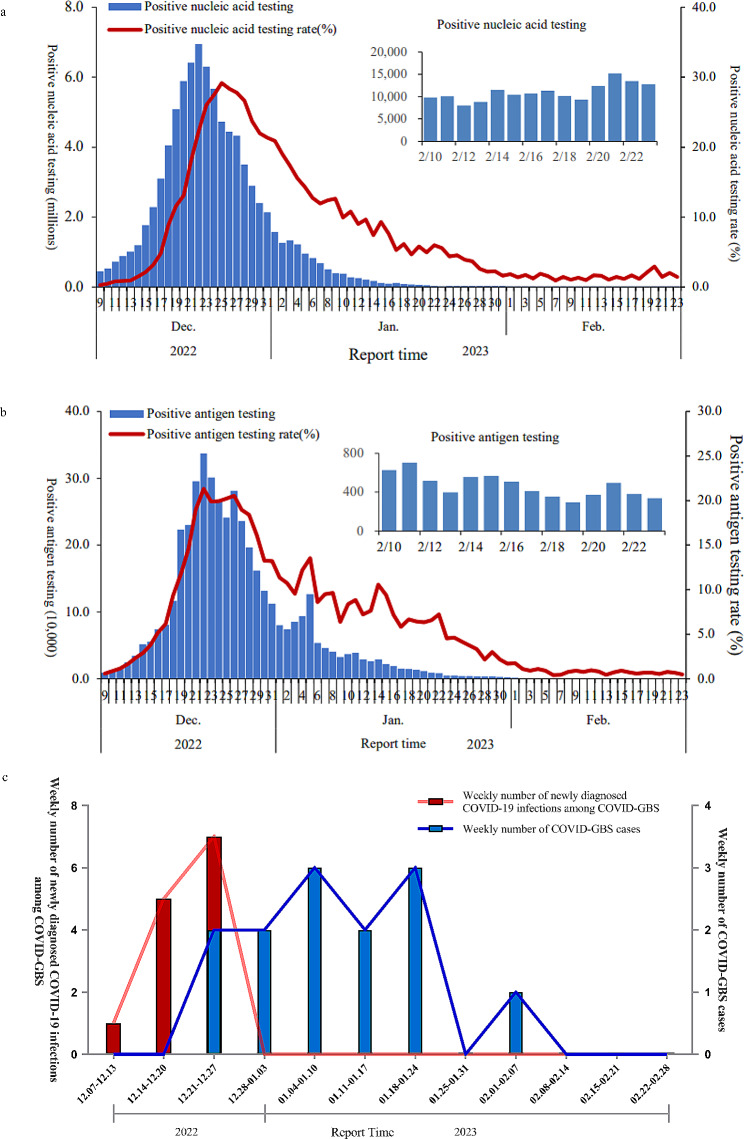
Objective: Most studies investigated the relationship between COVID-19 and Guillain-Barré syndrome (GBS) by comparing the incidence of GBS before and during the pandemic of COVID-19. However, the findings were inconsistent, probably owing to varying degrees of the lockdown policy. The quarantine requirements and travel restrictions in China were lifted around December 7, 2022. This study aimed to explore whether the relative frequency of GBS increased during the major outbreak in the absence of COVID-19-mandated social restrictions in China.
Methods: GBS patients admitted to the First Hospital, Shanxi Medical University, from December 7, 2022 to February 20, 2023, and from June, 2017 to August, 2019 were included. The relative frequencies of GBS in hospitalized patients during different periods were compared. The patients with and without SARS-CoV-2 infection within six weeks prior to GBS onset formed the COVID-GBS group and non-COVID-GBS group, respectively.
Results: The relative frequency of GBS among hospitalized patients during the major outbreak of COVID-19 (13/14,408) was significantly higher than that before the COVID-19 epidemic (29/160,669, P < 0.001). More COVID-GBS patients (11/13) presented AIDP subtype than non-COVID-GBS cases (10/27, P = 0.003). The mean interval between onset of infective symptoms and GBS was longer in COVID-GBS (21.54 ± 11.56 days) than in non-COVID-GBS (5.76 ± 3.18 days, P < 0.001).
Conclusions: COVID-19 significantly increased the incidence of GBS. Most COVID-GBS patients fell into the category of AIDP, responded well to IVIg, and had a favorable prognosis.
Keywords: COVID-19; Characteristic; Guillain-Barré Syndrome; Incidence; Prognosis.
© 2024. The Author(s).
Conflict of interest statement
The authors declare no competing interests.
Figures
References
-
- Beghi E, Giussani G, Westenberg E, Allegri R, Garcia-Azorin D, Guekht A, Frontera J, Kivipelto M, Mangialasche F, Mukaetova-Ladinska EB, et al. Acute and post-acute neurological manifestations of COVID-19: present findings, critical appraisal, and future directions. J Neurol. 2022;269(5):2265–74. doi: 10.1007/s00415-021-10848-4. - DOI - PMC - PubMed
-
- Nagappa M, Dutta D, Debnath M, Seshagiri D, Sreekumaran Nair B, Das S, Wahatule R, Sinha S, Ravi V, Taly A. Impact of antecedent infections on the antibodies against gangliosides and ganglioside complexes in Guillain-Barré syndrome: a correlative study. Ann Indian Acad Neurol 2022, 25(3). - PMC - PubMed
MeSH terms
LinkOut - more resources
Full Text Sources
Medical
Miscellaneous
