


Malignancy pattern analysis of breast ultrasound images using clinical features and a graph convolutional network
- PMID: 38817843
- PMCID: PMC11138200
- DOI: 10.1177/20552076241251660
Malignancy pattern analysis of breast ultrasound images using clinical features and a graph convolutional network
Abstract
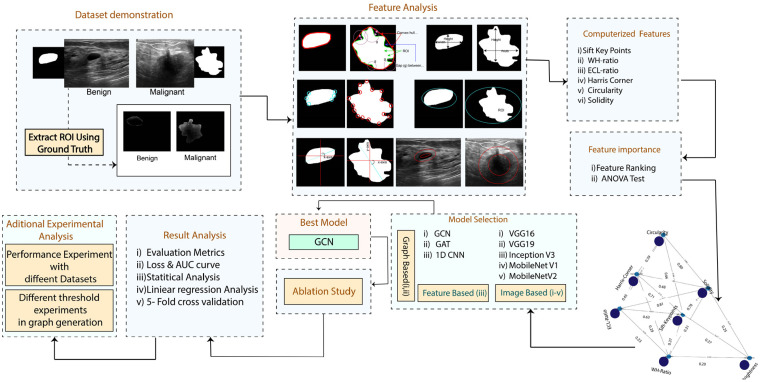
Objective: Early diagnosis of breast cancer can lead to effective treatment, possibly increase long-term survival rates, and improve quality of life. The objective of this study is to present an automated analysis and classification system for breast cancer using clinical markers such as tumor shape, orientation, margin, and surrounding tissue. The novelty and uniqueness of the study lie in the approach of considering medical features based on the diagnosis of radiologists.
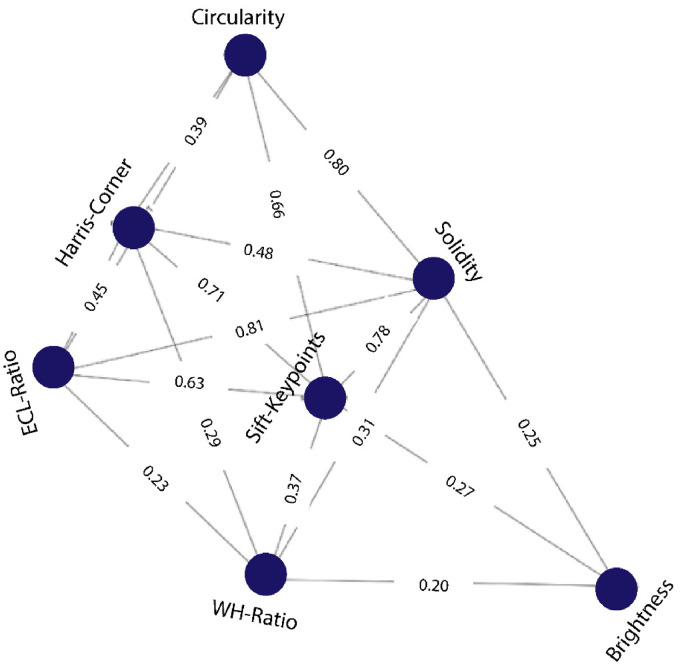
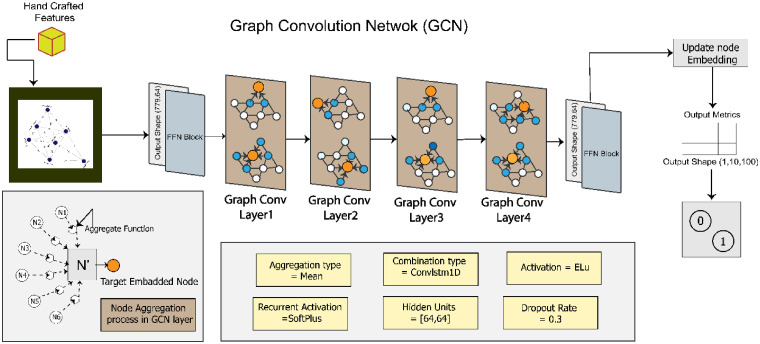
Methods: Using clinical markers, a graph is generated where each feature is represented by a node, and the connection between them is represented by an edge which is derived through Pearson's correlation method. A graph convolutional network (GCN) model is proposed to classify breast tumors into benign and malignant, using the graph data. Several statistical tests are performed to assess the importance of the proposed features. The performance of the proposed GCN model is improved by experimenting with different layer configurations and hyper-parameter settings.
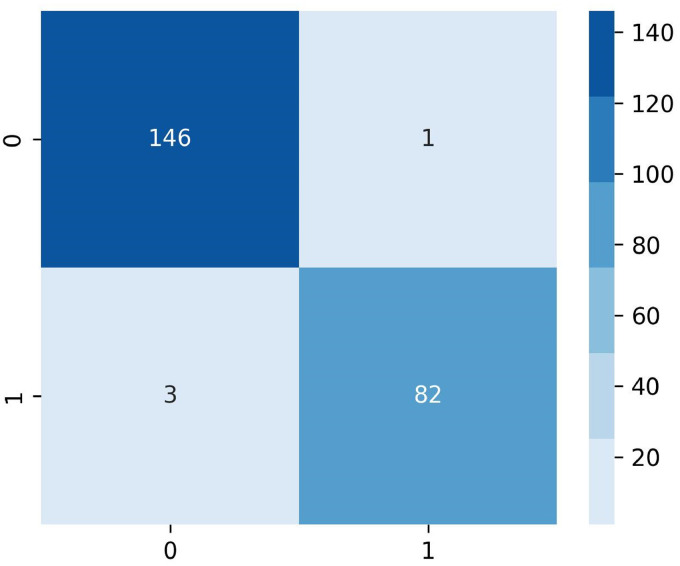
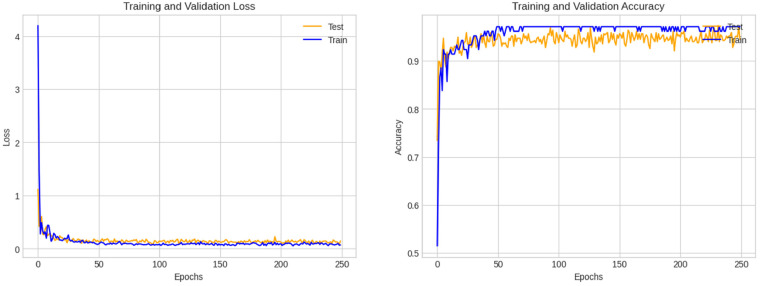
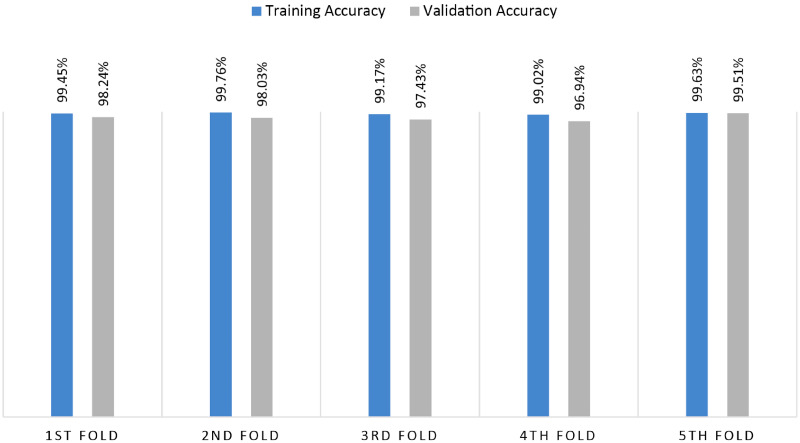
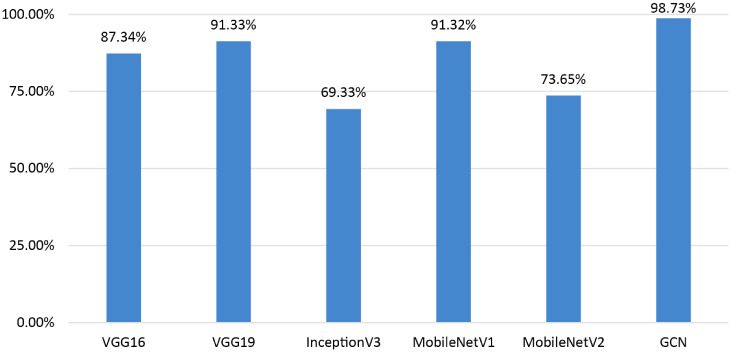
Results: Results show that the proposed model has a 98.73% test accuracy. The performance of the model is compared with a graph attention network, a one-dimensional convolutional neural network, and five transfer learning models, ten machine learning models, and three ensemble learning models. The performance of the model was further assessed with three supplementary breast cancer ultrasound image datasets, where the accuracies are 91.03%, 94.37%, and 89.62% for Dataset A, Dataset B, and Dataset C (combining Dataset A and Dataset B) respectively. Overfitting issues are assessed through k-fold cross-validation.
Conclusion: Several variants are utilized to present a more rigorous and fair evaluation of our work, especially the importance of extracting clinically relevant features. Moreover, a GCN model using graph data can be a promising solution for an automated feature-based breast image classification system.
Keywords: Breast ultrasound image; clinical features; ensemble learning; graph attention network; graph convolutional network.
© The Author(s) 2024.
Conflict of interest statement
The authors declared no potential conflicts of interest with respect to the research, authorship, and/or publication of this article.
Figures
References
-
- Zhang S., Xie W., Li W., Wang L., Feng C., “GAMB-GNN: Graph Neural Networks learning from gene structure relations and Markov Blanket ranking for cancer classification in microarray data,” Chemometrics and Intelligent Laboratory Systems, vol. 232, Jan. 2023, doi: 10.1016/j.chemolab.2022.104713. - DOI
-
- Gradishar W. J. et al., “Breast cancer, version 3.2020,” JNCCN Journal of the National Comprehensive Cancer Network, vol. 18, no. 4, pp. 452–478, Apr. 2020, doi: 10.6004/jnccn.2020.0016. - PubMed
-
- Myers E. R. et al., “Benefits and harms of breast cancer screening: A systematic review,” JAMA - Journal of the American Medical Association, vol. 314, no. 15. American Medical Association, pp. 1615–1634, Oct. 20, 2015. doi: 10.1001/jama.2015.13183. - PubMed
LinkOut - more resources
Full Text Sources
