


Isolated fracture of the coronoid process following a molar extraction: A rare case report
- PMID: 38819092
- PMCID: PMC11143830
- DOI: 10.1177/03000605241257446
Isolated fracture of the coronoid process following a molar extraction: A rare case report
Abstract
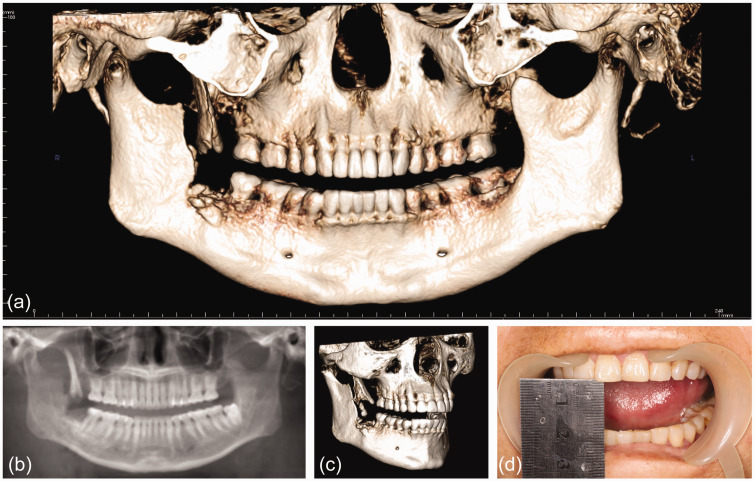
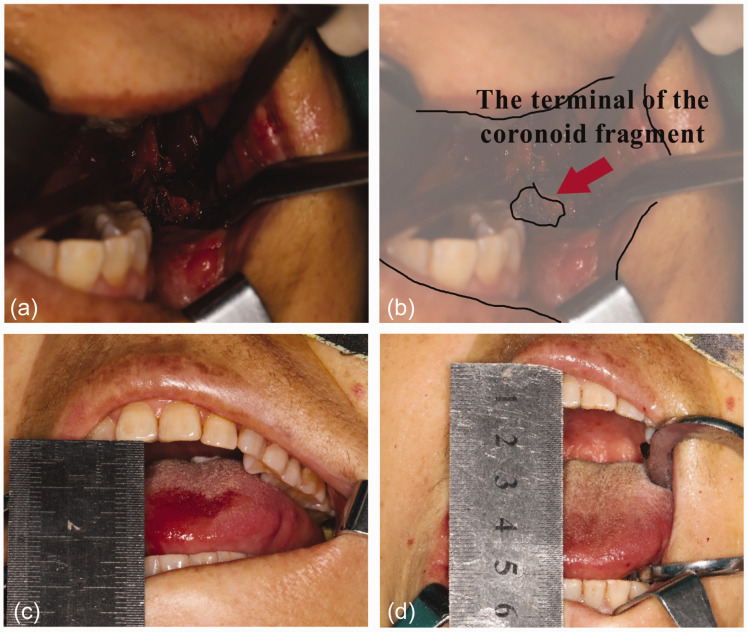
Isolated coronoid process fractures are uncommon, and iatrogenic isolated fractures are extremely rare. This case describes a displaced fracture of an isolated coronoid process thought to be due to excessive force applied by a dentist that had been overlooked and left untreated for about a month. The patient was a woman in her late 50's and she had undergone a molar extraction. Her dentist had confused her symptoms of trismus, pain, and facial oedema with the complex tooth extraction procedure. Following a cone-beam computed tomography (CBCT) scan we showed that the mandibular coronoid process on her right side had suffered a longitudinal fracture, and the fractured fragment had rotated upwards and inwards. Following successful surgical elimination of the fragmented coronoid process, the patient received targeted physiotherapy sessions that yielded excellent results. At the five-month follow-up, the ability of the patient to open her mouth had improved enormously, and her facial appearance almost recovered to its original state.
Keywords: Dental extraction; coronoid process; mandibular fracture; oral surgery.
Conflict of interest statement
Declaration of conflicting interestsThe authors declare that there are no conflicts of interest.
Figures

References
-
- Lambade P, Dawane P, Mali D. Assessment of Difficulty in Mandibular Third Molar Surgery by Lambade-Dawane-Mali’s Index. J Oral Maxillofac Surg 2023; 81: 772–779. - PubMed
Publication types
MeSH terms
LinkOut - more resources
Full Text Sources
