. 2024 May 1;7(5):e2414322.
doi: 10.1001/jamanetworkopen.2024.14322.

Mediterranean Diet Adherence and Risk of All-Cause Mortality in Women

Affiliations

Mediterranean Diet Adherence and Risk of All-Cause Mortality in Women

Shafqat Ahmad et al. JAMA Netw Open. .

Abstract

Importance: Higher adherence to the Mediterranean diet has been associated with reduced risk of all-cause mortality, but data on underlying molecular mechanisms over long follow-up are limited.

Objectives: To investigate Mediterranean diet adherence and risk of all-cause mortality and to examine the relative contribution of cardiometabolic factors to this risk reduction.

Design, setting, and participants: This cohort study included initially healthy women from the Women's Health Study, who had provided blood samples, biomarker measurements, and dietary information. Baseline data included self-reported demographics and a validated food-frequency questionnaire. The data collection period was from April 1993 to January 1996, and data analysis took place from June 2018 to November 2023.

Exposures: Mediterranean diet score (range, 0-9) was computed based on 9 dietary components.

Main outcome and measures: Thirty-three blood biomarkers, including traditional and novel lipid, lipoprotein, apolipoprotein, inflammation, insulin resistance, and metabolism measurements, were evaluated at baseline using standard assays and nuclear magnetic resonance spectroscopy. Mortality and cause of death were determined from medical and death records. Cox proportional hazards regression was used to calculate hazard ratios (HRs) for Mediterranean diet adherence and mortality risk, and mediation analyses were used to calculate the mediated effect of different biomarkers in understanding this association.

Results: Among 25 315 participants, the mean (SD) baseline age was 54.6 (7.1) years, with 329 (1.3%) Asian women, 406 (1.6%) Black women, 240 (0.9%) Hispanic women, 24 036 (94.9%) White women, and 95 (0.4%) women with other race and ethnicity; the median (IQR) Mediterranean diet adherence score was 4.0 (3.0-5.0). Over a mean (SD) of 24.7 (4.8) years of follow-up, 3879 deaths occurred. Compared with low Mediterranean diet adherence (score 0-3), adjusted risk reductions were observed for middle (score 4-5) and upper (score 6-9) groups, with HRs of 0.84 (95% CI, 0.78-0.90) and 0.77 (95% CI, 0.70-0.84), respectively (P for trend < .001). Further adjusting for lifestyle factors attenuated the risk reductions, but they remained statistically significant (middle adherence group: HR, 0.92 [95% CI, 0.85-0.99]; upper adherence group: HR, 0.89 [95% CI, 0.82-0.98]; P for trend = .001). Of the biomarkers examined, small molecule metabolites and inflammatory biomarkers contributed most to the lower mortality risk (explaining 14.8% and 13.0%, respectively, of the association), followed by triglyceride-rich lipoproteins (10.2%), body mass index (10.2%), and insulin resistance (7.4%). Other pathways, including branched-chain amino acids, high-density lipoproteins, low-density lipoproteins, glycemic measures, and hypertension, had smaller contributions (<3%).

Conclusions and relevance: In this cohort study, higher adherence to the Mediterranean diet was associated with 23% lower risk of all-cause mortality. This inverse association was partially explained by multiple cardiometabolic factors.


Conflict of interest statement

Conflict of Interest Disclosures: Dr Lee reported receiving grants from the National Institutes of Health (NIH) supporting the Women's Health Study during the conduct of the study. Dr Ridker reported receiving grants from the National Heart, Lung, and Blood Institute (NHLBI) during the conduct of the study as well as receiving institutional research grants from Kowa, Novartis, Amarin, Pfizer, Esperion, Novo Nordisk, and the NHLBI; personal fees for consulting from Novartis, Flame, Agepha, Ardelyx, Arrowhead, AstraZeneca, CSL Behring, Janssen Pharmaceuticals, Civi Biopharm, GSK, SOCAR, Novo Nordisk, Health Outlook, Montai Health, Eli Lilly and Co, New Amsterdam, Boehringer-Ingelheim, RTI, Zomagen, Cytokinetics, Horizon Therapeutics, and Cardio Therapeutics; being a minor shareholder in Uppton, Bitteroot Bio, and Angiowave; and serving on the advisory boards of the Leducq Foundation and the Baim Institute outside the submitted work. Dr Manson reported receiving grants from the NIH during the conduct of the study as well as receiving grants from Mars Edge outside the submitted work. Dr Mora reported being coinventor on a patent for examining glycoprotein acetylation in relation to colorectal cancer risk licensed to LabCorp and on a patent application for a method for prediction of future cardiovascular disease risk via analysis of IgG glycome, assigned to GENOS d.o.o. and the Brigham and Women’s Hospital, Inc. No other disclosures were reported.

Figures

Figure 1.
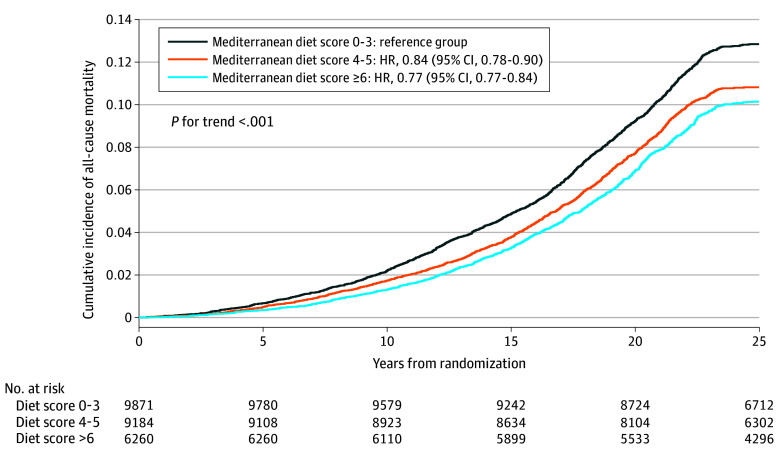
Figure 1.. Cumulative Survival for the Mediterranean Diet in All-Cause Mortality–Confirmed Person Years
The analyses were adjusted for age, treatment, and total energy intake.
Figure 2.
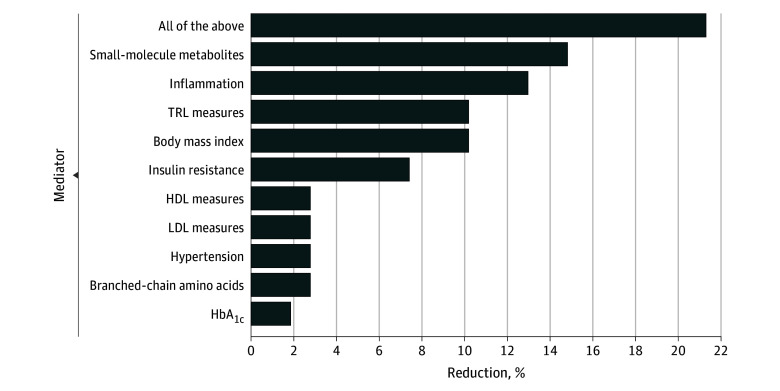
Figure 2.. The Proportion of All-Cause Mortality Reduction for High Adherence to the Mediterranean Diet Attributed to Groups of Mediators
Mediator groups were small-molecule metabolites (citrate, creatinine, homocysteine, alaline), inflammation (high-sensitivity C-reactive protein, fibrinogen, soluble intracellular adhesion molecule 1, and glycoprotein acetylation), triglyceride-rich lipoproteins (TRL) measures (triglyceride-rich lipoprotein particle size and concentrations, triglycerides), body mass index (calculated as weight in kilograms divided by height in meters squared), insulin resistance (lipoprotein insulin resistance index score, 5-y diabetes risk factor index score), high-density lipoprotein (HDL) measures (HDL particle size and concentration, HDL cholesterol), low-density lipoprotein (LDL) measures (LDL particle size and concentration, LDL cholesterol), hypertension, branched-chain amino acids, and hemoglobin A1c (HbA1c). Apolipoproteins (lipoprotein[a], apolipoprotein AI, and apolipoprotein B100) did not contribute to mediating the association of Mediterranean diet adherence with all-cause mortality. The basic model included age, randomized treatment assignment, energy intake, smoking, alcohol intake, menopausal status, postmenopausal hormone use, and physical activity.

References

    1. English LK, Ard JD, Bailey RL, et al. . Evaluation of dietary patterns and all-cause mortality: a systematic review. JAMA Netw Open. 2021;4(8):e2122277. doi:10.1001/jamanetworkopen.2021.22277 - DOI - PMC - PubMed
    1. Cespedes EM, Hu FB. Dietary patterns: from nutritional epidemiologic analysis to national guidelines. Am J Clin Nutr. 2015;101(5):899-900. doi:10.3945/ajcn.115.110213 - DOI - PMC - PubMed
    1. Shan Z, Wang F, Li Y, et al. . Healthy eating patterns and risk of total and cause-specific mortality. JAMA Intern Med. 2023;183(2):142-153. doi:10.1001/jamainternmed.2022.6117 - DOI - PMC - PubMed
    1. Schulze MB, Martínez-González MA, Fung TT, Lichtenstein AH, Forouhi NG. Food based dietary patterns and chronic disease prevention. BMJ. 2018;361:k2396. doi:10.1136/bmj.k2396 - DOI - PMC - PubMed
    1. Collaborators GBDD; GBD 2017 Diet Collaborators . Health effects of dietary risks in 195 countries, 1990-2017: a systematic analysis for the Global Burden of Disease Study 2017. Lancet. 2019;393(10184):1958-1972. doi:10.1016/S0140-6736(19)30041-8 - DOI - PMC - PubMed

Publication types