Spinal inhibitory neurons degenerate before motor neurons and excitatory neurons in a mouse model of ALS
- PMID: 38820149
- PMCID: PMC11141618
- DOI: 10.1126/sciadv.adk3229
Spinal inhibitory neurons degenerate before motor neurons and excitatory neurons in a mouse model of ALS
Abstract
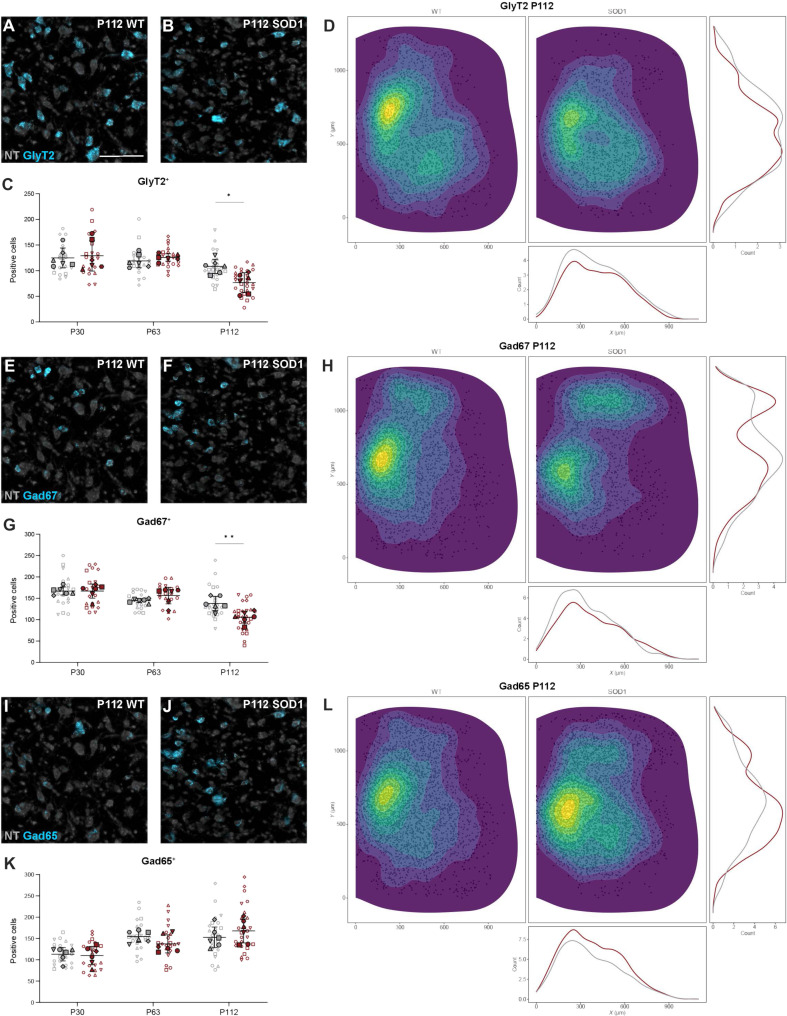
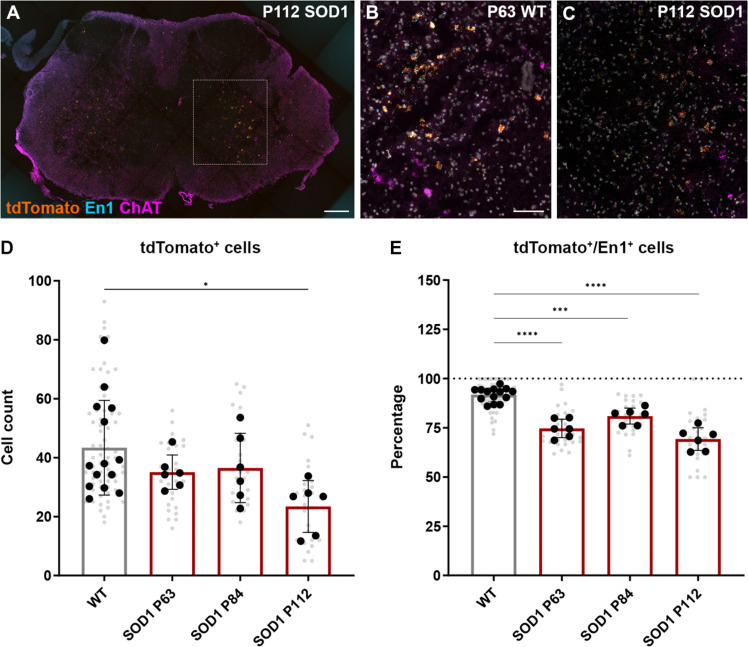
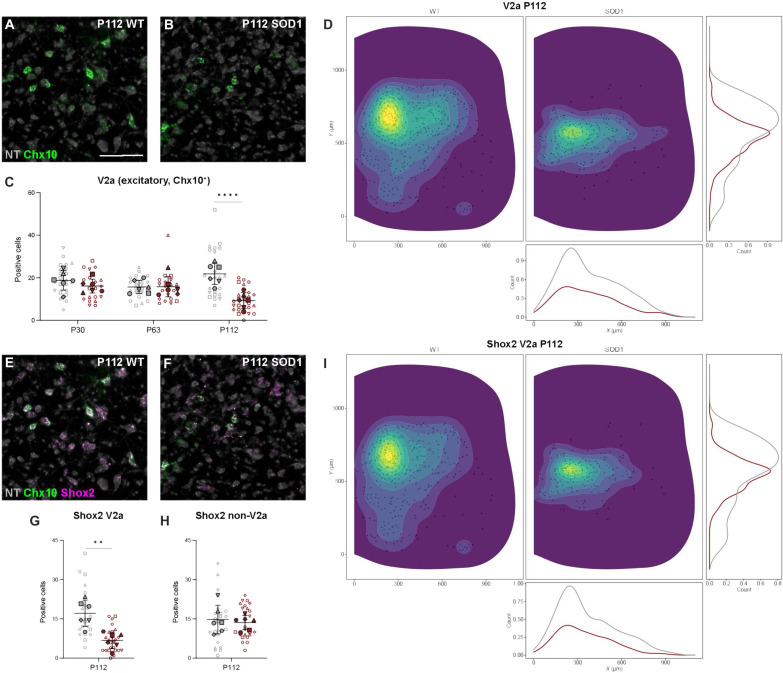
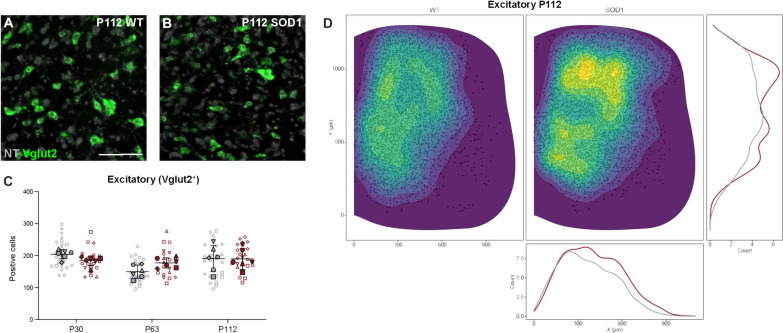
Amyotrophic lateral sclerosis (ALS) is characterized by the progressive loss of somatic motor neurons. A major focus has been directed to motor neuron intrinsic properties as a cause for degeneration, while less attention has been given to the contribution of spinal interneurons. In the present work, we applied multiplexing detection of transcripts and machine learning-based image analysis to investigate the fate of multiple spinal interneuron populations during ALS progression in the SOD1G93A mouse model. The analysis showed that spinal inhibitory interneurons are affected early in the disease, before motor neuron death, and are characterized by a slow progressive degeneration, while excitatory interneurons are affected later with a steep progression. Moreover, we report differential vulnerability within inhibitory and excitatory subpopulations. Our study reveals a strong interneuron involvement in ALS development with interneuron specific degeneration. These observations point to differential involvement of diverse spinal neuronal circuits that eventually may be determining motor neuron degeneration.
Figures

References
-
- Kiehn O., Locomotor circuits in the mammalian spinal cord. Annu. Rev. Neurosci. 29, 279–306 (2006). - PubMed
-
- Briscoe J., Pierani A., Jessell T. M., Ericson J., A homeodomain protein code specifies progenitor cell identity and neuronal fate in the ventral neural tube. Cell 101, 435–445 (2000). - PubMed
-
- Grillner S., El Manira A., The intrinsic operation of the networks that make us locomote. Curr. Opin. Neurobiol. 31, 244–249 (2015). - PubMed
MeSH terms
Substances
LinkOut - more resources
Full Text Sources
Medical
Molecular Biology Databases
Miscellaneous