Implementing team-based telemedicine workflows in safety-net primary care
- PMID: 38820184
- PMCID: PMC12178754
- DOI: 10.37765/ajmc.2024.89550
Implementing team-based telemedicine workflows in safety-net primary care
Abstract
Objectives: Challenges in implementing telemedicine disproportionately affect patients served in safety-net settings. Few studies have elucidated pragmatic, team-based strategies for successful telemedicine implementation in primary care, especially with a safety-net population.
Study design: We conducted in-depth, semistructured qualitative interviews with primary care clinicians and staff in a large urban safety-net health care system on the facilitators, challenges, and impact of implementing team workflows for synchronous telemedicine video and audio-only visits.
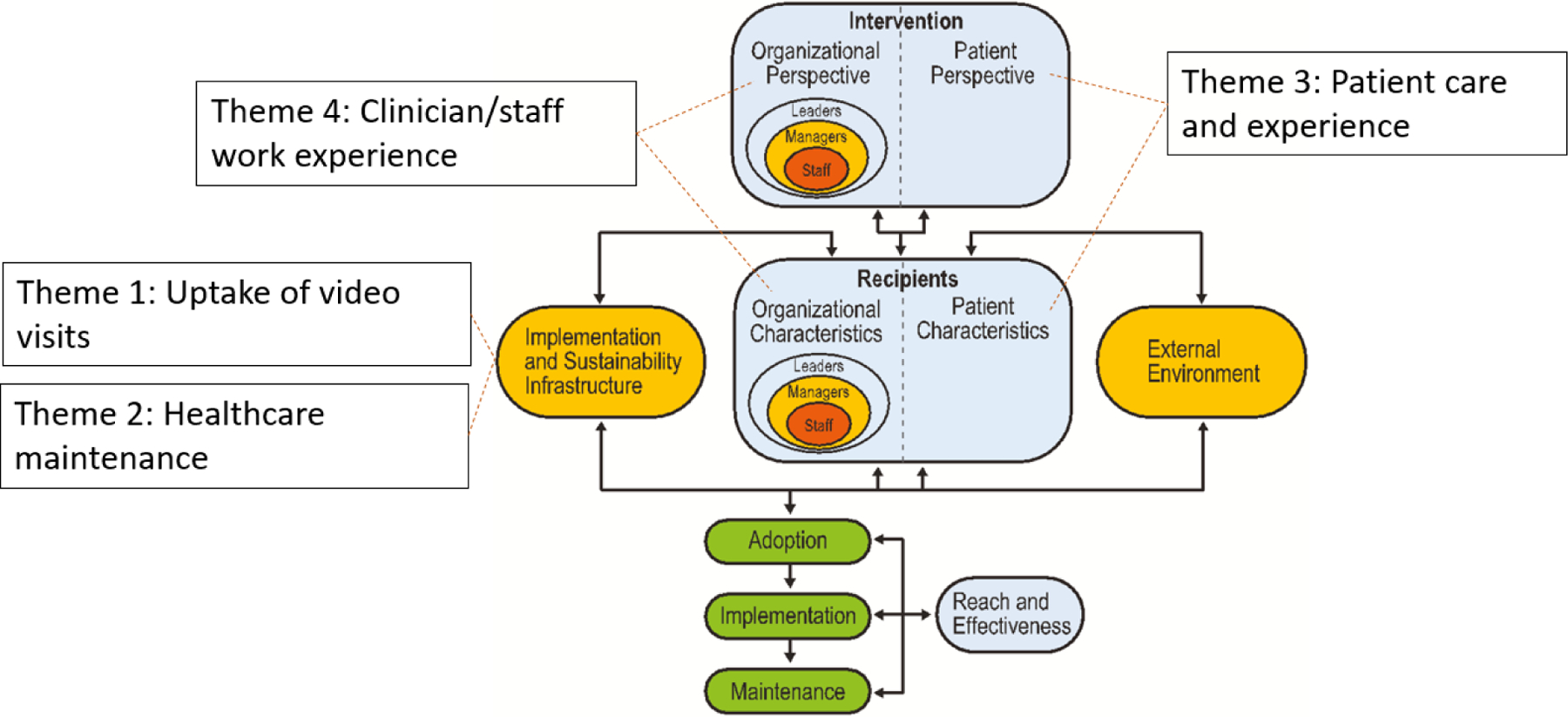
Methods: Interviews were analyzed using modified grounded theory with multistage coding. Common themes were identified and reviewed to describe within-group and between-group variations. We used the Practical, Robust Implementation Sustainability Model framework to organize the final themes with an implementation science lens.
Results: Four themes emerged from 11 interviews: (1) having a dedicated individual preparing patients for video visits is a prerequisite for the successful introduction of video visits to patients with limited digital literacy; (2) health care maintenance during video and audio-only visits benefits from standardized workflows and communication; (3) the increased flexibility and accessibility of telemedicine visits were perceived benefits to patient care, despite barriers for subsets of patients; and (4) telemedicine visits generally have a positive impact on work experience for clinicians and staff due to increased efficiency, despite audio-only visits feeling less engaging.
Conclusions: Understanding how to strategically use team-based workflows to expand video visit access while ensuring care quality of all telemedicine visits will allow primary care practices to maximize telemedicine's benefits to patients in the safety-net setting.
Figures
References
-
- Mehrotra A, Ray K, Brockmeyer DM, Barnett ML, Bender JA. Commentary; Rapidly converting to “virtual practices”: outpatient care in the era of Covid-19. NEJM Catalyst, Innovations in Care Delivery. Published Apr 1, 2020. https://catalyst.nejm.org/doi/full/10.1056/CAT.20.0091 - DOI
-
- Keesara S, Jonas A, Schulman K. Covid-19 and health care’s digital revolution. N Engl J Med 2020;382:e82. - PubMed
-
- Shachar C, Engel J, Elwyn G. Implications for telehealth in a postpandemic future: regulatory and privacy issues. JAMA 2020;323:2375–6. - PubMed
-
- Lin CC, Dievler A, Robbins C, Sripipatana A, Quinn M, Nair S. Telehealth In Health Centers: Key Adoption Factors, Barriers, And Opportunities. Health Aff (Millwood) 2018. Dec;37(12):1967–1974. - PubMed
Publication types
MeSH terms
Grants and funding
LinkOut - more resources
Full Text Sources
Medical