


Association between prehospital ROX index with 30-day mortality among septic shock
- PMID: 38822441
- PMCID: PMC11141059
- DOI: 10.1186/s40001-024-01902-8
Association between prehospital ROX index with 30-day mortality among septic shock
Abstract
Purpose: Respiratory dysfunction is one of the most frequent symptoms observed during sepsis reflecting hypoxemia and/or acidosis that may be assessed by the ROX index (ratio of oxygen saturation by pulse oximetry/fraction of inspired oxygen to respiratory rate). This study aimed to describe the relationship between the prehospital ROX index and 30-day mortality rate among septic shock patients cared for in the prehospital setting by a mobile intensive care unit (MICU).
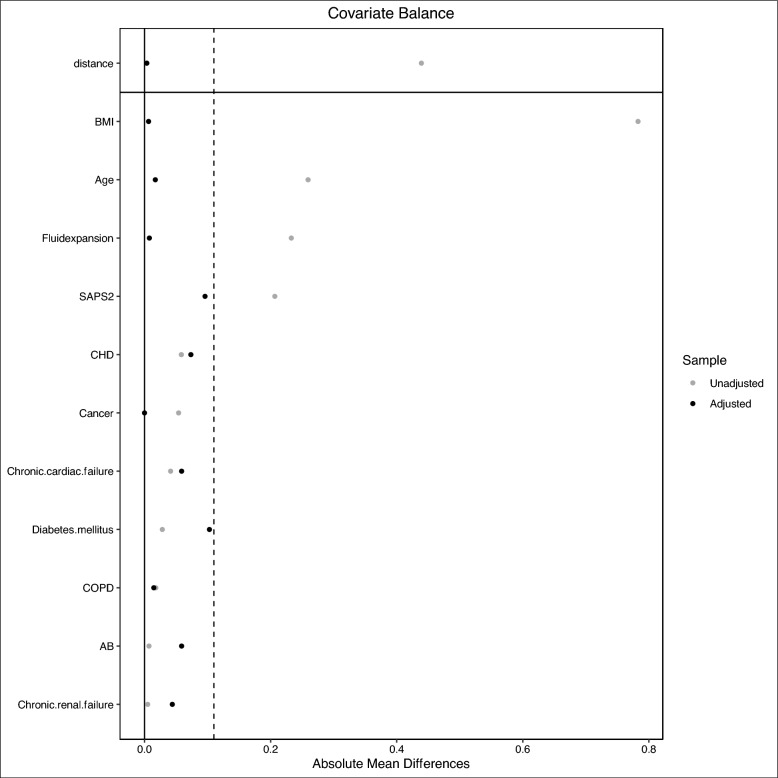
Methods: From May 2016 to December 2021, 530 septic shock patients cared for by a prehospital MICU were retrospectively analysed. Initial ROX index value was calculated at the first contact with MICU. A Cox regression analysis after propensity score matching was performed to assess the relationship between 30-day mortality rate and a ROX index ≤ 10.
Results: Pulmonary, digestive and urinary sepsis were suspected among 43%, 25% and 17% patients, respectively. The 30-day overall mortality reached 31%. Cox regression analysis showed a significant association between 30-day mortality and a ROX index ≤ 10: adjusted hazard ratio of 1.54 [1.08-2.31], p < 0.05.
Conclusions: During the prehospital stage of septic shock patients cared for by a MICU, ROX index is significantly associated with 30-day mortality. A prehospital ROX ≤ 10 value is associated with a 1.5-fold 30-day mortality rate increase. Prospective studies are needed to confirm the ability of prehospital ROX to predict sepsis outcome since the prehospital setting.
Keywords: Mortality; Prehospital setting; ROX index; Septic shock.
© 2024. The Author(s).
Conflict of interest statement
No author have conflicts of interest to declare.
Figures

References
MeSH terms
Substances
LinkOut - more resources
Full Text Sources
