


This is a preprint.
Human birth tissue products as a non-opioid medicine to inhibit post-surgical pain
- PMID: 38826432
- PMCID: PMC11142121
- DOI: 10.1101/2024.05.19.594874
Human birth tissue products as a non-opioid medicine to inhibit post-surgical pain
Update in
-
Human birth tissue products as a non-opioid medicine to inhibit post-surgical pain.Elife. 2024 Dec 13;13:RP101269. doi: 10.7554/eLife.101269. Elife. 2024. PMID: 39671234 Free PMC article.
Abstract
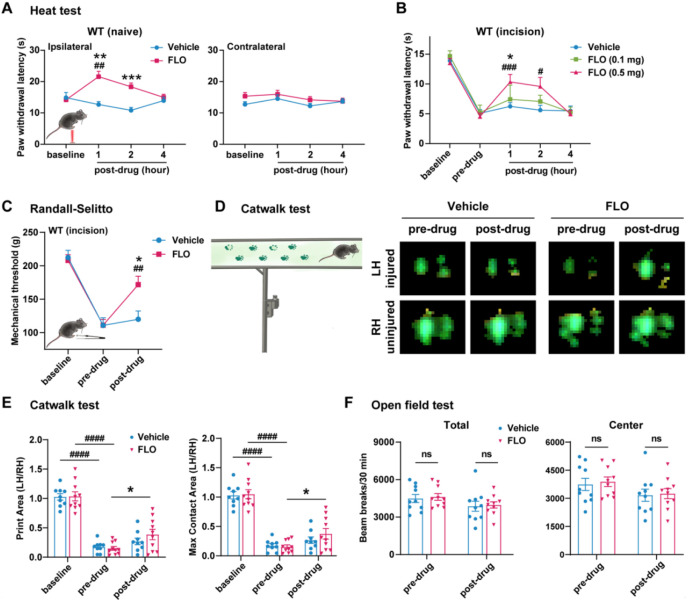
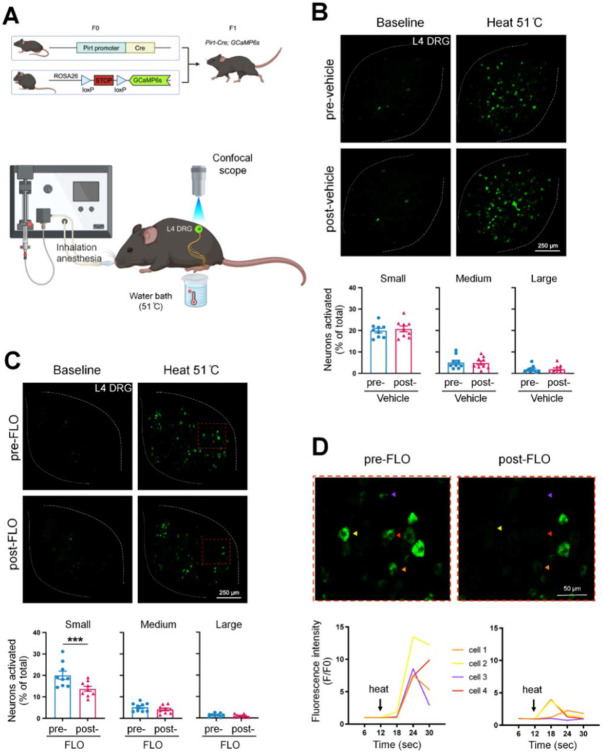
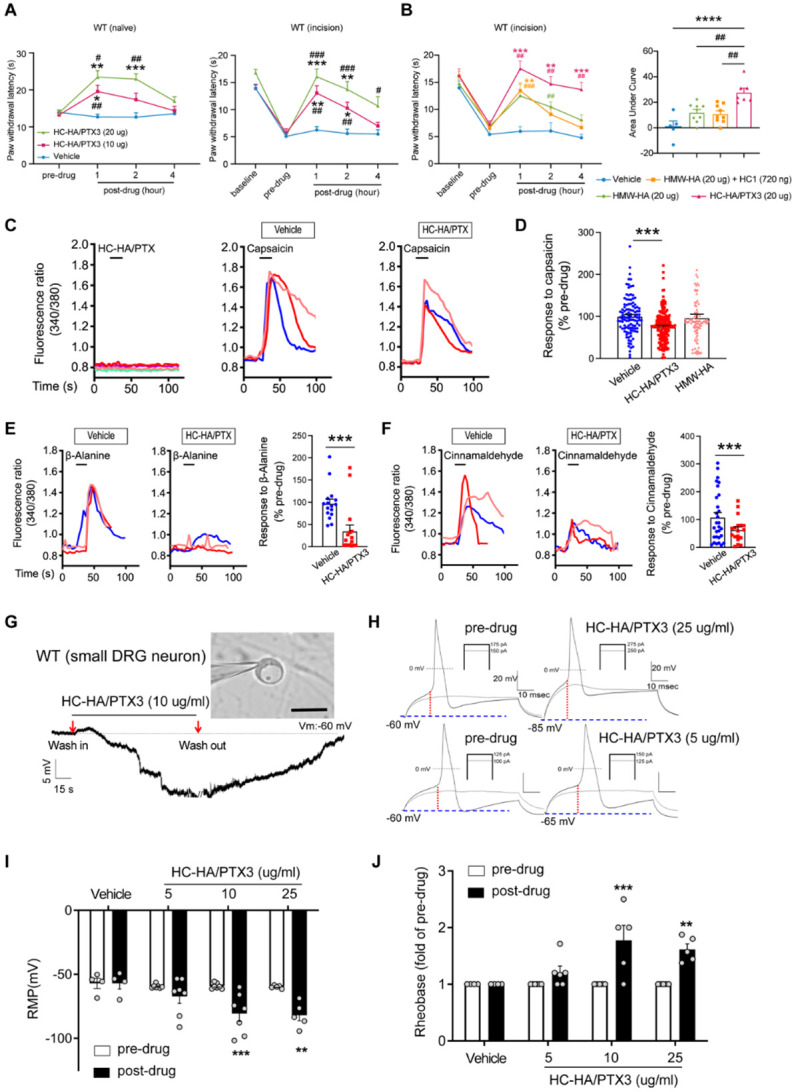
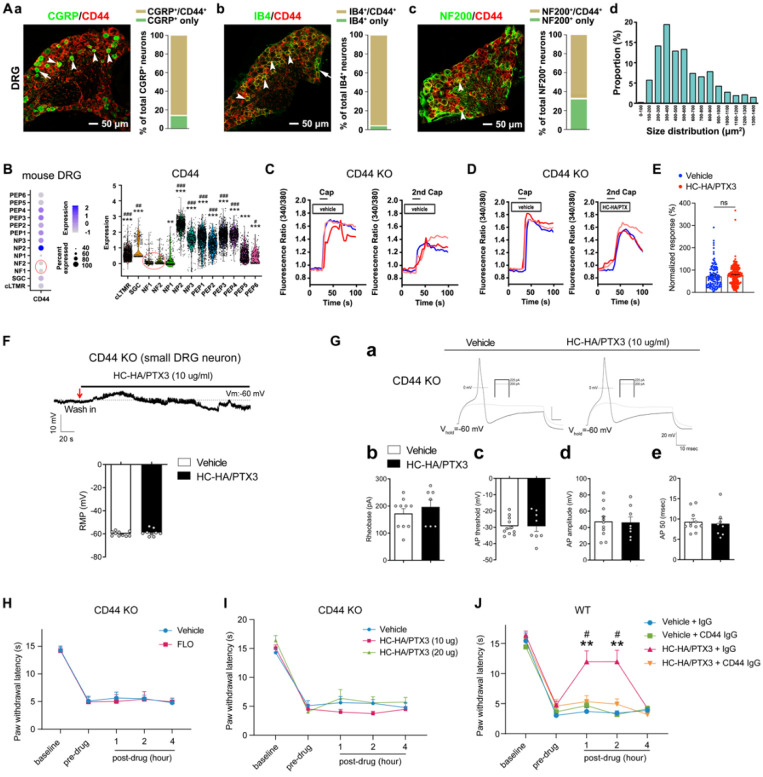
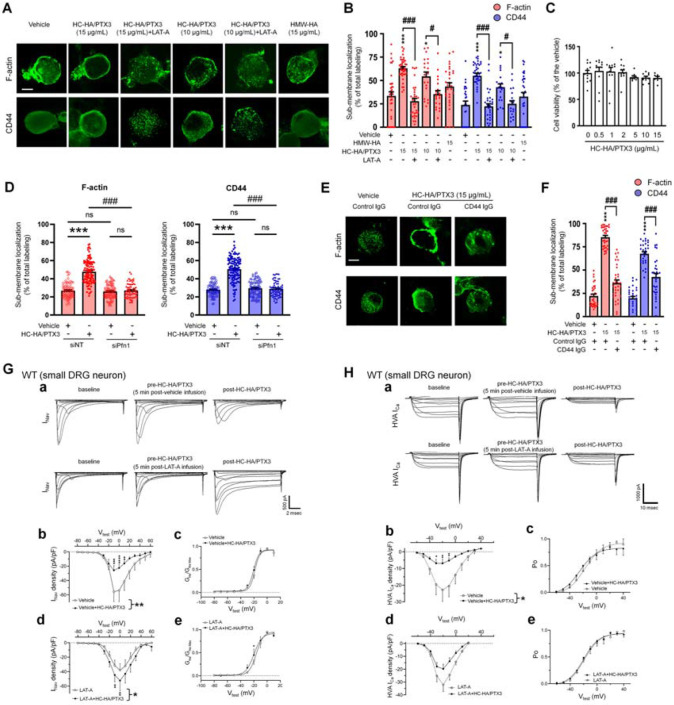
Pain after surgery causes significant suffering. Opioid analgesics cause severe side effects and accidental death. Therefore, there is an urgent need to develop non-opioid therapies for managing post-surgical pain. Local application of Clarix Flo (FLO), a human amniotic membrane (AM) product, attenuated established post-surgical pain hypersensitivity without exhibiting known side effects of opioid use in mice. This effect was achieved through direct inhibition of nociceptive dorsal root ganglion (DRG) neurons via CD44-dependent pathways. We further purified the major matrix component, the heavy chain-hyaluronic acid/pentraxin 3 (HC-HA/PTX3) from human AM that has greater purity and water solubility than FLO. HC-HA/PTX3 replicated FLO-induced neuronal and pain inhibition. Mechanistically, HC-HA/PTX3 induced cytoskeleton rearrangements to inhibit sodium current and high-voltage activated calcium current on nociceptive neurons, suggesting it is a key bioactive component mediating pain relief. Collectively, our findings highlight the potential of naturally derived biologics from human birth tissues as an effective non-opioid treatment for post-surgical pain. Moreover, we unravel the underlying mechanisms of pain inhibition induced by FLO and HC-HA/PTX3.
Keywords: CD44; cytoskeleton rearrangement; human birth tissues; pain; sensory neurons.
Conflict of interest statement
Conflict-of-interest Statement M.M., H.H. and S.C.T. are employed by BioTissue, Inc. D.Y. is employed by Acrogenic Technologies Inc. However, none of the authors has a commercial interest in the material presented in this paper. There are no other relationships that might lead to a conflict of interest in the current study.
Figures
References
-
- Kehlet H, Jensen TS, and Woolf CJ. Persistent postsurgical pain: risk factors and prevention. Lancet. 2006;367(9522):1618–25. - PubMed
-
- Colvin LA, Bull F, and Hales TG. Perioperative opioid analgesia-when is enough too much? A review of opioid-induced tolerance and hyperalgesia. Lancet. 2019;393(10180):1558–68. - PubMed
-
- de Rotth A. Plastic repair of conjunctival defects with fetal membranes. Arch Ophthalmol-Chic. 1940;23(3):522–5.
Publication types
Grants and funding
LinkOut - more resources
Full Text Sources
Miscellaneous
