


Medial Tibial Stress Syndrome (Shin Splint): Prevalence, Causes, Prevention, and Management in Saudi Arabia
- PMID: 38826935
- PMCID: PMC11140428
- DOI: 10.7759/cureus.59441
Medial Tibial Stress Syndrome (Shin Splint): Prevalence, Causes, Prevention, and Management in Saudi Arabia
Abstract
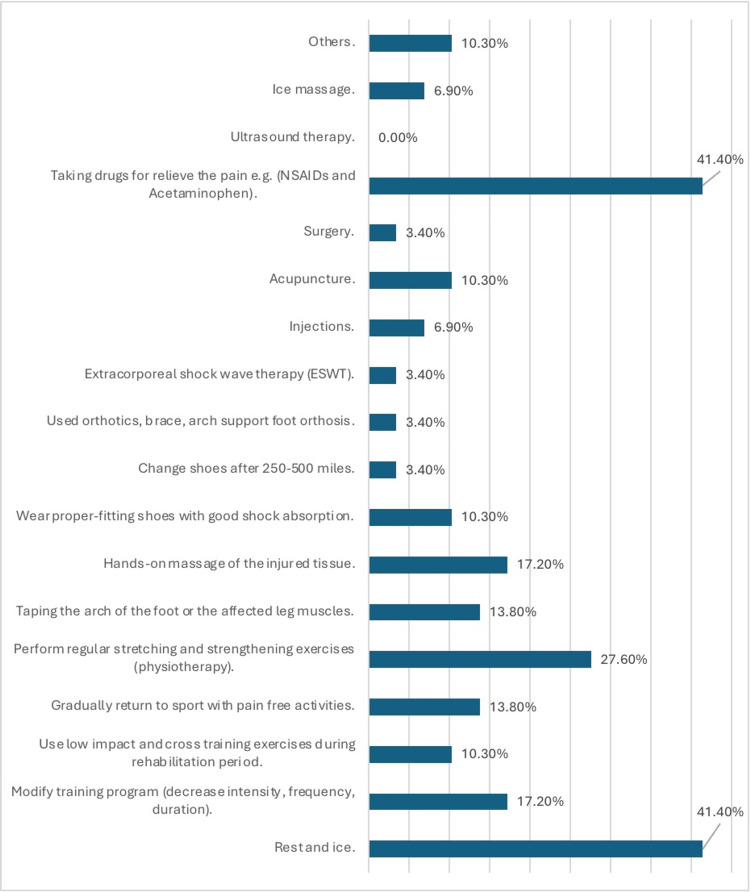
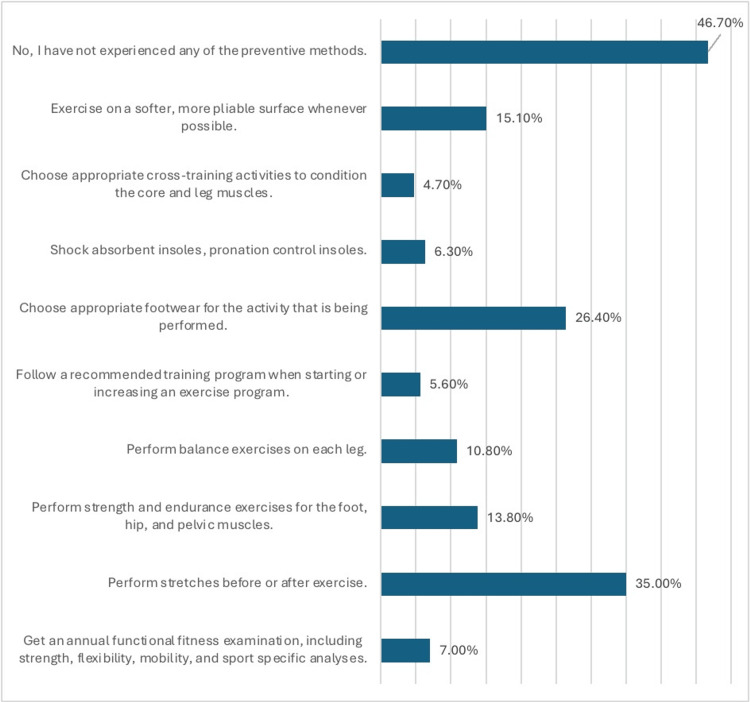
Background/aims Medial tibial stress syndrome (MTSS), also known as "shin splint", is most often described as exertional leg pain along the shinbone (tibia), which occurs due to the inflammation of the muscles, tendons, and bone tissue in this area. This study aims to assess the prevalence, risk factors, and their association with the development of MTSS, as well as the effective treatments that reduce pain and improve functions among the Saudi general population. Materials and method The present cross-sectional study was conducted on the general population of Saudi Arabia through an electronic survey over a period of three months. The study sample of 443 patients was deemed and considered. The study included participants from the general population in Saudi Arabia above the age of 18. A structured self-response questionnaire was given to the participants after institutional research ethical approval was obtained for the study. Results Among the 443 participants, the majority were male (n = 228, 51.5%), aged 18-29 (n = 227, 51.2%), and residing in the central region of Saudi Arabia (n = 398, 89.8%). Most participants reported engaging in sporting activities (n = 211, 47.6%), with high-intensity training being the most common (n = 93, 44.1%). Only a small proportion (n = 8, 1.8%) reported a previous diagnosis of MTSS. Analysis revealed associations between MTSS prevalence and certain demographic factors, including walking surface preferences and engagement in specific sports. Treatment strategies for MTSS included rest, ice application, physiotherapy, and pain-relieving medication, with varying degrees of satisfaction and recurrence rates among participants. Conclusion The study provides valuable insights into the prevalence, risk factors, management, and preventive measures related to MTSS among the Saudi general population. While certain demographic factors and exercise practices were associated with MTSS prevalence, effective treatment options such as rest, physiotherapy, and appropriate footwear were reported. Moreover, adherence to preventive measures such as stretching, proper footwear selection, and gradual training progression may help mitigate the risk of MTSS development.
Keywords: athletic leg pain; distal tibia; exertional leg pain; medial tibial stress syndrome; shin splints.
Copyright © 2024, Hashim et al.
Conflict of interest statement
The authors have declared that no competing interests exist.
Figures
References
-
- Is high soleus muscle activity during the stance phase of the running cycle a potential risk factor for the development of medial tibial stress syndrome? A prospective study. Naderi A, Moen MH, Degens H. J Sports Sci. 2020;38:2350–2358. - PubMed
-
- Rectus femoris muscle injuries in football: a clinically relevant review of mechanisms of injury, risk factors and preventive strategies. Mendiguchia J, Alentorn-Geli E, Idoate F, Myer GD. Br J Sports Med. 2013;47:359–366. - PubMed
-
- Prevalence of shin splint in recreational marathon runner. Patel PY, Patil N. https://pesquisa.bvsalud.org/portal/resource/pt/sea-205777 Int J Physiother. 2020;7
-
- Biomechanical risk factors in the development of medial tibial stress syndrome in distance runners. Tweed JL, Campbell JA, Avil SJ. J Am Podiatr Med Assoc. 2008;98:436–444. - PubMed
LinkOut - more resources
Full Text Sources