


Genomic investigation and nationwide tracking of pediatric invasive nontyphoidal Salmonella in China
- PMID: 38827503
- PMCID: PMC11139200
- DOI: 10.1002/mlf2.12117
Genomic investigation and nationwide tracking of pediatric invasive nontyphoidal Salmonella in China
Abstract
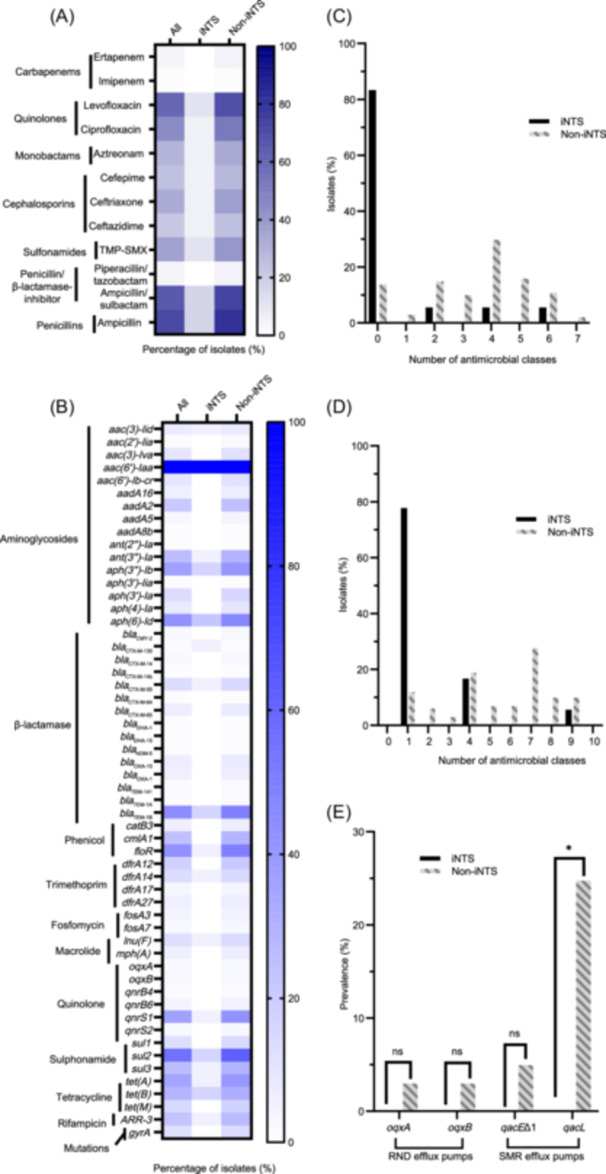
Invasive nontyphoidal Salmonella (iNTS) causes significant concern with ~15% morbidity, affecting populations mainly in African countries. However, iNTS infections among the Chinese pediatric population remain largely unknown. Here, we conducted a genomic investigation to study pediatric iNTS infections in a Chinese hospital. iNTS isolates accounted for 15.2% (18/119) of all nontyphoidal Salmonella (NTS) strains. Compared to non-iNTS isolates, iNTS isolates harbored a lower prevalence of antimicrobial-resistant genes of fluoroquinolones and β-lactams, as well as disinfectant determinants and plasmids, but carried a significantly higher prevalence of cdtB, faeCDE, and tcpC genes. Importantly, we detected an emerging serovar Goldcoast as the predominant iNTS serovar locally. By integrating 320 global Goldcoast genomes based on the One Health samplings, we conducted nationwide phylogenomic tracking and detected repeated human-to-human transmission events among iNTS cases caused by an underestimated serovar Goldcoast. Together, our exploratory genomic approach highlights a new trend in pediatric iNTS infections.
© 2024 The Authors. mLife published by John Wiley & Sons Australia, Ltd on behalf of Institute of Microbiology, Chinese Academy of Sciences.
Conflict of interest statement
The authors declare no conflict of interests.
Figures
References
-
- Hu Y, Wang J, Chen S, Li Y, Zhang R, Chen S. Non‐typhoidal Salmonella invasive infections in China. Lancet Infect Dis. 2022;22:939. - PubMed
LinkOut - more resources
Full Text Sources