Impact of cancer therapy on clonal hematopoiesis mutations and subsequent clinical outcomes
- PMID: 38830141
- PMCID: PMC11530395
- DOI: 10.1182/bloodadvances.2024012929
Impact of cancer therapy on clonal hematopoiesis mutations and subsequent clinical outcomes
Abstract
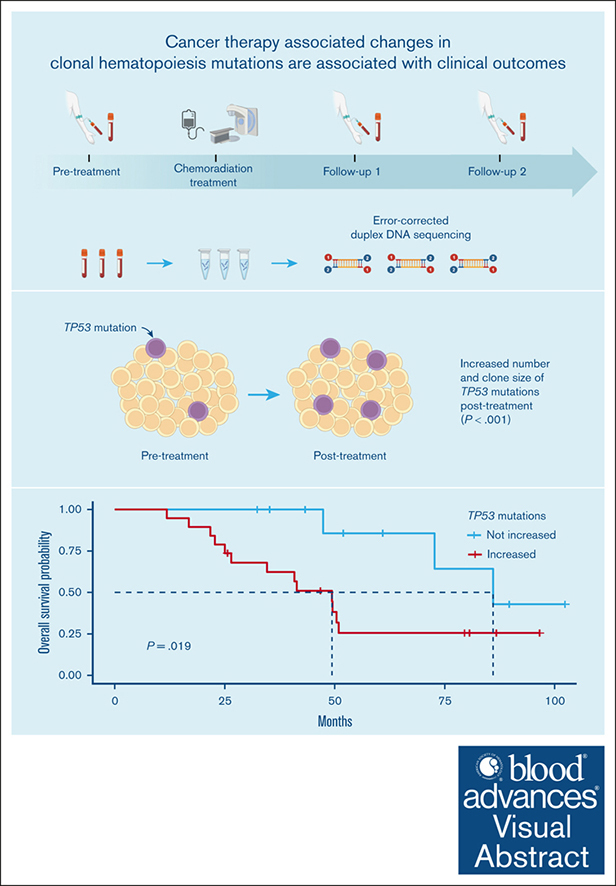
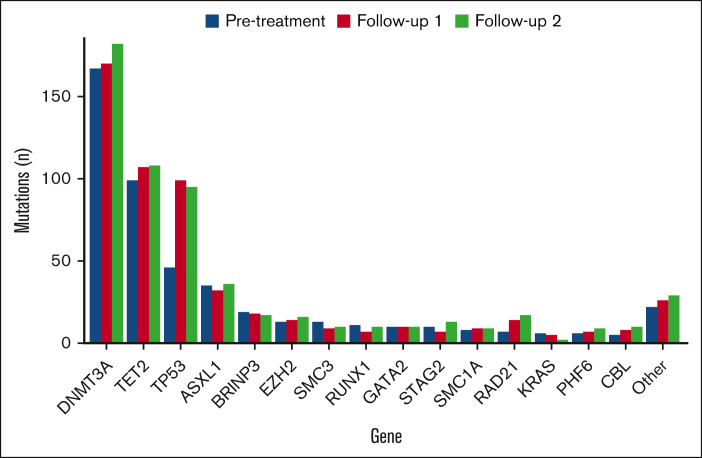
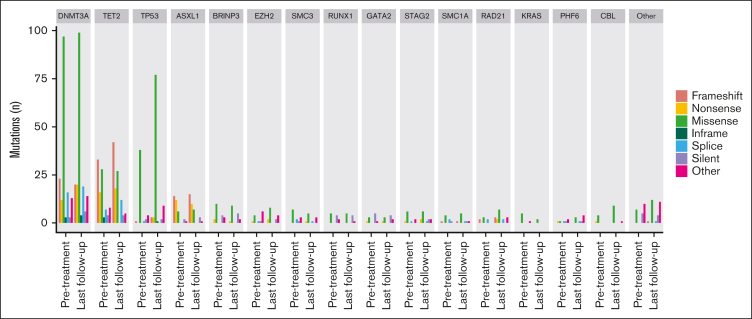
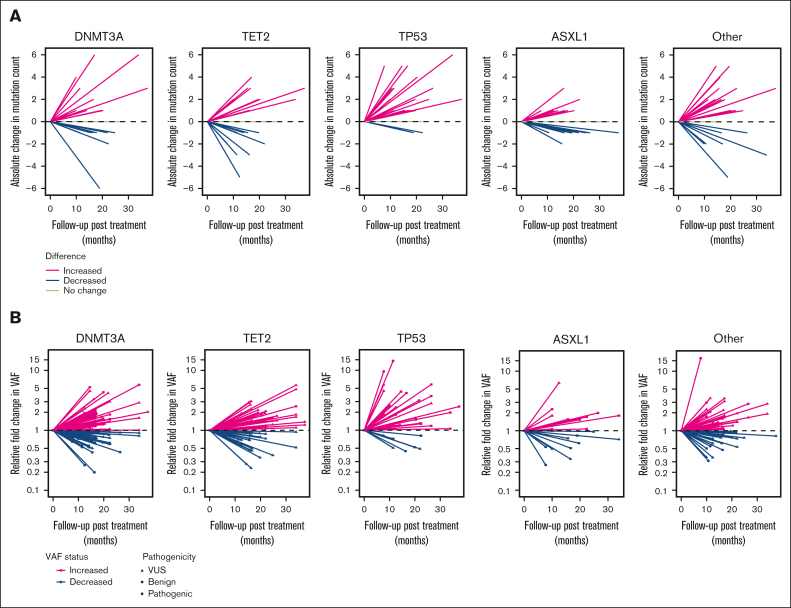
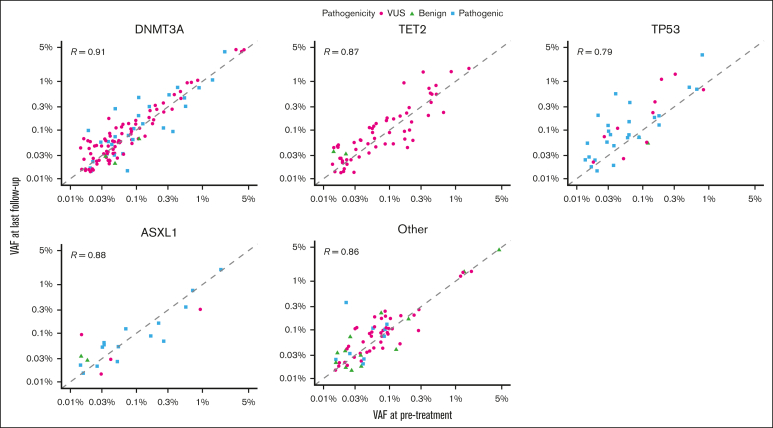
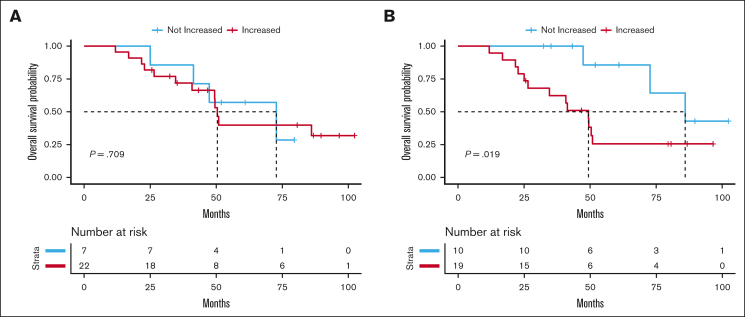
Exposure to cancer therapies is associated with an increased risk of clonal hematopoiesis (CH). The objective of our study was to investigate the genesis and evolution of CH after cancer therapy. In this prospective study, we undertook error-corrected duplex DNA sequencing in blood samples collected before and at 2 time points after chemoradiation in patients with esophageal or lung cancer recruited from 2013 to 2018. We applied a customized workflow to identify the earliest changes in CH mutation count and clone size and determine their association with clinical outcomes. Our study included 29 patients (87 samples). Their median age was 67 years, and 76% (n = 22) were male; the median follow-up period was 3.9 years. The most mutated genes were DNMT3A, TET2, TP53, and ASXL1. We observed a twofold increase in the number of mutations from before to after treatment in TP53, which differed from all other genes examined (P < .001). Among mutations detected before and after treatment, we observed an increased clone size in 38% and a decreased clone size in 5% of TP53 mutations (odds ratio, 3.7; 95% confidence interval [CI], 1.75-7.84; P < .001). Changes in mutation count and clone size were not observed in other genes. Individuals with an increase in the number of TP53 mutations after chemoradiation experienced shorter overall survival (hazard ratio, 7.07; 95% CI, 1.50-33.46; P = .014). In summary, we found an increase in the number and size of TP53 CH clones after chemoradiation that were associated with adverse clinical outcomes.
© 2024 by The American Society of Hematology. Licensed under Creative Commons Attribution-NonCommercial-NoDerivatives 4.0 International (CC BY-NC-ND 4.0), permitting only noncommercial, nonderivative use with attribution. All other rights reserved.
Conflict of interest statement
Conflicts-of-interest disclosure: C.T. recieves royalties from Wolters Kluwer and consulting fees and honoraria from Siemen Healthineer, Lantheus, Telix, Molli Surgical, and Boston Scientific. Z.L. serves on the advisory board of AIQ, Inc and Reheva Biosciences. S.H.L. reports grants from STCube, BeyondSpring, and Nektar Therapeutics; serves on the advisory board of AstraZeneca; reports consultant fees from XRad Therapeutics; and is a cofounder of and has stocks in Seek Diagnostics. The remaining authors declare no competing financial interests.
Figures
Comment in
-
CHIP shot: aiming at therapy-induced clonal hematopoiesis.Blood Adv. 2024 Oct 8;8(19):5213-5214. doi: 10.1182/bloodadvances.2024013724. Blood Adv. 2024. PMID: 39378028 Free PMC article. No abstract available.
References
MeSH terms
Grants and funding
LinkOut - more resources
Full Text Sources
Research Materials
Miscellaneous