


Potential distribution and ecological impacts of Acmella radicans (Jacquin) R.K. Jansen (a new Yunnan invasive species record) in China
- PMID: 38831264
- PMCID: PMC11145781
- DOI: 10.1186/s12870-024-05191-5
Potential distribution and ecological impacts of Acmella radicans (Jacquin) R.K. Jansen (a new Yunnan invasive species record) in China
Abstract
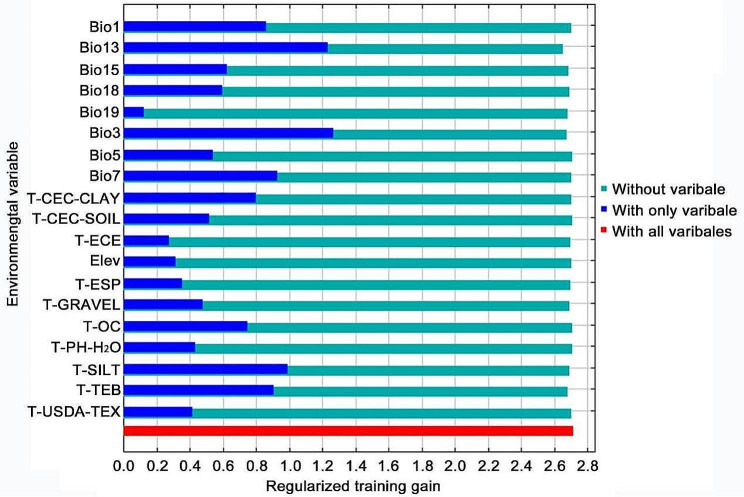
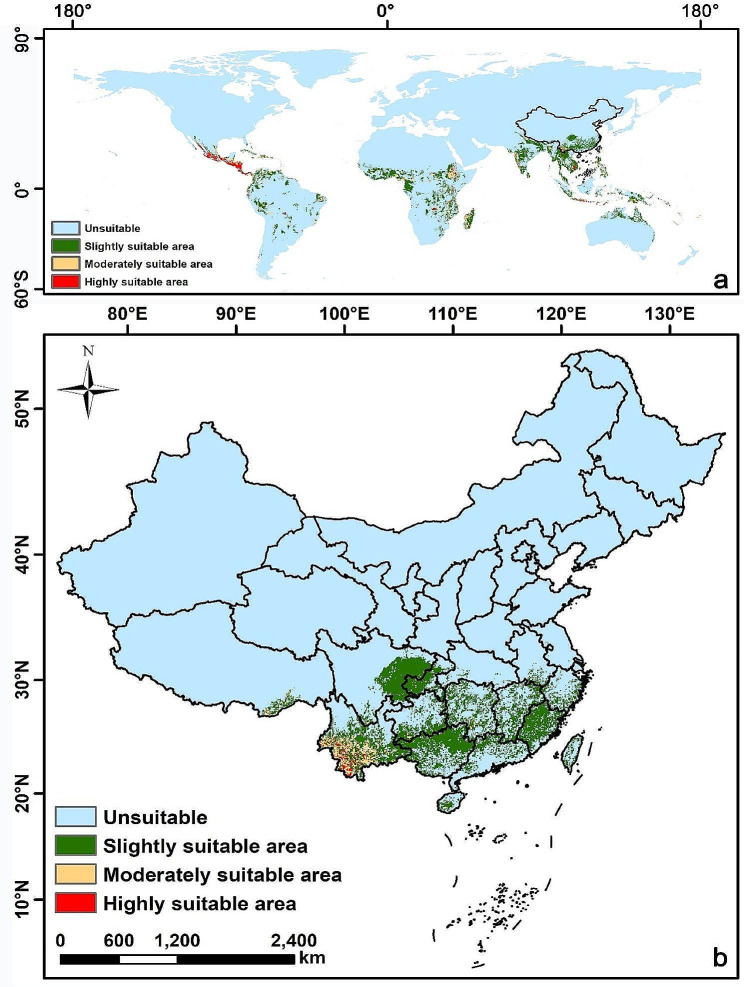
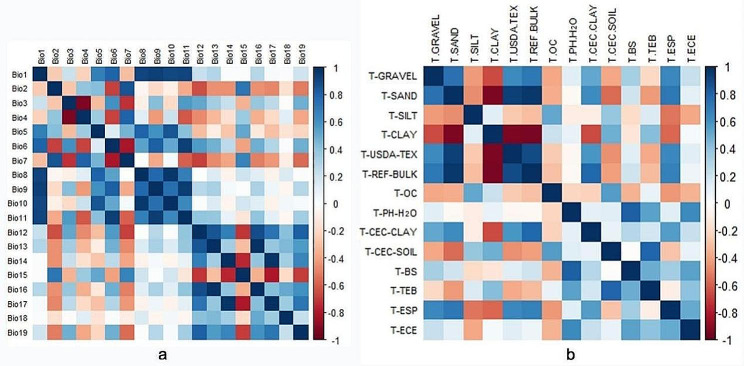
BACKGROUND ACMELLA RADICANS: (Jacquin) R.K. Jansen is a new invasive species record for Yunnan Province, China. Native to Central America, it has also been recently recorded invading other parts of Asia. To prevent this weed from becoming a serious issue, an assessment of its ecological impacts and potential distribution is needed. We predicted the potential distribution of A. radicans in China using the MaxEnt model and its ecological impacts on local plant communities and soil nutrients were explored. RESULTS: Simulated training using model parameters produced an area under curve value of 0.974, providing a high degree of confidence in model predictions. Environmental variables with the greatest predictive power were precipitation of wettest month, isothermality, topsoil TEB (total exchangeable bases), and precipitation seasonality, with a cumulative contribution of more than 72.70% and a cumulative permutation importance of more than 69.20%. The predicted potential suitable area of A. radicans in China is concentrated in the southern region. Projected areas of A. radicans ranked as high and moderately suitable comprised 5425 and 26,338 km2, accounting for 0.06 and 0.27% of the Chinese mainland area, respectively. Over the 5 years of monitoring, the population density of A. radicans increased while at the same time the population density and importance values of most other plant species declined markedly. Community species richness, diversity, and evenness values significantly declined. Soil organic matter, total N, total P, available N, and available P concentrations decreased significantly with increasing plant cover of A. radicans, whereas pH, total K and available K increased. CONCLUSION: Our study was the first to show that A. radicans is predicted to expand its range in China and may profoundly affect plant communities, species diversity, and the soil environment. Early warning and monitoring of A. radicans must be pursued with greater vigilance in southern China to prevent its further spread.
Keywords: Acmella radicans; Ecological impact; MaxEnt; New invasive species; Potential distribution; Predictive modeling.
© 2024. The Author(s).
Conflict of interest statement
The authors declare no competing interests.
Figures

References
-
- Richardson DM, Pyšek P, Rejmánek M, Barbour MG, Panetta FD, West CJ. Naturalization and invasion of alien plants: concepts and definitions. Divers. Distrib. 2000;6:93–107.
-
- Ricciardi A. Assessing species invasions as a cause of extinction. Trends Ecol Evol. 2004;19:619. doi: 10.1016/j.tree.2004.09.021. - DOI
-
- Rai RK, Shrestha L, Joshi S, Clements DR. Biotic and economic impacts of plant invasions. In: Clements DR, editor. Global plant invasions. Springer Nature Switzerland AG; 2022. pp. 301–15.
MeSH terms
Substances
Grants and funding
LinkOut - more resources
Full Text Sources
