


Evaluating competency-based medical education: a systematized review of current practices
- PMID: 38831271
- PMCID: PMC11149276
- DOI: 10.1186/s12909-024-05609-6
Evaluating competency-based medical education: a systematized review of current practices
Abstract
Background: Few published articles provide a comprehensive overview of the available evidence on the topic of evaluating competency-based medical education (CBME) curricula. The purpose of this review is therefore to synthesize the available evidence on the evaluation practices for competency-based curricula employed in schools and programs for undergraduate and postgraduate health professionals.
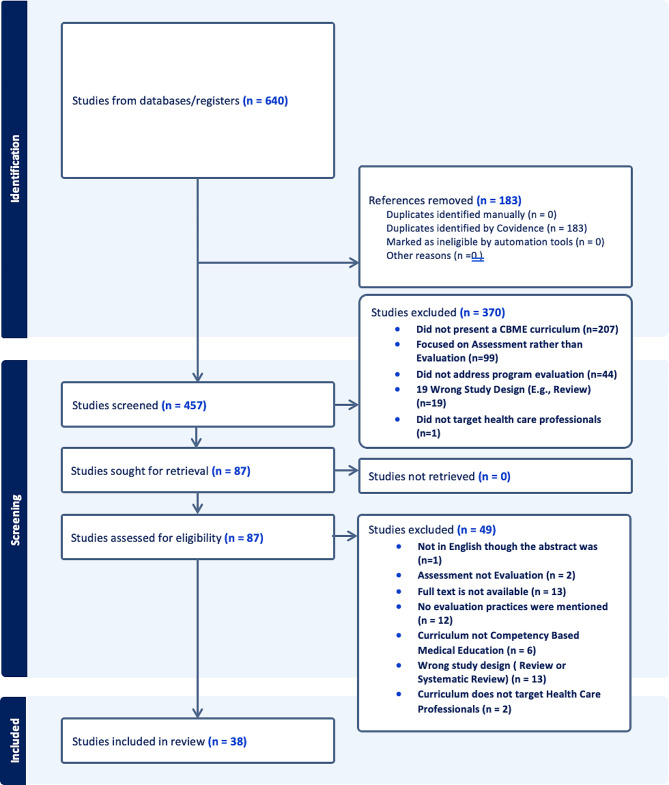
Method: This systematized review was conducted following the systematic reviews approach with minor modifications to synthesize the findings of published studies that examined the evaluation of CBME undergraduate and postgraduate programs for health professionals.
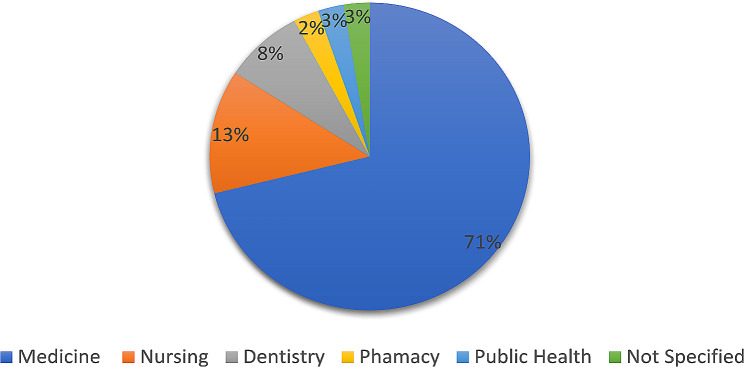
Results: Thirty-eight articles met the inclusion criteria and reported evaluation practices in CBME curricula from various countries and regions worldwide, such as Canada, China, Turkey, and West Africa. 57% of the evaluated programs were at the postgraduate level, and 71% were in the field of medicine. The results revealed variation in reporting evaluation practices, with numerous studies failing to clarify evaluations' objectives, approaches, tools, and standards as well as how evaluations were reported and communicated. It was noted that questionnaires were the primary tool employed for evaluating programs, often combined with interviews or focus groups. Furthermore, the utilized evaluation standards considered the well-known competencies framework, specialized association guidelines, and accreditation criteria.
Conclusion: This review calls attention to the importance of ensuring that reports of evaluation experiences include certain essential elements of evaluation to better inform theory and practice.
Keywords: Competency-based medical education; Curriculum development; Postgraduate medical education; Program evaluation; Undergraduate medical education.
© 2024. The Author(s).
Conflict of interest statement
The authors declare no competing interests.
Figures
References
-
- Davis MH, Amin Z, Grande JP, O’Neill AE, Pawlina W, Viggiano TR et al. Case studies in outcome-based education. Med Teach. 2009; 29(7):717–22. 10.1080/01421590701691429 - PubMed
-
- Caccia N, Nakajima A, Kent N. Competency-based medical education: The wave of the future. JOGC. 2015; 37(4):349–53. 10.1016/S1701-2163(15)30286-3 - PubMed
-
- Hawkins RE, Welcher CM, Holmboe ES, Kirk LM, Norcini JJ, Simons KB et al. Implementation of competency-based medical education: Are we addressing the concerns and challenges? Med Educ. 2015 Oct. 22; 49(11):1086–102. 10.1111/medu.12831 - PubMed
Publication types
MeSH terms
LinkOut - more resources
Full Text Sources
Miscellaneous
