


Assessing avian influenza surveillance intensity in wild birds using a One Health lens
- PMID: 38832079
- PMCID: PMC11145394
- DOI: 10.1016/j.onehlt.2024.100760
Assessing avian influenza surveillance intensity in wild birds using a One Health lens
Abstract
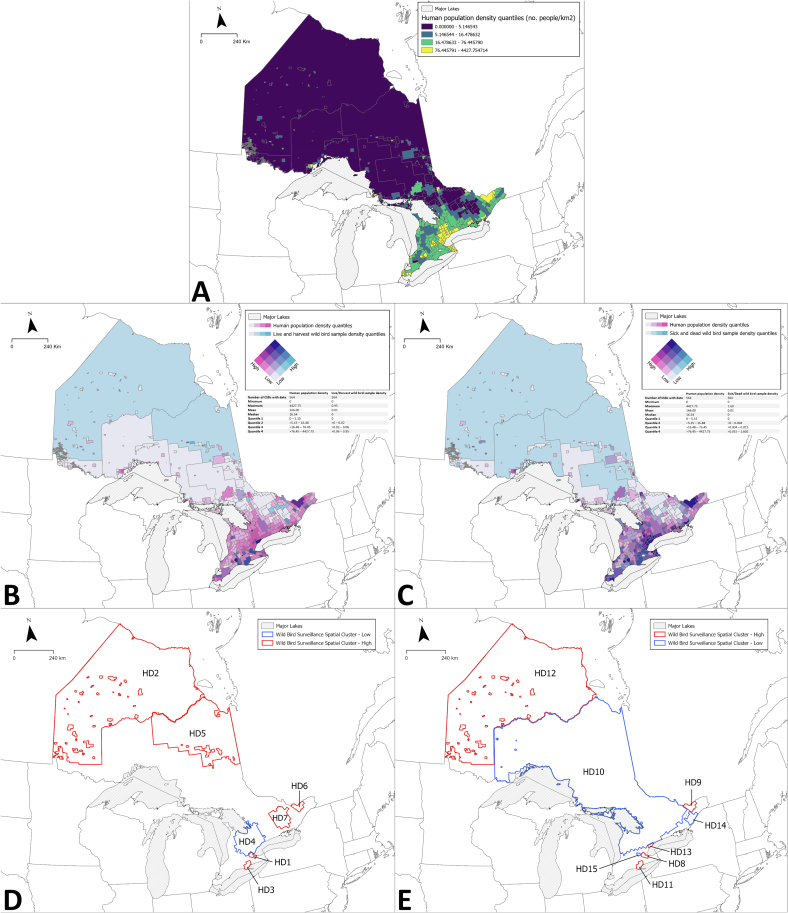
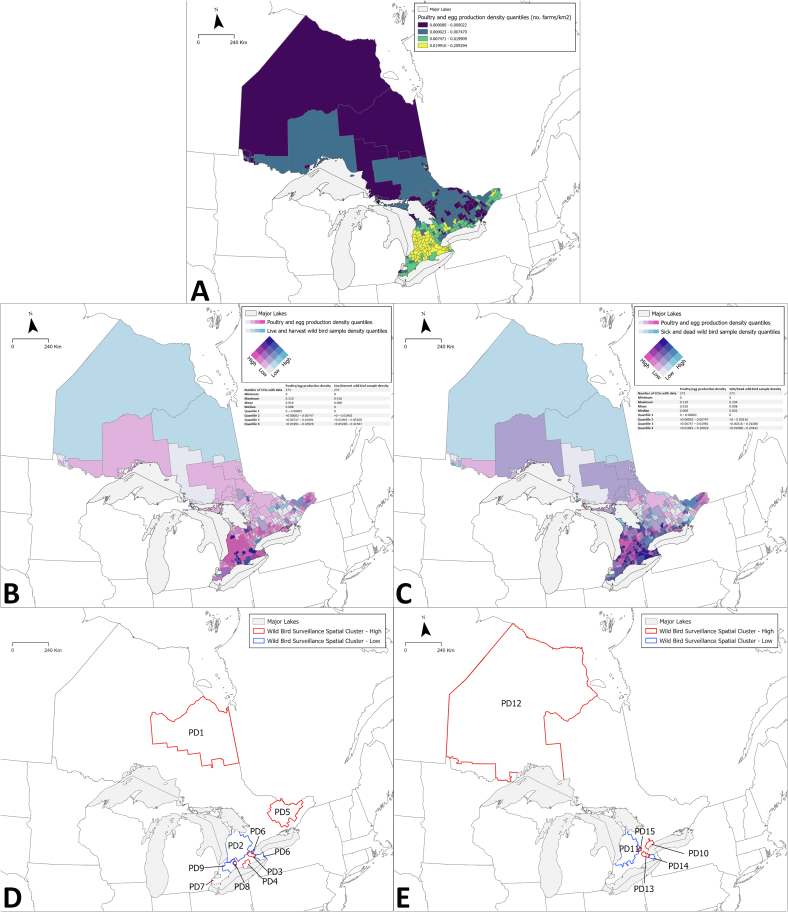
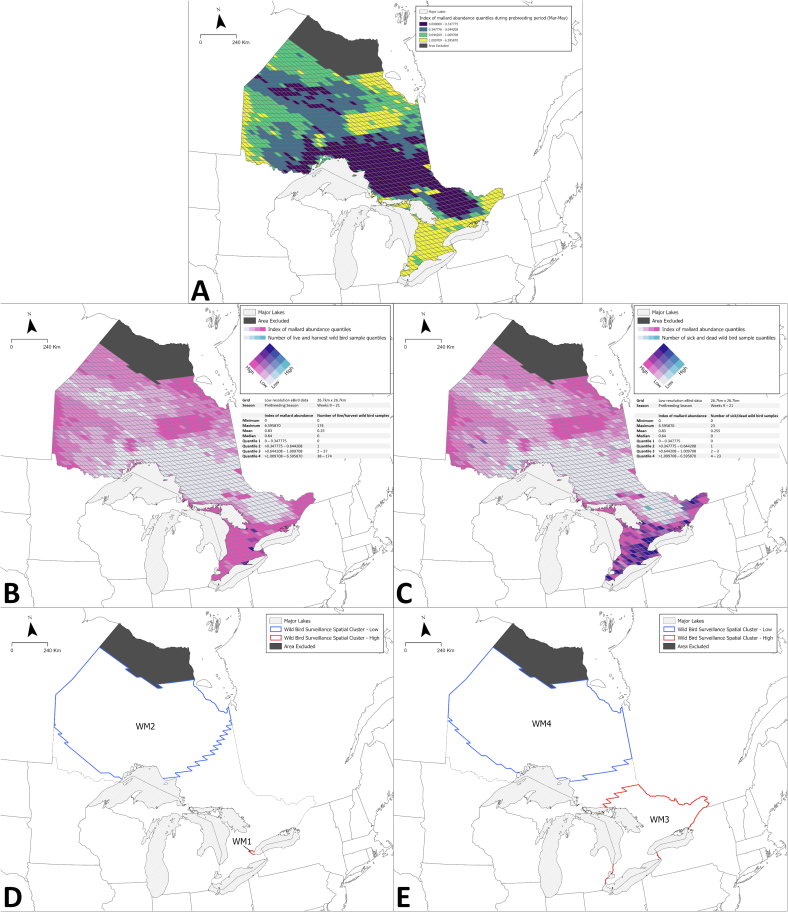
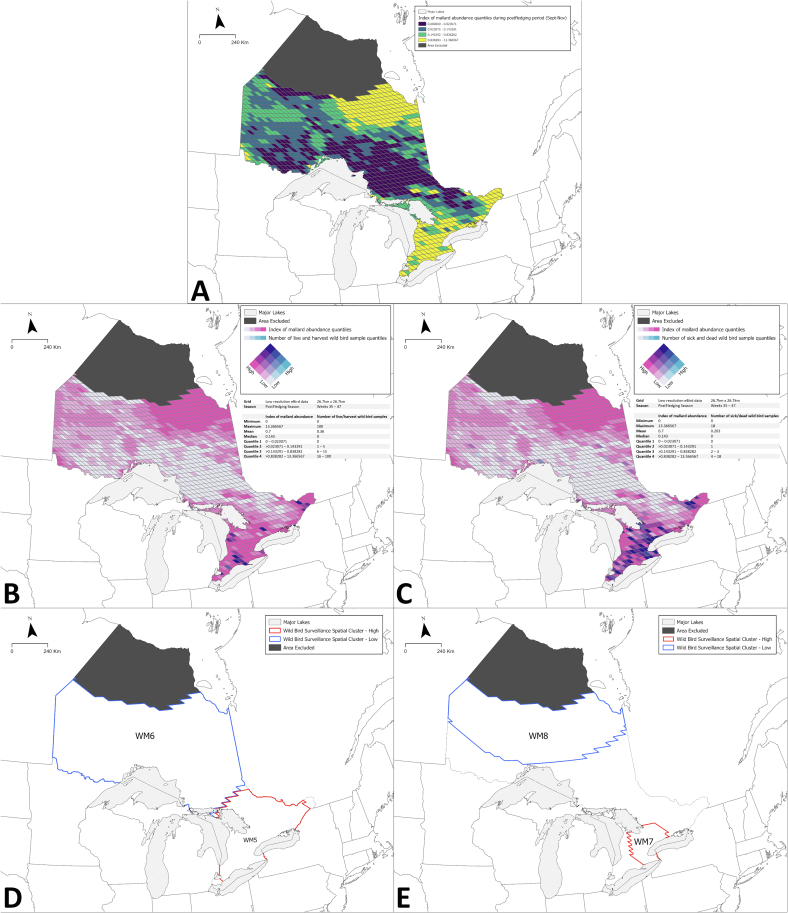
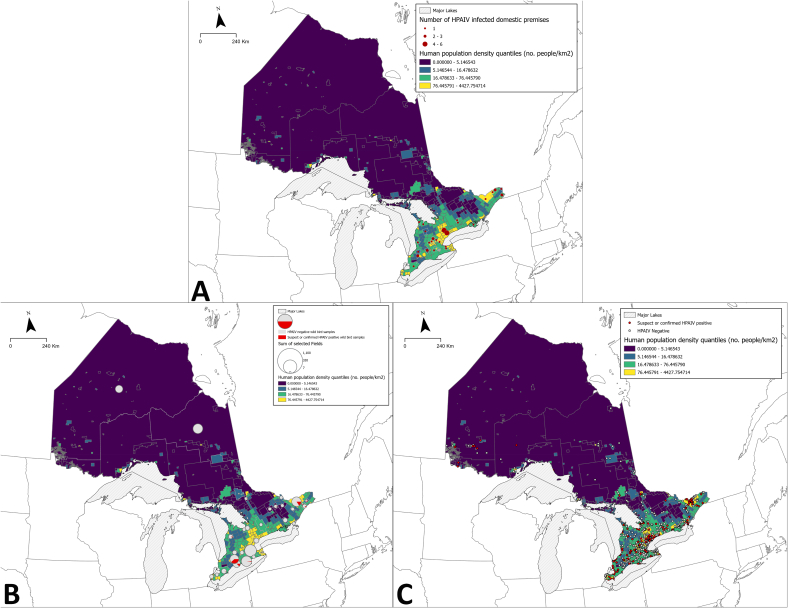
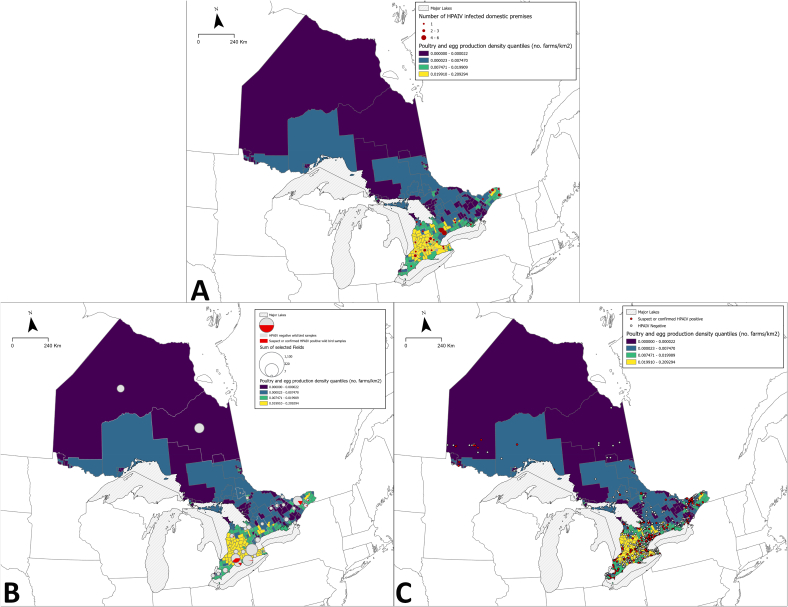
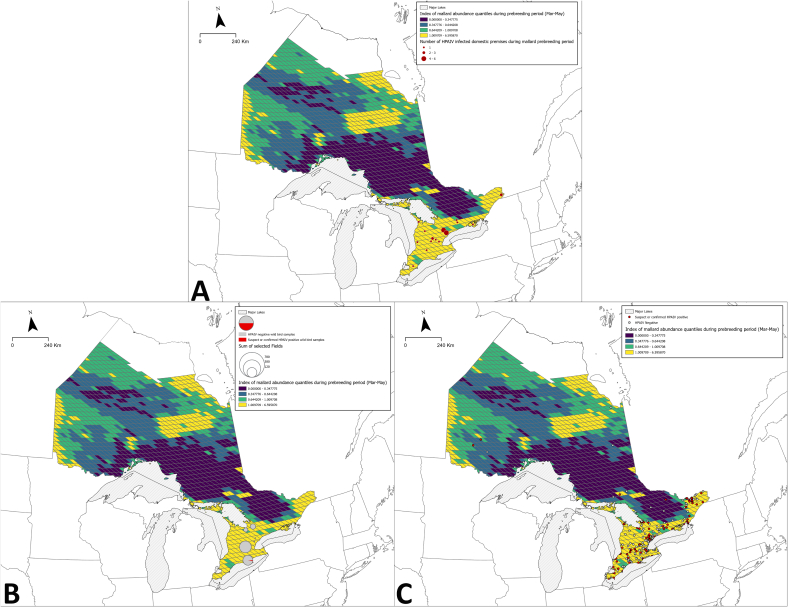
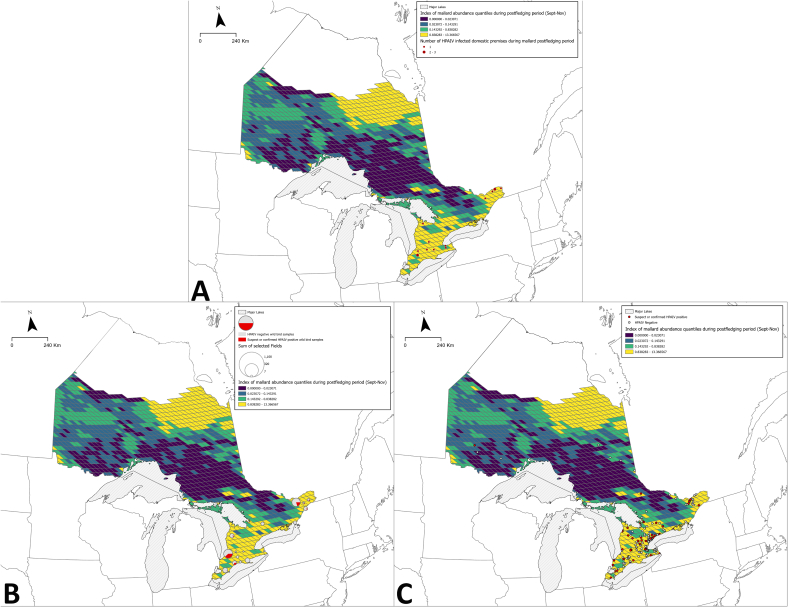
Wildlife disease surveillance, particularly for pathogens with zoonotic potential such as Highly Pathogenic Avian Influenza Virus (HPAIV), is critical to facilitate situational awareness, inform risk, and guide communication and response efforts within a One Health framework. This study evaluates the intensity of avian influenza virus (AIV) surveillance in Ontario's wild bird population following the 2021 H5N1 incursion into Canada. Analyzing 2562 samples collected between November 1, 2021, and October 31, 2022, in Ontario, Canada, we identify spatial variations in surveillance intensity relative to human population density, poultry facility density, and wild mallard abundance. Using the spatial scan statistic, we pinpoint areas where public engagement, collaborations with Indigenous and non-Indigenous hunter/harvesters, and working with poultry producers, could augment Ontario's AIV wild bird surveillance program. Enhanced surveillance at these human-domestic animal-wildlife interfaces is a crucial element of a One Health approach to AIV surveillance. Ongoing assessment of our wild bird surveillance programs is essential for strategic planning and will allow us to refine approaches and generate results that continue to support the program's overarching objective of safeguarding the health of people, animals, and ecosystems.
Keywords: Avian influenza virus; Migratory birds; One health; Poultry; Wild birds; Wildlife disease surveillance; Zoonotic pathogen surveillance.
© 2024 Published by Elsevier B.V.
Conflict of interest statement
None.
Figures
References
-
- Clark L., Hall J. Avian influenza in wild birds: status as reservoirs, and risks to humans and agriculture. Ornithol. Monogr. 2006;60:3–29. doi: 10.2307/40166825. - DOI
-
- Ramey A.M., Hill N.J., DeLiberto T.J., Gibbs S.E.J., Camille Hopkins M., Lang A.S., Poulson R.L., Prosser D.J., Sleeman J.M., Stallknecht D.E., Wan X.-F. Highly pathogenic avian influenza is an emerging disease threat to wild birds in North America. J.Wildl. Manag. 2022;86 doi: 10.1002/jwmg.22171. - DOI
-
- Giacinti, J. A., A. V. Signore, M. E. B. Jones, L. Bourque, S. Lair, C. Jardine, B. Stevens, T. Bollinger, D. Goldsmith, B. C. W. A. S. P. (BC WASPs), M. Pybus, I. Stasiak, R. Davis, N. Pople, L. Nituch, R. W. Brook, D. Ojkic, A. Massé, G. Dimitri-Masson, G. J. Parsons, M. Baker, C. Yason, J. Harms, N. Jutha, J. Neely, Y. Berhane, O. Lung, S. K. French, L. Myers, J. F. Provencher, S. Avery Gomm, G. J. Robertson, T. Barychka, K. E. B. Gurney, J. Wight, I. Rahman, K. Hargan, A. S. Lang, M. G. C. Brown, C. Pekarik, T. Thompson, A. McLaughlin, M. Willie, L. Wilson, S. A. Flemming, M. V. Ross, J. Leafloor, F. Baldwin, C. Sharp, H. Lewis, M. Beaumont, A. Hanson, R. A. Ronconi, E. Reed, M. Campbell, M. Saunders, and C. Soos. (2023b). Avian influenza viruses in wild birds in Canada following incursions of highly pathogenic H5N1 virus from Eurasia in 2021/2022. bioRxiv. doi: 10.1101/2023.11.23.565566. - DOI
LinkOut - more resources
Full Text Sources
