


Managing and treating COVID-19 in patients with hematological malignancies: a narrative review and expert insights
- PMID: 38833206
- PMCID: PMC11150206
- DOI: 10.1007/s10238-024-01381-5
Managing and treating COVID-19 in patients with hematological malignancies: a narrative review and expert insights
Abstract
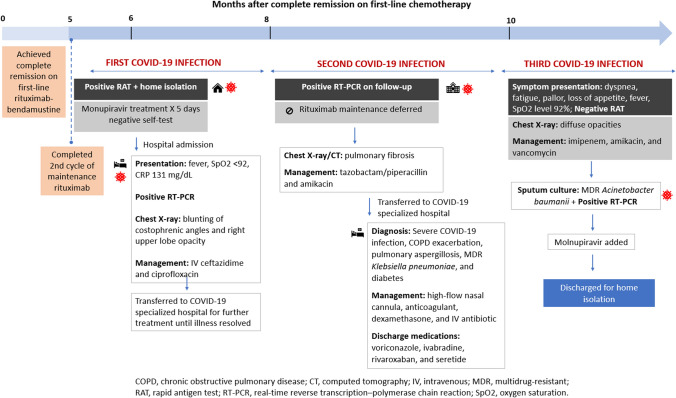
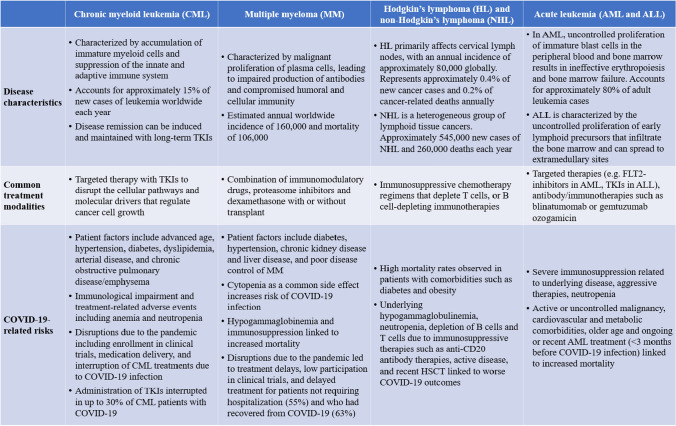
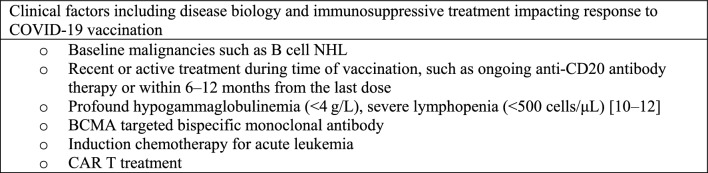
Patients with hematologic malignancies (HMs) are at a significantly higher risk of contracting COVID-19 and experiencing severe outcomes compared to individuals without HMs. This heightened risk is influenced by various factors, including the underlying malignancy, immunosuppressive treatments, and patient-related factors. Notably, immunosuppressive regimens commonly used for HM treatment can lead to the depletion of B cells and T cells, which is associated with increased COVID-19-related complications and mortality in these patients. As the pandemic transitions into an endemic state, it remains crucial to acknowledge and address the ongoing risk for individuals with HMs. In this review, we aim to summarize the current evidence to enhance our understanding of the impact of HMs on COVID-19 risks and outcomes, identify particularly vulnerable individuals, and emphasize the need for specialized clinical attention and management. Furthermore, the impaired immune response to COVID-19 vaccination observed in these patients underscores the importance of implementing additional mitigation strategies. This may include targeted prophylaxis and treatment with antivirals and monoclonal antibodies as indicated. To provide practical guidance and considerations, we present two illustrative cases to highlight the real-life challenges faced by physicians caring for patients with HMs, emphasizing the need for individualized management based on disease severity, type, and the unique circumstances of each patient.
Keywords: COVID-19; Hematological malignancies; Immunocompromised; Immunosuppressed; Lymphomas; Omicron.
© 2024. The Author(s).
Conflict of interest statement
Following the International Committee of Medical Journal Editors’ (ICMJE) guidelines, Heng Joo Ng and Chieh Lee Wong report receiving consulting fees and honoraria for lectures and presentations from AstraZeneca. Quang The Nguyen reports receiving consulting fees from AstraZeneca. Phu Huynh Duc Vinh reports receiving consulting fees and honoraria for lectures and presentations from AstraZeneca and Novartis. Maaz Kamal Alata reports receiving honoraria for lectures and presentations for AstraZeneca, Pfizer, and Astellas Pharma. Additionally, he reports receiving meeting attendance support from Astellas Pharma, NewBridge Pharmaceuticals, Merck, and Gilead. Jing Yuan Tan has no relevant affiliations or financial involvement with any organization or entity with a financial interest in or financial conflict with the subject matter or materials discussed in the manuscript. This includes employment, consultancies, honoraria, stock ownership or options, expert testimony, grants, or patents received or pending, or royalties.
Figures
References
Publication types
MeSH terms
Substances
LinkOut - more resources
Full Text Sources
Medical
Research Materials
