


Transition experiences of patients with post stroke dysphagia and family caregivers: A longitudinal, qualitative study
- PMID: 38833445
- PMCID: PMC11149836
- DOI: 10.1371/journal.pone.0304325
Transition experiences of patients with post stroke dysphagia and family caregivers: A longitudinal, qualitative study
Abstract
Background: Stroke patients with dysphagia and family caregivers will experience multiple transitions during the whole process of the disease and various nursing needs will be generated. There is a lack of knowledge about their experiences at different transition stages. Thus, we aimed to explore the transition experiences of patients with post stroke dysphagia and family caregivers from admission to discharge home.
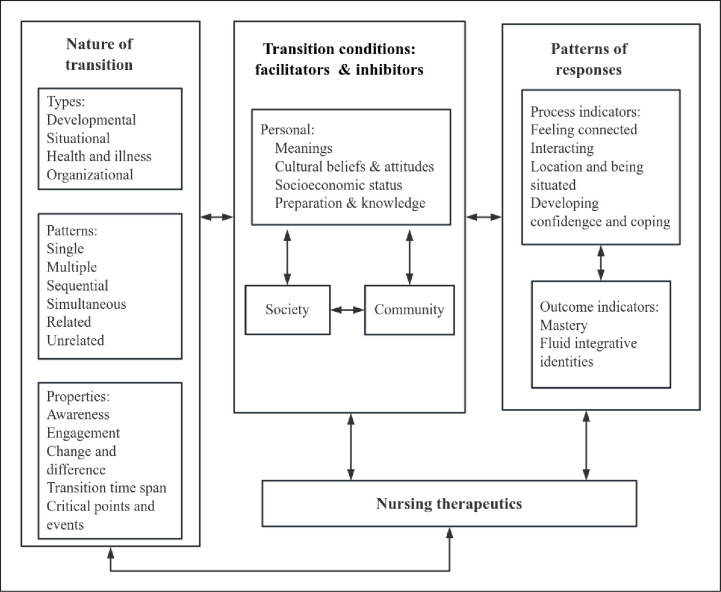
Methods: A semi-structured interview based on Meleis's transition theory was used during hospitalization and telephone follow-up interviews were conducted in the first, third, and sixth month after the diagnosis of dysphagia. Interview transcripts were analyzed using the conventional content analysis method.
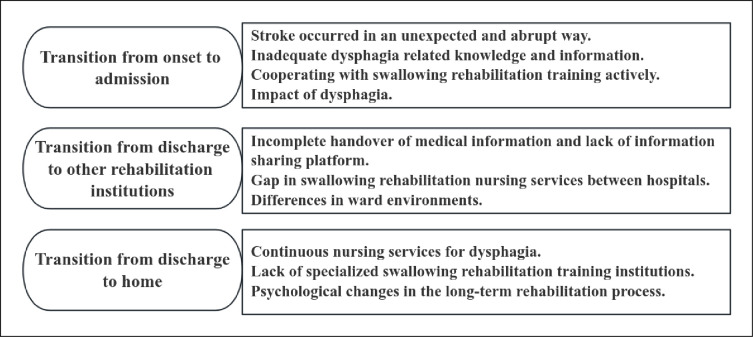
Results: A total of 17 participants enrolled in the first face-to-face interview, 16 participants took part in the first month's telephone follow-up interview, 14 participants in the third month, and 12 participants in the sixth month. The transition experiences of patients with post stroke dysphagia and family caregivers could be summarized into three themes: (1)transition from onset to admission; (2)transition from discharge to other rehabilitation institutions; and (3)transition from discharge to home. Each theme had identified interrelated subthemes.
Conclusions: The experiences of patients with post stroke dysphagia and family caregivers during transition are a dynamic process with enormous challenges in each phase. Collaboration with health care professionals, follow-up support after discharge, and available community and social support should be integrated into transitional nursing to help patients facilitate their transition.
Copyright: © 2024 CHEN et al. This is an open access article distributed under the terms of the Creative Commons Attribution License, which permits unrestricted use, distribution, and reproduction in any medium, provided the original author and source are credited.
Conflict of interest statement
The authors have declared that no competing interests exist.
Figures
References
MeSH terms
LinkOut - more resources
Full Text Sources
Medical
