


A novel high sensitive, specificity duplex enzyme-activated differentiating probes PCR method for the SNP detection and differentiation of MS-H vaccine strains from wild-type Mycoplasma synoviae strains
- PMID: 38833744
- PMCID: PMC11190711
- DOI: 10.1016/j.psj.2024.103874
A novel high sensitive, specificity duplex enzyme-activated differentiating probes PCR method for the SNP detection and differentiation of MS-H vaccine strains from wild-type Mycoplasma synoviae strains
Abstract
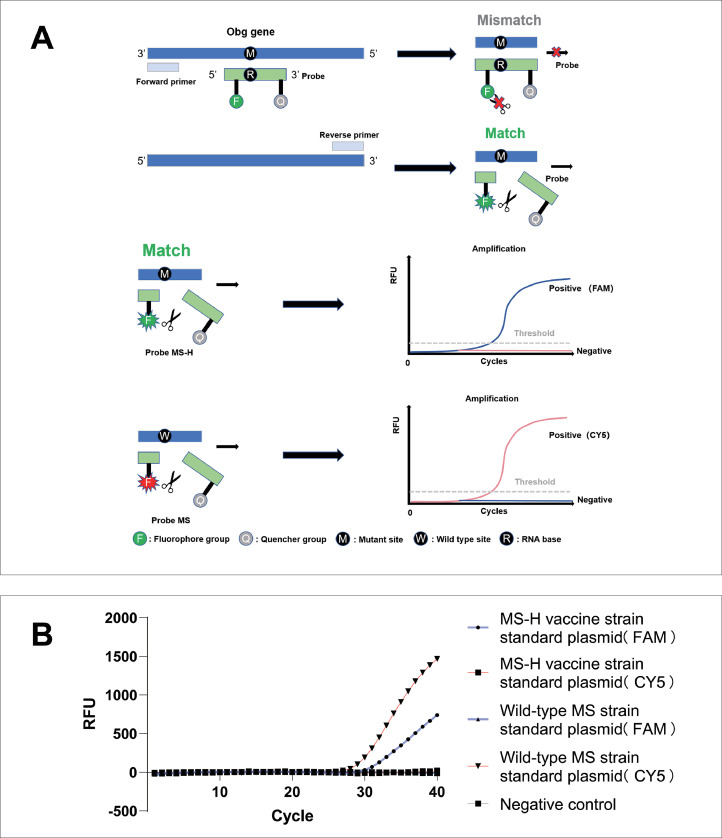
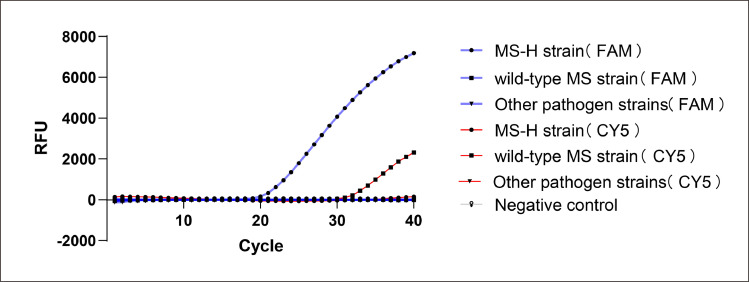
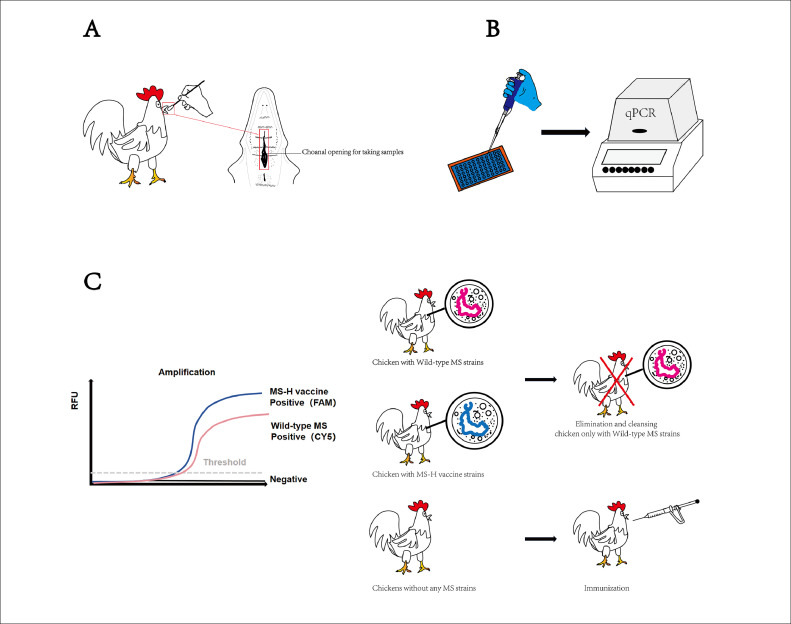
Mycoplasma synoviae (MS) is a contagious pathogen that poses a significant threat to the poultry industry. Detection plays an important role in the prevention and control of MS, particularly in differentiating between wild-type MS and live attenuated vaccine strains for vaccination selection and culling of animals with wild-type only. The live attenuated ts+ vaccine strain MS-H is recognized as the most effective and widely used vaccine. In this study, we have developed a method called double enzyme-activated differentiation probes PCR (DEA-probes PCR) for the differentiation of MS-H vaccine strain from wild-type strain by targeting the single nucleotide polymorphism (SNP) of the 367th nucleotide in the Obg gene sequence. We developed 2 modified probes with the ribonucleotide insert. When the probe perfectly complements with the target, the ribonuclease H2 (RNase H2) will cleave the ribonucleotide, resulting in the generation of fluorescent signal. With a detection limit of 5.8 copies/µL, the DEA-probes PCR method demonstrates 100% specificity in distinguishing wild-type MS from MS-H strains in 1 h. The method demonstrated great performance in real application of 100 superior palate cleft swab samples from chickens in poultry farms. Twenty-eight samples were detected as MS positive, consistent with the results of the Chinese industry standard method. Additionally, our method was able to distinguish 19 wild-type MS strains from 9 MS-H vaccine strains. The DEA-probes PCR method is rapid, specific and sensitive for SNP detection, overcoming the misidentification in MS detection and differentiation. It can be also applied to the differentiation of infected from vaccinated animals (DIVA) for other pathogens.
Keywords: RNase H2 enzyme; mycoplasma synoviae; quantitative PCR detecting; rapid detection; single-nucleotide polymorphism.
Copyright © 2024 The Authors. Published by Elsevier Inc. All rights reserved.
Conflict of interest statement
DISCLOSURES The authors declare no conflicts of interest.
Figures




References
-
- Abdelrahman A., Shany S., Dardeer M., Hassan K., Ali A., ElKady M. Avian Mycoplasma gallisepticum and Mycoplasma synoviae: advances in diagnosis and control. Ger. J. Vet. Res. 2021;1:46–55.
-
- Abolnik C., Gouws J. Extended survival times of Mycoplasma gallisepticum and Mycoplasma synoviae on kanekalon synthetic hair fibres. Poult Sci. 2014;93:8–11. - PubMed
-
- Ball C., Felice V., Ding Y., Forrester A., Catelli E., Ganapathy K. Influences of swab types and storage temperatures on isolation and molecular detection of Mycoplasma gallisepticum and Mycoplasma synoviae. Avian Pathol. 2020;49:106–110. - PubMed
-
- Catania S., Gobbo F., Bilato D., Gagliazzo L., Moronato M.L., Terregino C., Bradbury J.M., Ramirez A.S. Two strains of Mycoplasma synoviae from chicken flocks on the same layer farm differ in their ability to produce eggshell apex abnormality. Vet. Microbiol. 2016;193:60–66. - PubMed
MeSH terms
Substances
LinkOut - more resources
Full Text Sources
