


Cognitive control training with domain-general response inhibition does not change children's brains or behavior
- PMID: 38834704
- PMCID: PMC11239524
- DOI: 10.1038/s41593-024-01672-w
Cognitive control training with domain-general response inhibition does not change children's brains or behavior
Abstract
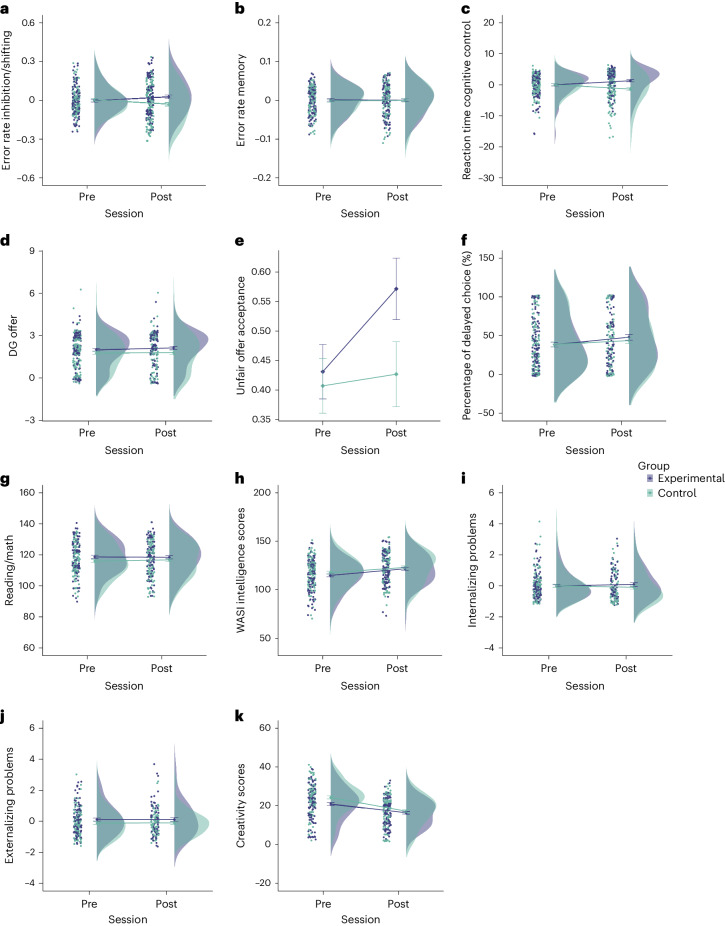
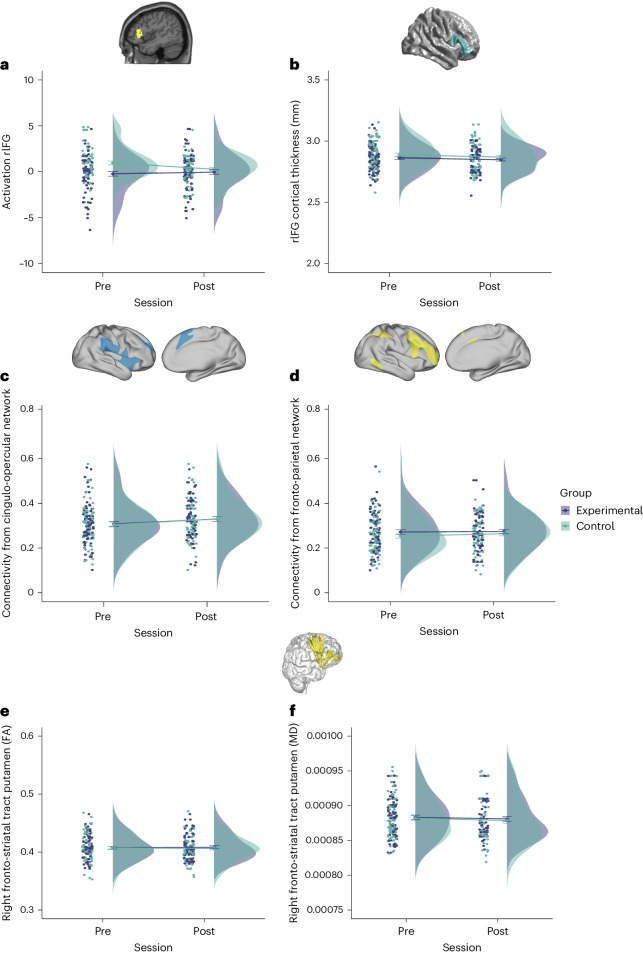
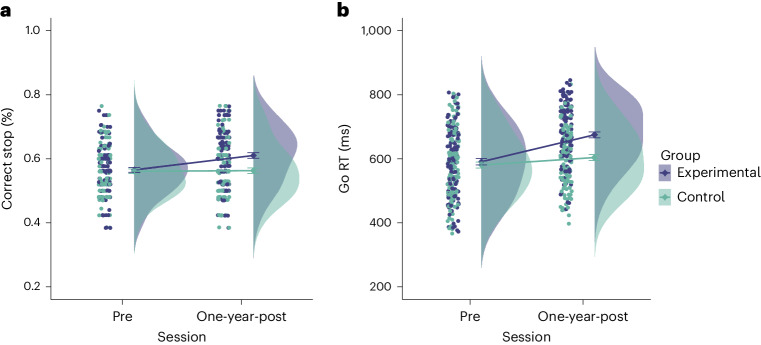
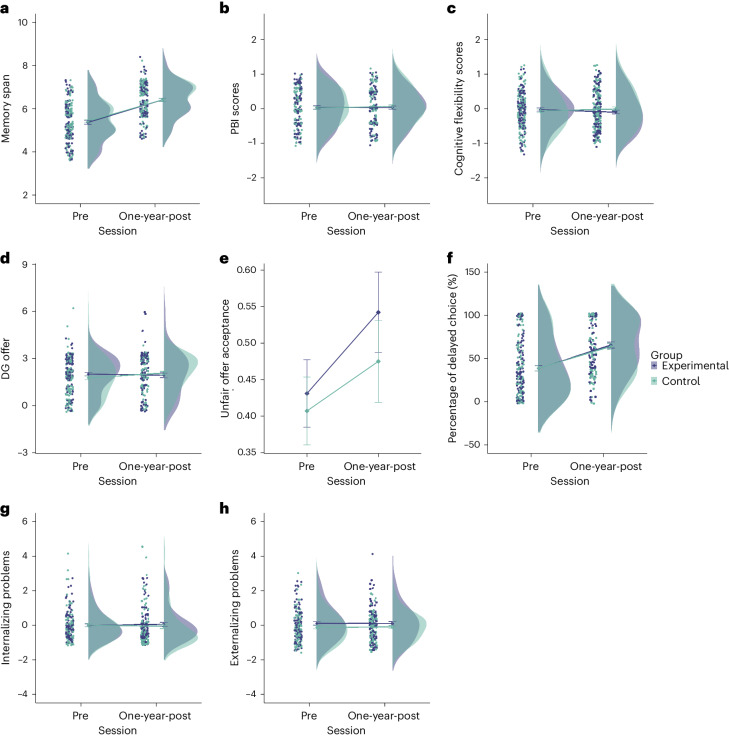
Cognitive control is required to organize thoughts and actions and is critical for the pursuit of long-term goals. Childhood cognitive control relates to other domains of cognitive functioning and predicts later-life success and well-being. In this study, we used a randomized controlled trial to test whether cognitive control can be improved through a pre-registered 8-week intervention in 235 children aged 6-13 years targeting response inhibition and whether this leads to changes in multiple behavioral and neural outcomes compared to a response speed training. We show long-lasting improvements of closely related measures of cognitive control at the 1-year follow-up; however, training had no impact on any behavioral outcomes (decision-making, academic achievement, mental health, fluid reasoning and creativity) or neural outcomes (task-dependent and intrinsic brain function and gray and white matter structure). Bayesian analyses provide strong evidence of absent training effects. We conclude that targeted training of response inhibition does little to change children's brains or their behavior.
© 2024. The Author(s).
Conflict of interest statement
N.U.F.D. is a co-founder of Turing Medical. Any potential conflicts of interest have been reviewed and managed by Washington University. N.U.F.D. is a co-inventor of FIRMM Technology 2198 (FIRMM—real-time monitoring and prediction of motion in MRI scans, exclusively licensed to Turing Medical). Any potential conflicts of interest have been reviewed and managed by Washington University. The other authors declare no competing interests.
Figures
References
-
- Hoffmann F, Singer T, Steinbeis N. Children’s increased emotional egocentricity compared to adults is mediated by age-related differences in conflict processing. Child Dev. 2015;86:765–780. - PubMed
-
- McAuliffe K, Blake PR, Steinbeis N, Warneken F. The developmental foundations of human fairness. Nat. Hum. Behav. 2017;1:0042.
-
- Steinbeis, N. Taxing behavioral control diminishes sharing and costly punishment in childhood. Dev. Sci.21, e12492 (2018). - PubMed
-
- Steinbeis N, Bernhardt BC, Singer T. Impulse control and underlying functions of the left DLPFC mediate age-related and age-independent individual differences in strategic social behavior. Neuron. 2012;73:1040–1051. - PubMed
Publication types
MeSH terms
Grants and funding
- Fellowship/Jacobs Foundation
- R01 MH096773/MH/NIMH NIH HHS/United States
- 2019-1356-04/Jacobs Foundation
- 715282/EC | EU Framework Programme for Research and Innovation H2020 | H2020 Priority Excellent Science | H2020 European Research Council (H2020 Excellent Science - European Research Council)
- R44 MH121276/MH/NIMH NIH HHS/United States
LinkOut - more resources
Full Text Sources
