Impact of the War in Ukraine on the Ability of Children to Recognize Basic Emotions
- PMID: 38835807
- PMCID: PMC11148555
- DOI: 10.3389/ijph.2024.1607094
Impact of the War in Ukraine on the Ability of Children to Recognize Basic Emotions
Abstract
Objectives: This study assessed emotion recognition skills in school-age children in wartime conditions in Ukraine.
Methods: An online survey based on the concept of basic emotions was administrated to a sample of 419 schoolchildren from Ukraine and a control group of 310 schoolchildren from the Czech Republic, aged 8 to 12.
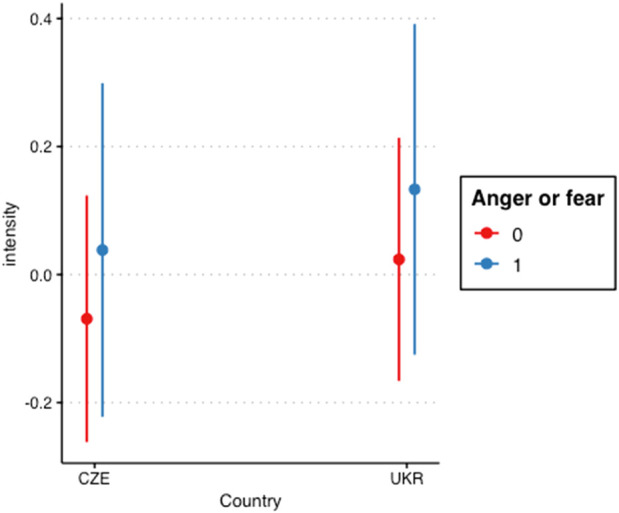
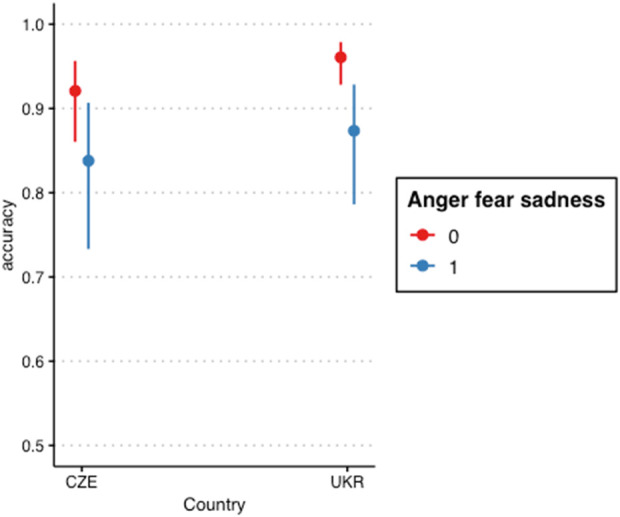
Results: There is no difference in judging the intensity of anger and fear by Ukrainian children, compared with the control group. There is no evidence that the emotions of anger, fear, and sadness were better recognized in the Ukrainian group. Children from Ukraine were better at recognizing positive emotions than Czech children.
Conclusion: Increased risks of threats and wartime experience do not impair the accuracy of identification of emotions like fear or the assessment of intensity of basic emotions by children who experience war in Ukraine. Still, it is important to continue studying the long-term consequences of military conflicts in order to deepen the understanding of their impact on human mental functioning.
Keywords: children; emotion intensity; emotion recognition; emotion recognition accuracy; war.
Copyright © 2024 Loshenko, Palíšek, Straka, Jabůrek, Portešová and Ševčíková.
Conflict of interest statement
The authors declare that they do not have any conflicts of interest.
Figures
References
-
- Halberstadt AG, Denham SA, Dunsmore JC. Affective Social Competence. Soc Dev (2001) 10(1):79–119. 10.1111/1467-9507.00150 - DOI
MeSH terms
LinkOut - more resources
Full Text Sources