


Exploring the clinical transition of engineered exosomes designed for intracellular delivery of therapeutic proteins
- PMID: 38838263
- PMCID: PMC11227971
- DOI: 10.1093/stcltm/szae027
Exploring the clinical transition of engineered exosomes designed for intracellular delivery of therapeutic proteins
Abstract
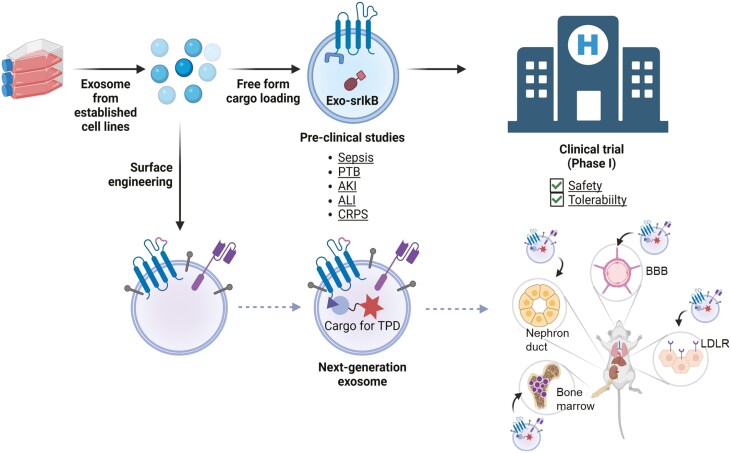
Extracellular vesicles, particularly exosomes, have emerged as promising drug delivery systems owing to their unique advantages, such as biocompatibility, immune tolerability, and target specificity. Various engineering strategies have been implemented to harness these innate qualities, with a focus on enhancing the pharmacokinetic and pharmacodynamic properties of exosomes via payload loading and surface engineering for active targeting. This concise review outlines the challenges in the development of exosomes as drug carriers and offers insights into strategies for their effective clinical translation. We also highlight preclinical studies that have successfully employed anti-inflammatory exosomes and suggest future directions for exosome therapeutics. These advancements underscore the potential for integrating exosome-based therapies into clinical practice, heralding promise for future medical interventions.
Keywords: drug delivery system; exosome purification; exosomes; extracellular vesicles; inflammation; protein therapeutics.
© The Author(s) 2024. Published by Oxford University Press.
Conflict of interest statement
C.C. is the founder and shareholder; H.C. is an ex-employee and minor shareholder; and M.K., D.-J.J., and H. J. K., are employees of ILIAS Biologics, Inc. The authors declare no potential conflicts of interest.
Figures
References
Publication types
MeSH terms
Substances
LinkOut - more resources
Full Text Sources
